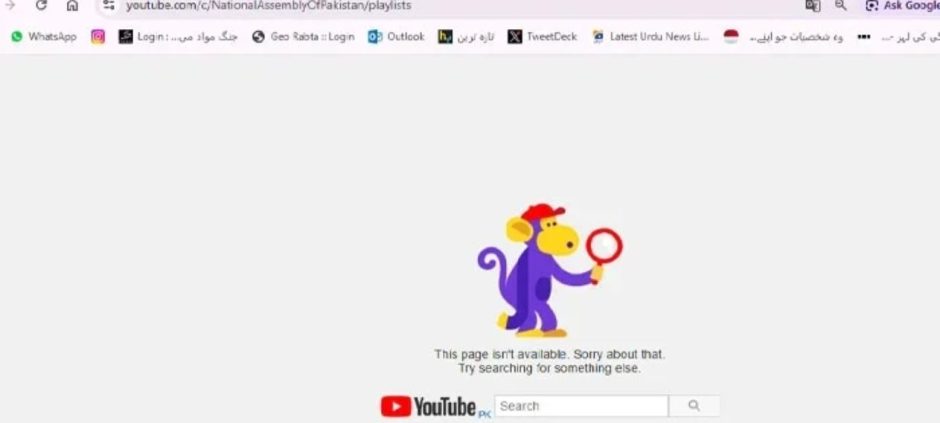
The National Assembly’s official YouTube channel has gone offline, and parliamentary proceedings have not been broadcast in recent days.
Previously, sessions of the lower house were streamed live on the channel. However, the official link has not shown any activity recently.
The proceedings have also not appeared on state television, leaving citizens unable to watch parliament live.
Opposition members claim the government may be attempting to block National Assembly broadcasts. They argue this could prevent transparency in key parliamentary decisions.
NA officials, however, say the YouTube channel is down due to a technical fault. They assure the public that the issue will be resolved soon.
A screengrab on January 23, 2026, showed that the official National Assembly YouTube channel is currently unavailable. This has sparked discussion on social media and among political analysts.
The development coincides with a joint session of parliament convened on Friday by President Asif Ali Zardari. The session passed three bills that had been returned by the president without his signature last month.
The bills include the National Commission for Human Rights Amendment Bill, 2025, the Daanish Schools Authority Bill, 2025, and the Domestic Violence (Prevention and Protection) Bill, 2025.
You can read our coverage on Ayaz Sadiq warning against anti-state speech in the National Assembly and learn about his statements to maintain parliamentary decorum. Stay updated on official warnings and discussions from the National Assembly sessions.
President Zardari had returned these bills to parliament despite their earlier approval by both the Senate and the National Assembly. The joint session’s approval now clears them for further processing.
Citizens and political observers are calling for the restoration of the YouTube channel to maintain transparency in parliamentary proceedings. Officials say efforts are underway to bring the channel back online soon.
While the cause of the outage remains unclear, the absence of the live stream has raised concerns about public access to legislative developments.