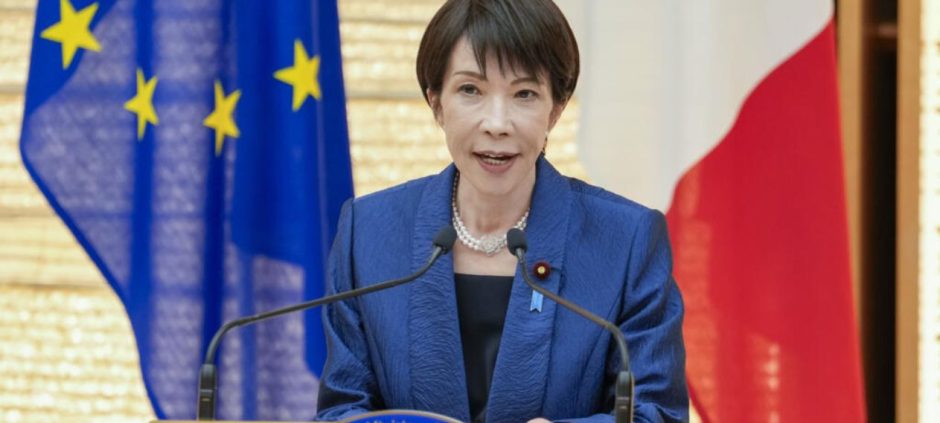
Japan’s Prime Minister Sanae Takaichi has called a snap election to secure a stronger mandate for her government. The election is scheduled for February 8, following the dissolution of the lower house on January 23.
Takaichi, the country’s first female leader, told reporters she wants the public to decide if she is fit to lead. Campaigning will begin on January 27.
If re-elected, she has pledged to cut food taxes for two years to ease the burden on citizens struggling with inflation. Her cabinet recently approved a record 122.3-trillion-yen ($768 billion) budget for the fiscal year starting April 2026.
Takaichi emphasized the need to act quickly to address economic challenges. “We have a responsibility to overcome the shackles of excessive austerity and take immediate action against the crisis at hand,” she said.
The ruling Liberal Democratic Party (LDP) has governed Japan almost continuously, though it has frequently changed leaders. Takaichi’s cabinet is currently enjoying strong poll numbers, despite the party’s general decline in popularity.
The LDP, along with coalition partner Japan Innovation Party (JIP), holds only a slim majority in the lower house. Experts say this narrow margin may hinder her ability to pass fiscal and defence policies.
Sadafumi Kawato, a political analyst, noted, “If the LDP can get a majority by itself in the lower house, that’ll help her pursue policies without concessions to other parties.”
Opposition parties have criticized the move. Jun Azumi of the Constitutional Democratic Party of Japan (CDP) said dissolving the lower house risks delaying crucial policies and could “sacrifice livelihoods.”
A snap election may also strengthen Takaichi’s position in foreign affairs. Analysts say it could give her leverage in tensions with China. Relations have strained since Takaichi suggested Japan could intervene militarily if China attacked Taiwan. China recently imposed restrictions on exports of dual-use goods and rare-earth products vital to Japan’s industry.
Takaichi denounced these “economic pressure tactics” but did not mention China by name. Experts warn that Beijing may intensify trade controls if Takaichi wins, signaling that supporting a hawkish leader could have consequences.
Polls show 60 percent of Japanese citizens worry about worsening Japan-China relations and its impact on the economy. Learn more about Japan’s leadership in our news on Japan’s First Female PM Takaichi Takes Charge.
Smaller parties, including the populist Sanseito, have gained support in recent elections. Opposition parties, including Komeito and CDP, have formed alliances to challenge Takaichi in the snap election.
The election outcome will determine whether Takaichi can secure a strong mandate to push forward her domestic and foreign policy agenda.