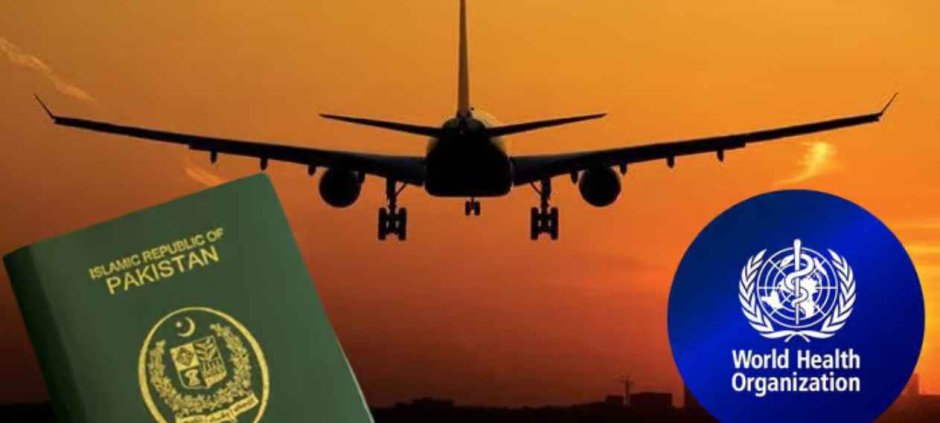
The World Health Organization (WHO) has extended international travel restrictions on Pakistan for another three months.
The decision comes amid continued concerns about polio transmission in Pakistan and Afghanistan. The WHO considers the ongoing spread a risk to international public health.
According to ARY News, the WHO highlighted continued poliovirus transmission across parts of Pakistan. It also raised concerns about cross-border movement between Pakistan and Afghanistan.
Frequent movement between the two countries may increase opportunities for the virus to spread. The WHO identified this movement as an important factor in ongoing transmission.
Poliovirus continues to move from Afghanistan into southern Khyber Pakhtunkhwa. Transmission has also been reported in the Quetta block.
At the same time, southern Khyber Pakhtunkhwa continues to report active transmission. Karachi has also remained an area of concern for health authorities.
The WHO has specifically highlighted Karachi because of its role in continued poliovirus spread. The city remains an important focus for vaccination and disease control efforts.
The organization has called for targeted vaccination campaigns in several areas. These include Central Pakistan, southern Khyber Pakhtunkhwa, and the Quetta block.
The WHO said focused vaccination efforts are necessary to reduce transmission. Such campaigns aim to reach children who have not received required polio doses.
Another concern is the number of children missing routine polio vaccinations. Vaccine refusals have also created difficulties for Pakistan’s eradication efforts.
Health authorities continue to face challenges in reaching some children. Security conditions have made vaccination campaigns particularly difficult in parts of Khyber Pakhtunkhwa.
According to the WHO communiqué, security problems have prevented up to 250,000 children from receiving polio vaccines. This gap increases concerns about continued virus circulation.
The situation makes vaccination coverage especially important in affected areas. Children who miss vaccinations can remain vulnerable to poliovirus infection.
Polio is a highly infectious disease that can cause permanent paralysis. Vaccination remains the main method used to prevent its spread.
The WHO’s continued travel measures are linked to the international risk from poliovirus. The measures are intended to reduce the possibility of further international spread.
The restrictions do not represent a complete travel ban on Pakistan. Instead, they are conditional measures linked to public health concerns.
The latest extension will keep the measures in place for at least another three months. During this period, Pakistani authorities are expected to continue vaccination and surveillance activities.
Reducing cross-border transmission remains an important part of the response. Coordination between Pakistan and Afghanistan is also relevant to controlling the virus.
The WHO has urged stronger vaccination efforts in areas with ongoing transmission. It has also stressed the importance of reaching children who remain unvaccinated.
Polio transmission can continue when vaccination gaps remain in affected communities. Security challenges and vaccine refusals can make these gaps harder to close.
Pakistan continues to work toward eliminating poliovirus transmission. However, the latest WHO decision highlights the remaining challenges.
In other related news also read WHO Declares Cruise Ship Hantavirus Outbreak Over
The next three months will provide another period for health authorities to strengthen vaccination coverage. Continued surveillance and targeted campaigns will remain important for controlling the disease.