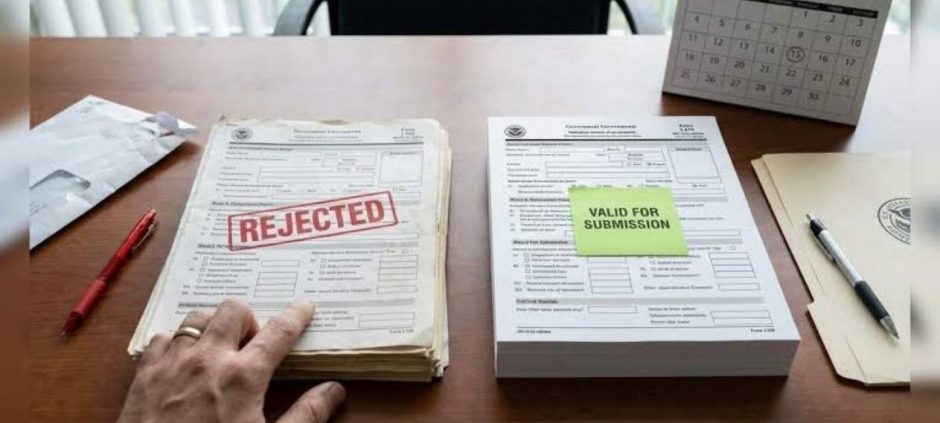
The US Citizenship and Immigration Services (USCIS) will introduce new editions of two major immigration forms on September 15, 2026. Applicants using older versions after the deadline could have their applications rejected.
The change applies to Form I-539 and Form I-765. Both revised forms will carry the edition date 09/15/26.
Form I-539 is used by certain nonimmigrants who want to extend or change their status in the United States. The form is also used by eligible H-4 spouses and children of H-1B workers.
H-1B workers generally do not use Form I-539 to extend their status. Their employers normally file Form I-129 for H-1B extensions.
Form I-765 is used by eligible applicants seeking an Employment Authorization Document, commonly known as an EAD. The form is important for several categories of foreign nationals seeking permission to work in the US.
F-1 international students applying for Optional Practical Training and STEM OPT may also use Form I-765. Certain H-4 spouses and other eligible applicants can also apply for employment authorization through the form.
The new Form I-539 will replace the current 08/28/24 edition. The revised Form I-765 will replace the existing 08/21/25 edition.
Applicants can continue using the current editions if their applications are postmarked or submitted electronically before September 15. After that date, only the new editions will be accepted.
USCIS will not provide a grace period for applicants using older versions after the deadline. Applicants planning to file around the cutoff should therefore check the form edition date carefully.
USCIS has already released preview versions of the revised forms and their instructions. These materials are intended to help applicants prepare for the upcoming changes.
However, applicants have been warned not to submit the new editions before September 15. USCIS will not accept the revised forms before their official effective date.
The form changes are linked to new US immigration rules concerning fixed admission periods and extension-of-stay procedures. The changes affect F-1 students, J-1 exchange visitors and I-category foreign media representatives.
Under the new framework, F, J and I nonimmigrants will generally move away from the longstanding duration-of-status system. Some applicants may need to request an extension if they want to remain in the United States beyond their authorized stay.
Applicants planning to submit Form I-539 or Form I-765 near the September 15 deadline should carefully review the edition date. Using an outdated form after the deadline could result in rejection and may require the application to be filed again.