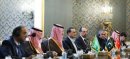
High-level talks involving Iran, Pakistan, Saudi Arabia and Türkiye began in Tehran on Monday. The meeting comes amid rising regional tensions and efforts to contain the widening conflict.
Iranian state television reported that officials discussed regional cooperation, security and the consequences of the US-Israeli war on Iran. The discussions also focused on diplomatic efforts to reduce tensions across the region.
The meeting was proposed by Pakistan during a visit by Field Marshal Asim Munir to Tehran last week. Munir serves as Pakistan’s Chief of Defence Forces and Chief of Army Staff.
Iranian media reported that the proposal received a positive response from Tehran. The meeting marks an important diplomatic contact between Iran and the three countries associated with the Makkah pact.
Senior Officials Attend Tehran Meeting
Iranian state broadcaster IRIB released footage showing Munir and Pakistan’s Interior Minister Mohsin Naqvi meeting Iranian leaders.
Those present included President Masoud Pezeshkian, Foreign Minister Abbas Araghchi and security official Mohsen Rezaei.
Pakistan’s military media wing, Inter-Services Public Relations, confirmed Munir’s visit earlier on Monday. However, it did not initially provide further details about the discussions.
Iranian media also reported the participation of Saudi Defence Minister Prince Khalid bin Salman and Turkish intelligence chief Ibrahim Kalin.
Saudi Deputy Minister for Public Diplomacy Rayed Krimly said the visit supported efforts to promote dialogue and reduce regional tensions. He also highlighted mediation efforts involving Qatar and Pakistan.
Regional Security Tops the Agenda
Iranian Foreign Ministry spokesperson Esmaeil Baqaei said the talks would cover several urgent regional issues. These include Israel’s policies, developments in Palestine and Lebanon, and the effects of the US-Israeli military campaign against Iran.
Iranian officials have also promoted an approach they describe as “endogenous security.” This concept calls for regional countries to address security challenges through cooperation and mutual trust.
The talks come amid concerns about maritime security, energy supplies and instability across the Gulf and Red Sea. These issues have increased the importance of diplomatic engagement between regional governments.
Pakistan Pushes for Diplomatic Solutions
According to Iran’s ISNA news agency, the meeting proposal emerged during Munir’s previous visit to Tehran. Iranian officials reportedly welcomed the initiative.
The latest discussions follow earlier contacts between Pakistani and Iranian officials. Tehran has reportedly said Washington must take initial steps to rebuild trust.
Iran has also presented a seven-point proposal as a possible starting point for renewed negotiations. Pakistan and Qatar have continued supporting diplomatic efforts to reduce tensions.
The meeting provides another opportunity for countries with important regional security and economic interests to exchange views.
Makkah Pact Members Face Regional Challenges
The talks are taking place as fighting involving Saudi Arabia and Yemen’s Houthi movement intensifies. Tensions between Washington and Tehran also remain elevated.
The Makkah pact refers to a joint defence arrangement described in the supplied report. The agreement was signed in August and provides for collective defence among its members.
Under the reported arrangement, an armed attack against one member is treated as an attack against all. However, the current discussions also involve Iran, which is not identified as a member of the agreement.
Maritime security remains another major concern. The Strait of Hormuz is a critical route for global oil and liquefied natural gas shipments.
The report says Iran has asserted control over passage through the strait. It also states that the United States has imposed a naval counter-blockade on Iranian ports.
In other related news also read Iran nuclear talks with European powers
Despite ongoing diplomatic efforts, a lasting settlement remains uncertain. The Tehran talks could provide another channel for dialogue as regional governments seek ways to manage the conflict.