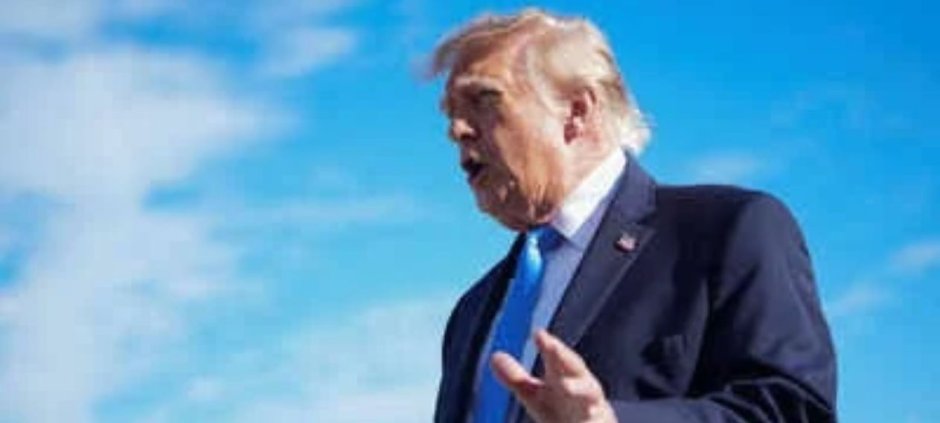
US President Donald Trump has warned that the United States may launch further military action against Iran as diplomatic efforts remain deadlocked and tensions over the Strait of Hormuz continue to rise. Iran has responded with threats of wider retaliation, warning that American military bases across the Middle East could become targets if Washington continues its naval operations in the strategic waterway.
Speaking to reporters at the White House on Thursday, Trump suggested that additional military action could come soon. He argued that previous US administrations should have addressed Iran’s nuclear ambitions much earlier.
Trump did not reveal potential targets or provide a specific timeline for any new operation. However, his remarks have added to concerns about renewed fighting and a wider regional conflict.
Trump Says More Military Action Is Possible
Trump said the United States had already inflicted significant damage on Iran but indicated that Washington could go further.
He also dismissed the prospect of ongoing negotiations with Tehran, saying that a resolution would come one way or another in the near future.
Speaking at an election rally in Iowa, Trump said he believed the conflict would end “very soon”. He acknowledged that the war had come at a cost but maintained that preventing Iran from acquiring nuclear weapons remained a priority.
The US president also claimed that many Americans supported his decision to confront Iran, despite opposition from some sections of the public.
Trump’s remarks did not clarify whether Washington was preparing an immediate military operation or using the threat of further action to increase pressure on Tehran.
Trump Accuses Iran of Driving Up Oil Prices
In a social media post, Trump accused Iran of attempting to push oil prices higher ahead of the US midterm elections.
He alleged that Tehran was spreading reports about attacks and naval mines in the Strait of Hormuz to influence energy markets. These allegations were not independently verified in the supplied report.
The dispute comes as the waterway remains a major flashpoint between the two countries. The Strait of Hormuz is a critical route for international energy shipments, making any disruption a concern for oil markets and global trade.
US naval escorts and Iran’s warnings against what it considers unauthorised passage have further increased tensions in the region.
Iran Threatens US Military Bases
Iran’s Islamic Revolutionary Guard Corps (IRGC) has warned that continued US naval escorts through the strait could trigger attacks on American military bases across the Middle East.
IRGC spokesperson Hossein Mohebi said Iran had activated its “decentralised mosaic defence” doctrine. He indicated that Iran could adopt a more aggressive approach if Washington resumed military operations.
According to Mohebi, Iran would not necessarily limit its response to proportional retaliation. Instead, he said, the country could take the initiative and launch offensive and asymmetrical attacks.
The IRGC also claimed that three additional vessels had struck mines west of the Strait of Hormuz. This claim has not been independently verified in the supplied report.
Iranian officials have separately warned that US bases and critical infrastructure across the Gulf could be targeted if neighbouring countries support another American or Israeli military operation.
Such threats raise concerns about attacks on military installations, energy facilities and other strategic assets across the region.
Iran Sets Conditions for Reopening the Strait of Hormuz
Major General Mohsen Rezaei, secretary of Iran’s Supreme National Security Council, has said reopening the Strait of Hormuz remains possible. However, he stressed that Tehran’s conditions must first be addressed.
Rezaei said Iran had submitted seven new conditions through mediators and would not reopen the waterway or resume negotiations until those conditions were implemented.
He argued that any agreement must include firm guarantees rather than relying on political promises from the other side.
Rezaei also indicated that shipping could resume under new arrangements agreed upon with Oman if Washington fulfilled its commitments.
His remarks suggest that Iran intends to maintain control over its strategic leverage until it receives assurances that any future agreement will be honoured.
Iranian Foreign Minister Keeps Door Open to Diplomacy
Iranian Foreign Minister Abbas Araghchi has said Tehran remains open to diplomacy, but only if Washington demonstrates a genuine willingness to rebuild trust.
He warned that choosing military confrontation instead could lead to what he described as an even greater strategic failure.
However, the diplomatic deadlock continues. Iran is insisting on guarantees and the implementation of its conditions, while the United States is maintaining pressure through its military and economic measures.
The two sides have yet to reach a breakthrough that could ease tensions around the strait.
US Blockade and Oil Market Concerns
The supplied report says the US naval blockade of Iranian ports has passed 100 days. US Central Command has claimed that the blockade prevented at least $25 billion in Iranian oil exports.
US Treasury Secretary Scott Bessent has also shared satellite images reportedly showing Kharg Island, Iran’s main oil export terminal, without tankers.
Meanwhile, Iranian state media reported explosions in Hormozgan province near the Strait of Hormuz on October 22. Oil prices rose amid concerns about regional instability, while flight schedules also faced disruptions.
These developments highlight the potential economic consequences of a prolonged confrontation. Any further disruption to energy shipments could affect international oil prices, shipping costs and regional trade.
Wider Regional Conflict Remains a Concern
The tensions are unfolding alongside other developments involving Israel and regional groups. Israeli Prime Minister Benjamin Netanyahu has reportedly called for regime change in Tehran ahead of Israel’s October 27 election.
The supplied report also mentions continued Houthi missile attacks on Saudi Arabia and condemnation from United Nations Secretary-General Antonio Guterres.
These developments have added to fears that renewed US-Iran hostilities could spread beyond the two countries.
For now, Trump has signalled that further military action remains possible, while Iran has warned that any renewed attack could trigger a wider response. With the Strait of Hormuz still at the centre of the dispute, the future of diplomacy and regional security remains uncertain.
Also read: Trump Links Saudi Nuclear Deal to Abraham Accords