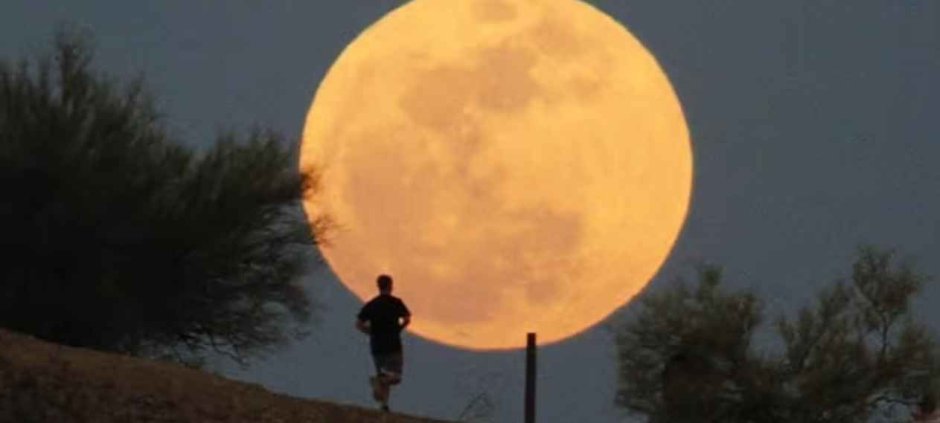
Skywatchers across Pakistan will have an opportunity to witness a spectacular lunar display tonight. The Beaver Supermoon is expected to shine brightly across the country on November 24.
The full Moon will reach its peak at 7:53pm Pakistan Standard Time (PST). However, people will not need to wait until that exact moment. The Moon will remain visible after moonrise, weather conditions permitting.
November’s full Moon is also the second Supermoon of 2026. This year’s lunar event will offer another opportunity to observe the Moon appearing slightly larger and brighter than usual.
The display will become even more interesting because of the Moon’s apparent proximity to the Pleiades star cluster. The cluster is popularly known as the Seven Sisters.
Supermoon Viewing Time Across Pakistan
The full Moon will reach its peak at different local times worldwide. In Pakistan, the expected peak time is 7:53pm on November 24.
According to the international time conversion, the peak will occur at 2:53pm GMT. This corresponds to 7:53pm in Pakistan.
In Karachi, moonrise is expected at approximately 5:18pm. However, the exact timing will vary across different cities.
Skywatchers should choose locations with clear views of the eastern horizon. Open areas away from tall buildings and trees can provide better viewing conditions.
Places with limited artificial lighting may also improve the stargazing experience. However, special equipment will not be necessary to observe the lunar event.
The Supermoon will be visible to the naked eye under clear skies. Telescopes and binoculars are optional for people interested in closer observations.
Why Does the Moon Appear Bigger During a Supermoon?
A Supermoon occurs when a full Moon happens near its closest point to Earth. This point in the Moon’s elliptical orbit is known as perigee.
The Moon does not follow a perfectly circular path around Earth. Its distance from our planet therefore changes throughout its orbit.
When a full Moon coincides with perigee, it can appear slightly larger and brighter. The difference is relatively small compared with an average full Moon.
The Moon may also look unusually large when rising near the horizon. However, this effect is mainly caused by an optical phenomenon called the Moon Illusion.
Why November’s Full Moon Is Called the Beaver Moon
The name Beaver Moon comes from traditional seasonal terminology in North America. November was historically associated with beavers preparing shelters and dams for winter.
It was also linked to seasonal beaver trapping before freezing conditions arrived. The name has remained part of traditional full Moon terminology.
In other related news also read Supermoon 2026 Timing and Viewing Tips in Pakistan
Tonight’s lunar display will give people across Pakistan an opportunity to enjoy the night sky. Clear weather and an unobstructed view will improve the chances of witnessing the event.