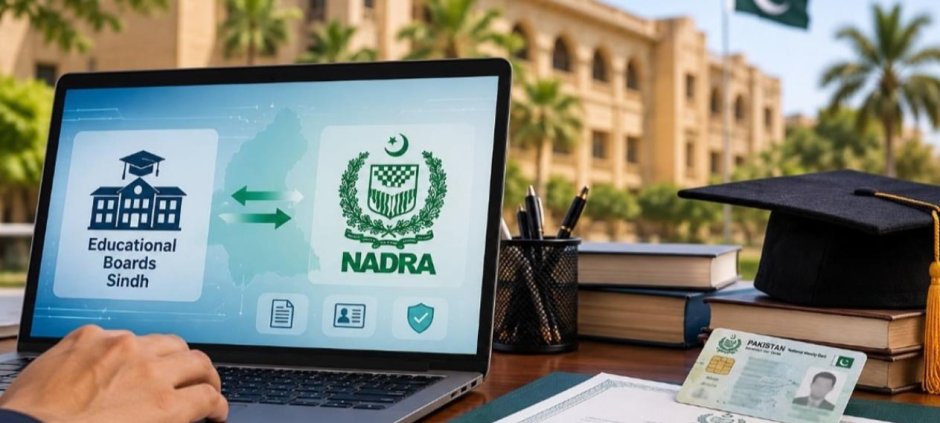
Sindh’s proposal to link its domicile system with the National Database and Registration Authority (NADRA) has remained unimplemented for nearly 16 years, despite being developed to prevent fake and multiple domicile certificates.
The plan was originally prepared in 2010 during the tenure of then provincial IT Minister Raza Haroon and IT Secretary Muhammad Hussain Syed. It was intended to introduce a system that could help verify applicants’ residential records and prevent people from obtaining domiciles from multiple districts or provinces.
According to reports, several meetings were held with NADRA officials to discuss the procedure, budget and other arrangements needed to implement the proposal. A summary was subsequently sent to the chief minister for approval, but the initiative was eventually shelved.
The issue has once again come into focus following complaints about alleged irregularities in medical college admissions and government recruitment across Sindh.
Why Sindh Proposed Linking Domiciles With NADRA
The proposed system was designed to address concerns over the issuance of fake and multiple domicile certificates.
A domicile certificate is an important document used to establish a person’s connection with a particular district or area. It can also determine eligibility for educational opportunities, government jobs and regional quotas.
The proposed NADRA integration was expected to make verification easier and help authorities identify applicants holding questionable or multiple domicile records.
It also aimed to protect genuine residents of Sindh by ensuring that educational seats and government positions reserved for local candidates were not taken by individuals who were not eligible.
However, with the proposal still unimplemented, concerns over domicile verification have continued to surface.
Complaints Over Medical Admissions and Government Jobs
The issue has resurfaced amid allegations of irregularities in medical college admissions and recruitment in different government departments.
According to reports, some candidates who completed their matriculation and intermediate education in other provinces or cities were found to hold Karachi domiciles. In certain cases, their parents reportedly also possessed Karachi domicile certificates.
These claims have raised questions about how domicile records are verified and whether existing procedures are sufficient to prevent applicants from using certificates issued from areas where they may not be eligible.
Similar complaints have also emerged in recruitment by Sindh’s education, health and other government departments, where applicants have allegedly used domiciles from districts other than their actual areas of residence to secure public-sector positions.
If established, such practices could disadvantage candidates who genuinely belong to the districts where vacancies or reserved opportunities are available.
Sindh MPA Seeks Investigation Into Karachi Recruitment
The controversy has also reached the Sindh Assembly, where member Syed Ijazul Haq has called for an investigation into alleged irregularities in Grade 1 to 4 recruitment in Karachi’s District West.
In a letter dated November 13, 2026, addressed to the deputy commissioner, Haq raised concerns about appointments made during 2022–23 in the primary and secondary wings of the School Education Department and at Sindh Qatar Hospital.
He alleged that eligible local candidates were overlooked while applicants from other districts secured government positions by using fake domiciles and Permanent Residence Certificates (PRCs).
The allegations have brought renewed attention to the procedures followed during recruitment and the verification of documents submitted by candidates.
An investigation would be needed to establish whether the reported irregularities occurred and whether any recruitment rules were violated.
Sindh’s Online Domicile System
The latest controversy comes shortly after Sindh introduced an online portal for domicile and PRC certificates, aimed at making the application process more accessible.
However, digitising applications and linking domicile records with NADRA are two separate measures. While an online portal can simplify submissions and processing, the proposed NADRA integration was specifically intended to strengthen verification and help identify questionable or multiple records.
The long delay in implementing the 2010 proposal has therefore renewed questions about how Sindh plans to address domicile-related complaints and ensure that educational and employment opportunities reach eligible local residents.