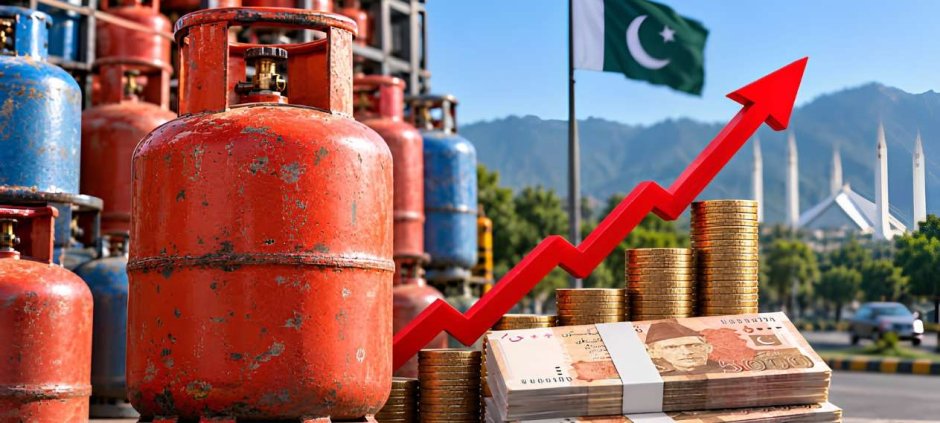
Pakistan’s Ministry of Petroleum has begun work on a new pricing policy for liquefied petroleum gas (LPG), aiming to improve price transparency, address artificial shortages and curb arbitrary increases in the domestic market.
The proposed framework would introduce a monthly import-parity pricing mechanism, linking LPG prices to the costs associated with importing the fuel into Pakistan. The model is intended to bring greater transparency to price determination and address concerns about excessive charges during periods of supply disruption.
According to a report published by Samaa News on October 28, the proposed policy would require approval from the Economic Coordination Committee (ECC) and the federal Cabinet.
However, separate reporting published the same day by The News indicated that the government was considering replacing the existing Saudi Aramco-based benchmark for locally produced LPG with Pakistan State Oil’s (PSO) landed import cost from November 1, 2026. The precise implementation arrangements and final policy details have yet to be clearly established in publicly reported information.
New LPG Pricing Formula Under Consideration
Under the proposed import-parity model, the government intends to establish a transparent formula for determining LPG prices each month.
Import-parity pricing generally takes into account the costs associated with bringing a product into the country. For LPG, these may include the international purchase price, transportation, insurance and other relevant import-related expenses.
According to the Samaa report, the proposed calculation would also factor in marine insurance costs covering potential maritime accidents.
The government’s stated objective is to improve the consistency of price-setting and reduce opportunities for artificial price increases when supplies become constrained.
Officials from the Ministry of Petroleum have maintained that adopting an import-parity mechanism is not intended to trigger an excessive increase in LPG prices.
Nevertheless, the exact effect on consumers will depend on the final pricing formula, the cost of imported cargoes, exchange-rate movements, supply conditions and the implementation of the proposed policy.
PSO Import Costs Could Become a New Benchmark
A separate report published by The News on October 28 said petroleum sector stakeholders had been informed about a potential change that would make PSO’s landed import cost the benchmark for locally produced LPG.
Under the reported proposal, the maximum price local producers could charge would be linked to the landed cost of PSO’s imported LPG cargoes rather than the existing ceiling based on Saudi Aramco’s Contract Price.
The report said the proposed change could take effect from November 1, although the petroleum minister was unavailable for comment when approached by the publication.
The two reports describe developments in the government’s effort to revise LPG pricing, but the precise formula and approval arrangements remain important points to clarify before consumers can determine the likely effect on prices.
Industry representatives have raised concerns about the potential consequences of linking domestic prices to a state-owned company’s import costs.
According to estimates cited by The News, the proposed mechanism could allow local producers to increase their prices by as much as 40%, potentially translating into a 20% to 25% increase in retail prices if implemented as described. These figures are industry estimates rather than a confirmed government forecast.
Stakeholders have also questioned how the mechanism would work if private companies could import LPG at a lower cost than PSO.
Pakistan Relies Heavily on Imported LPG
LPG is an important alternative fuel for households and businesses, particularly in areas without reliable access to piped natural gas.
Pakistan relies substantially on imports to meet its LPG requirements. Recent reporting has estimated that imports account for around 65% of the country’s overall supply, while a significant share of imported fuel has traditionally arrived through land routes.
The government is considering a greater role for maritime imports, with Saudi Arabia and Oman among the potential sources of additional supplies.
Moving more LPG through sea routes could help diversify supply arrangements and reduce dependence on vulnerable land-border routes. However, the effect on availability and prices would depend on shipping costs, port facilities, storage capacity, import contracts and the efficiency of distribution networks.
Marine insurance would also become a relevant part of the cost calculation for cargoes arriving by sea.
The proposed policy therefore involves two related challenges: establishing a pricing mechanism that reflects genuine supply costs and ensuring that the supply chain remains competitive and reliable.
Supply Disruptions Have Intensified Price Concerns
The policy discussions come amid serious concerns about LPG availability and overcharging ahead of winter.
On October 23, Reuters reported that the closure of key Pakistan-Iran border crossings had disrupted LPG imports, contributing to shortages and sharp price increases reported by traders.
LPG is particularly important during winter, when household energy requirements rise and some consumers face limited access to alternative fuels.
Supply interruptions can create pressure on distributors and consumers, especially when imported cargoes are delayed or transport routes become unavailable.
Earlier, on October 18, Dawn reported that the government had taken notice of alleged LPG hoarding and possible artificial shortages. Authorities were asked to coordinate efforts to improve supplies and ensure availability at notified prices.
These developments have strengthened calls for better monitoring, more reliable imports and a pricing system that reflects legitimate costs without allowing unjustified increases.
Industry Raises Questions About Competition and Transparency
While the government aims to improve transparency through the proposed pricing reforms, industry representatives have questioned whether a benchmark based on PSO’s import costs would protect consumers from unnecessary increases.
Stakeholders cited by The News argued that higher import costs could push domestic producers’ prices upwards even if private suppliers were able to obtain LPG at lower prices.
They also raised concerns about the legal basis of the proposed mechanism and the possibility that linking prices to a single state-owned importer could affect competition.
Some industry representatives have instead advocated greater deregulation, arguing that negotiations between buyers and sellers could help market competition determine prices.
The government, meanwhile, faces the challenge of ensuring sufficient supplies while protecting households from excessive charges.
A workable policy would need to define how import costs are calculated, which expenses are permitted, how different suppliers are treated and what safeguards would prevent overcharging or manipulation.
What the New LPG Policy Could Mean for Consumers
For households that depend on LPG cylinders, the immediate concern is whether the new mechanism will improve availability and prevent sudden price increases without making fuel more expensive.
A transparent formula could make the components of LPG pricing easier to understand. However, linking prices to import costs would not automatically guarantee lower prices, particularly when international prices, transport expenses or exchange rates increase.
The government will also need to address supply bottlenecks, monitor distributors and take action against proven cases of hoarding or sales above applicable notified prices.
Consumers should distinguish between the official price notifications and actual retail prices, which may differ where supply problems or enforcement failures occur.
As of October 28, 2026, Pakistan’s proposed LPG pricing reforms remain an evolving policy issue, with reports describing both a broader import-parity framework and a potential shift towards PSO’s landed import cost. The final policy details, formal approvals and implementation arrangements will determine how the changes affect producers, distributors and consumers.