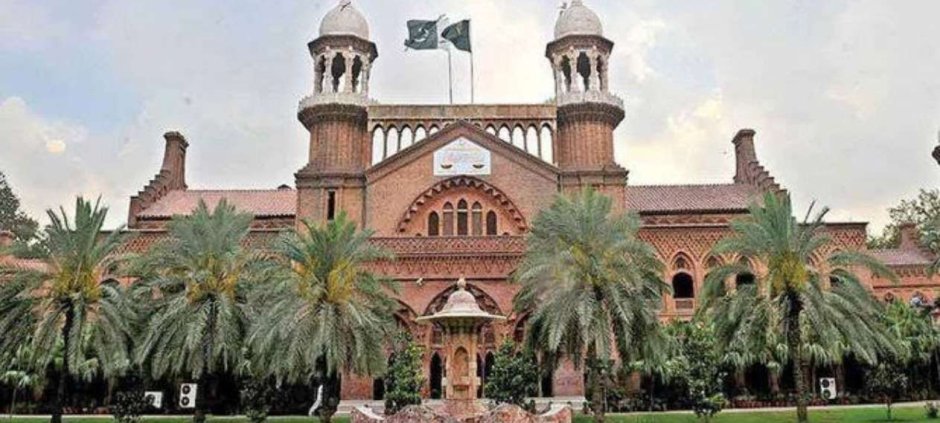
The Lahore High Court (LHC) has reduced Mehar Farhan’s life imprisonment sentence to the period he has already spent in custody, ruling that the circumstances of the murder case did not establish premeditation or a planned conspiracy. The court ordered his release after calculating his time served at 12 years, 11 months and two days, while maintaining the requirement to pay compensation to the deceased’s heirs.
Justice Muhammad Amjad Rafiq issued the verdict while partially allowing Farhan’s criminal appeal against the trial court’s decision. The ruling also highlighted questions about sentencing practices in Punjab and urged the provincial government to consider changes to the Punjab Sentencing Act, 2019.
The decision centres on the distinction between a murder committed following prior planning and a fatal incident arising from a sudden confrontation. The court reviewed the available evidence, eyewitness accounts and medical findings before modifying the legal basis of Farhan’s conviction and reducing his sentence.
Court Finds No Evidence of Premeditated Murder
According to the written judgment, the incident took place on July 10, 2020, during a sudden confrontation between two groups of boys. The court found no concrete evidence establishing that the murder had been planned in advance or that the accused had engaged in a formal conspiracy or prior consultation.
The judgment stated that Farhan struck the victim on the head with a hockey stick during the clash. The blow proved fatal, but the court concluded that the circumstances did not establish premeditation.
The court also examined the eyewitness accounts alongside the medical evidence presented during the proceedings. It found the eyewitness statements consistent with the medical findings, while determining that the case’s circumstances justified changing the legal classification of the offence for sentencing purposes.
The ruling did not erase the conviction. Instead, it altered the provision under which Farhan was convicted and revised the punishment in light of the court’s assessment of the incident.
Conviction Changed Under Pakistan Penal Code
The LHC modified Farhan’s conviction from Section 302(b) to Section 302(c) of the Pakistan Penal Code (PPC).
The two provisions have different sentencing implications. Section 302(b) concerns punishment for qatl-i-amd in circumstances where death or life imprisonment may be awarded as ta’zir, while Section 302(c) provides for a term of imprisonment that may extend to 25 years in cases where the punishment of qisas is not applicable, subject to the law’s other requirements.
In Farhan’s case, the court considered the sudden nature of the confrontation and the absence of established premeditation when deciding to alter the conviction and sentence.
After reviewing the period already served, the LHC held that his imprisonment of 12 years, 11 months and two days would constitute the sentence in the case.
Consequently, the previous life imprisonment term was set aside and replaced with the time Farhan had already spent in custody. The court ordered his release in accordance with the revised sentence.
Rs500,000 Compensation Order Remains in Effect
Although the LHC reduced the custodial sentence, it maintained the order requiring Farhan to pay Rs500,000 in compensation to the deceased’s heirs.
The judgment stated that failure to pay the compensation would result in an additional six months of imprisonment.
This means the reduction in the prison sentence did not cancel the financial obligation imposed by the court. The compensation order and the prescribed consequence for non-payment remain part of the verdict.
The court also directed that the trial court’s record be returned following the modification of the sentence.
The ruling demonstrates that the court treated the question of imprisonment separately from the compensation payable to the victim’s family.
LHC Urges Punjab to Review Sentencing Law
Beyond the individual appeal, Justice Muhammad Amjad Rafiq raised concerns about the legal framework used to determine sentences in serious criminal cases.
The court recommended that the Punjab government consider amending the Punjab Sentencing Act, 2019, to address its application to intentional murder cases and provide clearer guidance for sentencing decisions.
According to the judgment, cases involving offences for which the death penalty may be awarded under Section 302 fall outside the Act’s current scope. The court stressed that the legal nature of an offence should guide how the relevant sentencing provisions are applied.
The LHC also called for comprehensive guidelines on determining the minimum term of life imprisonment. It recommended that the Sentencing Council develop clear standards to help courts assess the appropriate duration of imprisonment and the circumstances relevant to reducing a sentence.
These proposals are intended to address uncertainty over how life sentences should be assessed and when judicial discretion may be exercised within the limits of the law.
Court Calls for a Separate Hearing Before Sentencing
The judgment also emphasised the importance of giving an accused person a separate opportunity to be heard before a sentence is imposed.
Such a hearing would allow the court to consider relevant circumstances before determining the appropriate punishment, in accordance with the applicable legal framework.
The recommendation forms part of the broader discussion about sentencing consistency, judicial discretion and the need for clear statutory guidance.
The LHC’s observations were recommendations for legal and procedural reform; they do not, by themselves, amend the existing law. Any changes to the Punjab Sentencing Act would require the appropriate legal process.
What the Verdict Means
Farhan’s appeal was partially accepted, his conviction was modified under the PPC, and his life imprisonment sentence was reduced to the 12 years, 11 months and two days he had already served. The court also ordered his release while retaining the Rs500,000 compensation requirement and the additional six-month imprisonment provision for non-payment.
The case has also brought renewed attention to the framework governing life sentences in Punjab, particularly the need for clearer sentencing guidelines and an opportunity for individual circumstances to be considered before punishment is determined.
The LHC has called on the provincial government to examine the relevant legislation and consider reforms that could provide clearer direction to courts dealing with serious criminal cases.
Also read: LHC Confirms Death Sentences in Motorway Rape Case