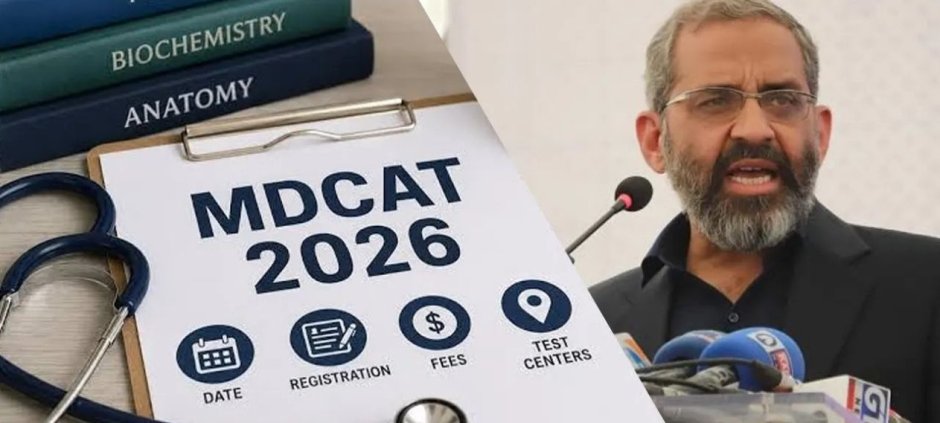
Jamaat-e-Islami (JI) has demanded an independent audit of the approximately Rs. 1.26 billion collected by the Pakistan Medical and Dental Council (PMDC) for the Medical and Dental College Admission Test (MDCAT) 2026, raising concerns over financial transparency, examination arrangements and alleged irregularities.
In a letter addressed to PMDC President Prof. Dr. Rizwan Taj, JI Karachi chief Monem Zafar called for a comprehensive investigation into the examination held on September 20. He urged authorities to review the preparation and distribution of question papers, answer keys, examination procedures and allegations of possible result tampering.
The demands have brought renewed attention to the administration of the nationwide medical entrance examination, which determines admission opportunities for students seeking to enter medical and dental colleges.
Zafar also called for candidates to receive copies of their question papers for self-assessment and proposed that the top 100 candidates be retested by an independent third party to help address concerns about the examination process.
JI Questions Use of Rs. 1.26 Billion in Examination Fees
According to the letter cited in the report, a total of 138,158 candidates registered for MDCAT 2026 across Pakistan. Of these, 33,336 candidates were from Sindh, including 9,505 from Karachi.
The registration fee was Rs. 9,000 per candidate, while applicants registering late were charged Rs. 13,000.
Monem Zafar questioned how the approximately Rs. 1.26 billion collected through examination fees had been spent. He called on the PMDC to publish a detailed breakdown of the funds, including examination administration costs and other related expenses.
The demand centres on financial accountability and the need for candidates and their families to understand how fees collected for a major national examination are utilised.
An independently reviewed financial statement could provide information about the costs of preparing question papers, arranging examination centres, hiring staff, managing security and conducting other administrative activities.
However, the precise allocation of the collected amount has not been established in the report. A detailed breakdown from the PMDC would be needed to clarify the total expenditure and how the funds were distributed.
Karachi Examination Centres Face Criticism
JI also raised concerns about the number and location of examination centres established in Karachi.
According to Zafar, only two centres were arranged for the city’s 9,505 candidates, with both located on University Road. He said the arrangements created difficulties for students and parents because of heavy traffic congestion and ongoing construction work related to the BRT Red Line project.
The concerns highlight the logistical challenges of conducting a large examination in a city with a wide geographical spread and significant transport pressures.
Students travelling from distant neighbourhoods may need additional time to reach examination venues, while road construction and congestion can make arrival more difficult. Such circumstances can add stress for candidates preparing for an important admission test.
Zafar argued that the number of examination centres should be determined according to the number of candidates and the geographical needs of the city.
Comparison With Other Cities
The letter also compared Karachi’s arrangements with those reported in other major cities.
According to the figures cited by JI, Peshawar had 19 examination centres for 16,722 candidates, while Lahore had six centres for 12,064 candidates.
These figures were presented to question whether Karachi had been provided with sufficient examination facilities for its registered candidates.
The number of centres alone does not establish whether an examination was administered fairly or efficiently, as venue capacity and other logistical factors also matter. Nevertheless, publishing detailed information about centre allocation, candidate capacity and transport considerations could help clarify the planning decisions.
Questions Raised Over Examination Arrangements in Sindh
Zafar also questioned the decision to assign MDCAT examination arrangements in Sindh to IBA Sukkur.
He referred to previous complaints concerning the institution’s role in examinations conducted under the Sindh government and called for scrutiny of the arrangements made for MDCAT 2026.
The concerns form part of JI’s wider demand for an independent review of the examination process. However, the reported allegations do not by themselves establish that the examination was compromised or that any institution engaged in wrongdoing.
A transparent review could help establish whether the procedures followed were consistent with the relevant rules and whether any corrective measures are necessary.
Concerns Over Question Papers and Answer Keys
The letter also raised questions about instructions issued shortly before the examination requiring candidates to return their question papers.
According to Zafar, the instruction was introduced around 10 days before the test and differed from previous practice. He argued that the change created concerns for candidates who wanted to review their performance after completing the examination.
JI also referred to complaints regarding answer keys for Biology, Chemistry and Physics, particularly for Paper Codes A and D.
Answer keys are an important part of the post-examination process because candidates use them to assess their responses and understand their likely performance. Questions about disputed answers can create uncertainty, especially when students believe a question may have more than one defensible answer or that a key contains an error.
Providing clear procedures for reporting disputed answers, reviewing objections and publishing final answer keys could help address such concerns.
JI’s demand for question papers to be made available to candidates is intended to support self-assessment and allow students to compare their responses with the published answers.
Students Report Long Waiting Hours and Limited Facilities
Another issue raised in the letter concerned the conditions at examination centres, including long waiting periods and reportedly inadequate facilities.
According to the account cited by JI, candidates were instructed to report at 6:30 a.m., while the three-hour examination began at around 10 a.m. at some centres and 10:30 a.m. at others.
As a result, students reportedly spent seven to eight hours at examination venues.
The letter stated that temperatures ranged from 40°C to 43°C and that some candidates were seated under cloth marquees with limited facilities and insufficient fans.
Such conditions can be particularly challenging during a high-stakes examination, when candidates need adequate seating, ventilation, drinking water and clear communication about schedules.
The reported delays and facilities have therefore become part of the broader call for improvements in examination management.
Clear reporting times, timely commencement of papers and appropriate arrangements for extreme temperatures could help reduce unnecessary pressure on candidates and their families.
Demand for Independent Retesting of Top Candidates
Among the key proposals put forward by JI is the retesting of the top 100 candidates through an independent third party.
Zafar also called for a comprehensive investigation into paper preparation, distribution, answer keys and allegations of possible result tampering.
An independent review could examine the procedures used to maintain examination security, verify results and address complaints. Any decision to conduct additional testing, however, would need to be assessed under the applicable examination rules and relevant legal and administrative requirements.
The demand for retesting is a proposal from JI and should not be interpreted as confirmation that the results were manipulated or that candidates obtained their scores improperly.
The PMDC’s response and any findings from an official review would be important in determining whether the allegations warrant further action.
PMDC Response and Transparency Remain Important
The demands have placed the focus on how the MDCAT examination was organised, how fees were spent and what procedures are available to candidates who dispute examination arrangements or results.
The concerns raised by JI include financial disclosure, the number and location of examination centres, access to question papers, answer-key disputes, waiting times and the proposed independent retesting of high-scoring candidates.
The allegations and proposals require assessment against official records and any response from the PMDC. The information provided in the report does not establish that financial misconduct, result tampering or deliberate examination irregularities occurred.
Publishing an itemised account of examination expenditure, explaining centre-allocation decisions and clarifying procedures for reviewing answer-key objections could help address questions raised by candidates and their families.
As calls for an audit continue, the next steps will depend on the response from the relevant authorities and whether a formal review is initiated.
Also read: MDCAT 2026: JI Demands Independent Retest