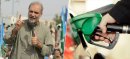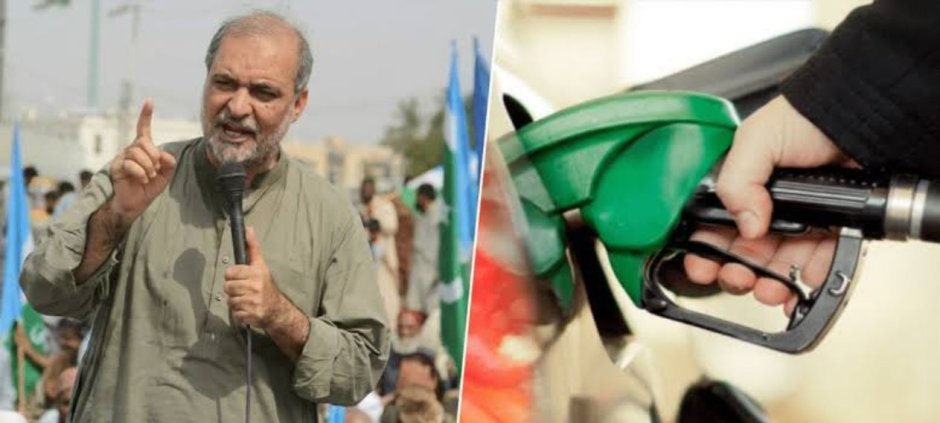
The Jamaat-e-Islami (JI) and the federal government have moved closer to reaching an agreement on petroleum price relief following their 10th round of negotiations in Islamabad.
Both sides have agreed on the broad outlines of a draft agreement aimed at expanding relief measures for petroleum consumers, particularly low-income households. However, the final agreement remains pending, with further consultations expected before a decision is announced.
JI has warned that it could resume its planned long march towards Islamabad if negotiations fail to produce a concrete commitment to abolish the petroleum levy.
JI Demands Immediate Abolition of Petroleum Levy
Speaking after Tuesday’s meeting, JI Deputy Emir Liaquat Baloch said the party had consistently demanded the removal of the petroleum levy to reduce the financial burden on ordinary consumers.
Baloch stated that the government had acknowledged the legitimacy of JI’s demand and had started working on a framework to address the issue.
However, the party wants the levy abolished immediately rather than relying solely on a gradual reduction.
“Our demand is that the levy should be abolished immediately and the public should be given clear relief,” Baloch said.
He also criticised the government for not reducing its own expenditures while transferring the burden of the Federal Board of Revenue’s (FBR) shortcomings to consumers.
Relief Proposed for Small Vehicles and Farmers
During the negotiations, JI proposed expanding existing petroleum relief measures to cover vehicles with engine capacities of up to 1,000cc.
The party also called for extending relief to the agricultural sector, arguing that farmers and small vehicle owners are among those affected by rising fuel expenses.
According to Baloch, both sides agreed that existing relief measures should be expanded, particularly to support households facing financial difficulties.
The proposals are intended to provide broader assistance to consumers who depend on petrol and diesel for daily transportation, agricultural activities and other essential needs.
Government to Consult IMF on Petroleum Levy Reduction
The government has reportedly started preparing a plan to meet its revenue requirements while gradually reducing the petroleum levy.
According to Baloch, officials intend to consult the International Monetary Fund (IMF) before finalising the proposed framework.
The government is expected to share further details about the plan after these consultations.
The IMF’s position is important because petroleum-related taxes and levies contribute to government revenue and are linked to Pakistan’s broader fiscal commitments.
However, no final timeline or confirmed reduction schedule has been announced so far.
Prime Minister’s Meeting Could Decide Long March
Another round of negotiations was expected on Wednesday or Thursday, according to Baloch.
A final decision on the proposed agreement could follow a meeting between Prime Minister Shehbaz Sharif and JI chief Hafiz Naeemur Rehman.
The outcome of that meeting may determine whether the party continues negotiations or resumes its planned long march towards Islamabad.
Baloch said JI remained committed to peaceful political engagement but would withdraw from the negotiations if the government showed no willingness to make meaningful progress.
The party has maintained that the petroleum levy must be abolished to provide direct relief to consumers.
Government Confirms Constructive Discussions
The federal government has also confirmed the latest negotiations.
Deputy Prime Minister and Foreign Minister Ishaq Dar held a follow-up meeting with a JI delegation led by Liaquat Baloch to discuss petroleum prices and possible relief measures.
According to a statement issued by the Deputy Prime Minister’s Office, both sides held constructive discussions on ways to support consumers, particularly low-income households.
Dar welcomed the positive engagement and reiterated the government’s commitment to supporting ordinary citizens amid economic challenges.
The meeting was attended by Adviser to the Prime Minister on Inter-Provincial Coordination Rana Sanaullah, Special Assistant to the Prime Minister Tariq Bajwa, the special secretary of the Petroleum Division and an additional secretary of the Finance Division.
JI delegation members Syed Firasat Shah, Nasrullah Randhawa and Inayatullah Khan also participated in the discussions.
JI Claims Protests Secured Fuel Price Relief
Baloch credited the party’s protests and public campaign with helping prevent further petroleum price increases and securing fuel-related relief.
He claimed that the campaign had helped deliver relief of Rs146 per litre on diesel and Rs120 per litre on petrol.
He said the negotiations had now reached the stage where final decisions were required from the government.
These figures represent claims made by the JI leader during the negotiations.
How JI’s Petroleum Levy Campaign Started
JI intensified its campaign against the petroleum levy in August, organising demonstrations and sit-ins across Pakistan.
The party raised concerns about rising fuel prices, inflation and what it described as an additional tax burden on consumers.
On August 16, JI workers staged sit-ins outside governors’ houses in provincial capitals, demanding the withdrawal of the petroleum levy and lower petrol prices.
On September 3, the government and JI agreed to establish technical committees to examine proposals for reducing the levy and petroleum prices.
During their first round of negotiations on September 7, JI submitted six proposals but maintained that its protests would continue until meaningful relief was provided.
Final Agreement Still Awaited
Despite progress in the 10th round of negotiations, the proposed agreement has not yet been finalised.
The next discussions and a possible meeting between Prime Minister Shehbaz Sharif and Hafiz Naeemur Rehman are expected to play an important role in determining the outcome.
For consumers, the key question remains whether the government will agree to abolish the petroleum levy or introduce a gradual reduction plan after consulting the IMF.
Until a final decision is announced, the existing petroleum levy arrangements will remain in place.
Also read: Pakistan Weighs Major Reduction in Petroleum Levy