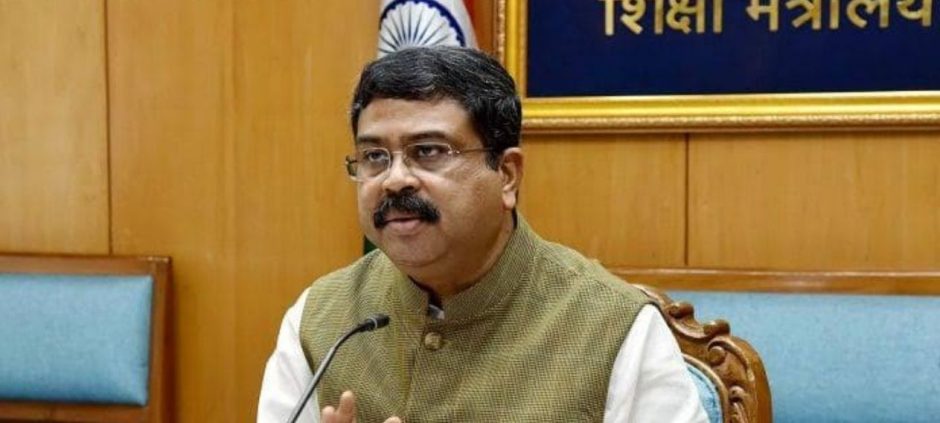
India’s Union Education Minister Dharmendra Pradhan resigned on Saturday following weeks of nationwide protests over the alleged NEET-UG 2026 paper leak, amid mounting pressure from students and opposition parties demanding accountability.
Pradhan confirmed that he had submitted his resignation to Prime Minister Narendra Modi, saying the decision was made in the larger interest of students and the country’s future. The controversy surrounding the medical entrance exam has triggered one of the largest student-led protest movements during Modi’s tenure.
Thousands of students have been demonstrating since June, accusing authorities of failing to prevent examination irregularities. Protesters staged a major sit-in at Delhi’s Jantar Mantar, while the movement gained momentum with the formation of the satirical Cockroach Janata Party (CJP), which became a symbolic platform for students seeking education reforms.
The protests have disrupted Parliament’s monsoon session, with opposition lawmakers backing calls for greater transparency and accountability. Authorities also shut down multiple Delhi Metro stations for several days in an attempt to limit access to protest sites.
In his resignation letter, Pradhan said he had spent more than four decades working in education and remained committed to ensuring students were not “trapped in a web of confusion.” He thanked Prime Minister Modi for the opportunity to serve and reaffirmed his commitment to public service.
The former minister said the government acted swiftly after irregularities surfaced by transferring the investigation to the Central Bureau of Investigation (CBI), cancelling the original examination, and announcing a fresh test. He also revealed that from next year, NEET will be conducted entirely in Computer-Based Test (CBT) mode to strengthen transparency and reduce the risk of future paper leaks.
Pradhan maintained that protecting the interests of more than two million students remained the government’s top priority throughout the crisis. He added that while he accepted responsibility for the controversy, he believed his resignation would allow students to focus on their education without further political distractions.
The Indian government is also preparing stricter anti-paper leak legislation, including Special Fast-Track Courts and a dedicated Special Task Force (STF), to prevent similar examination scandals in the future.
Aalso read: PHA Chairman terms union protest as blackmailing