The Inter Board Coordination Commission (IBCC) has approved several changes to Pakistan’s examination and equivalence system, including greater flexibility for students from foreign examination boards seeking Science Group equivalence.
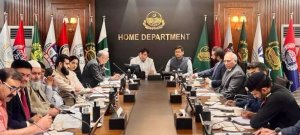
The decisions were taken during the commission’s 184th Forum meeting in Murree, where officials discussed reforms aimed at improving the examination system, strengthening transparency and making Pakistani qualifications more compatible with international standards.
One of the key decisions provides greater flexibility to foreign-board students who have studied science subjects as part of their qualifications.
Foreign-board students to get easier science equivalence
Under the revised framework, students from foreign examination boards who have passed at least two science subjects will be eligible to receive Science Group equivalence.
The change is expected to provide greater flexibility to students with international or foreign-board qualifications who want to have their academic credentials recognized under Pakistan’s equivalence system.
Equivalence is particularly important for students seeking admission to Pakistani educational institutions, as their foreign qualifications may need to be matched with the relevant local education group.
The latest decision could therefore make the process more accessible for students whose subject combinations differ from those traditionally followed under Pakistan’s examination system.
More religious seminaries added to equivalence framework
The IBCC Forum also recommended the inclusion of 12 additional Deeni Madaris for SSC and HSSC equivalence.
With the latest recommendation, the total number of institutions covered under the relevant equivalence framework will rise to 26.
The expansion is aimed at providing a wider pathway for students from recognized religious seminaries to obtain equivalence for their qualifications at the secondary and higher secondary levels.
This can help eligible students pursue further education within Pakistan’s formal academic system.
B-Form and CNIC numbers to be added to certificates
Another decision taken by the commission concerns the identification and verification of academic records.
The IBCC agreed to include B-Form or CNIC numbers on SSC and HSSC certificates.
The measure is intended to make academic records easier to identify, access and verify.
Including a unique identification number on certificates could also help authorities and educational institutions distinguish between records belonging to individuals with similar names and improve the overall management of academic documentation.
Scholarships and overseas opportunities for toppers
The commission also approved plans to provide scholarships and overseas exposure opportunities to board toppers.
In addition, winter and summer camps will be organized for high-achieving students.
These camps are expected to provide students with opportunities for additional learning, leadership development and broader exposure beyond their regular classroom studies.
The initiatives are part of a wider effort to recognize academic achievement and provide talented students with opportunities to further develop their skills.
Focus on conceptual learning
The two-day IBCC Forum meeting also focused on reforms to Pakistan’s examination system.
Participants discussed the need to move away from an examination culture heavily focused on rote learning and toward assessment methods that place greater emphasis on conceptual understanding.
The forum also considered measures aimed at improving transparency and uniformity across Pakistan’s examination system.
Another key objective discussed during the meeting was strengthening the international recognition of Pakistani qualifications.
Such reforms could help make academic assessment more consistent while ensuring that students are evaluated on their understanding and application of concepts rather than simply their ability to memorize information.
Examination boards participate in reforms
Chairpersons of Boards of Intermediate and Secondary Education (BISEs) from across Pakistan participated in the meeting.
Representatives from technical education boards and senior officials from curriculum and textbook boards also attended the two-day forum.
Their participation brought together representatives from different parts of Pakistan’s examination and education structure to discuss reforms affecting students at multiple levels.
The discussions covered both equivalence policies and broader examination-system improvements, reflecting the IBCC’s role in coordinating standards among examination boards.
Changes aim to improve recognition and access
The latest decisions represent a series of measures intended to make Pakistan’s examination and equivalence system more flexible and easier to manage.
For foreign-board students, the decision to allow Science Group equivalence after passing at least two science subjects could provide a more accessible route for recognition of their qualifications.
At the same time, the expansion of the Deeni Madaris equivalence framework, inclusion of B-Form or CNIC numbers on certificates, and new opportunities for high-achieving students are aimed at improving access, verification and academic development.
The IBCC has also placed emphasis on modernizing assessment practices by promoting conceptual learning and reducing reliance on rote memorization.
The reforms discussed at the Murree meeting are expected to contribute to a more transparent, uniform and internationally recognizable examination system while addressing some of the practical challenges faced by students seeking equivalence in Pakistan.
Also read: IBCC Halts Matric and Intermediate Certificate Checks: Details