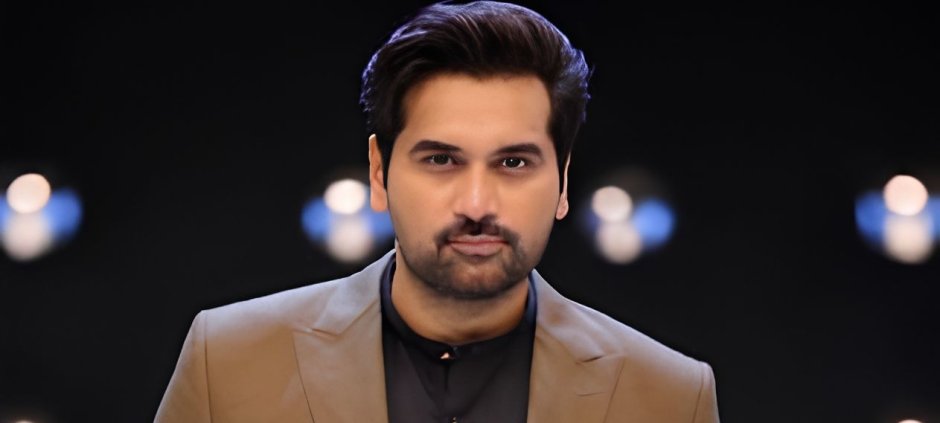
Pakistani actor and producer Humayun Saeed has urged the government to support the development of a homegrown over-the-top (OTT) streaming platform, arguing that a stronger local streaming industry could help Pakistani dramas and films reach wider audiences, including international viewers.
In an interview with host Ali Salman, Saeed discussed the distinctive style of Pakistani television dramas, the challenges facing the country’s streaming industry, the growing role of social media in discovering new talent and the lessons he learnt while working on Netflix’s The Crown.
The actor believes Pakistan should focus on developing its own streaming platform instead of relying entirely on international services such as Netflix. He argued that a local platform could give filmmakers, writers and actors more opportunities to showcase their work and develop content suited to digital audiences.
Saeed also called on the government to give the entertainment sector greater importance and support its growth. His comments have renewed discussion about the future of Pakistan’s digital entertainment industry and the opportunities available to local productions in international markets. Sources: The Express Tribune and Dawn Images.
Humayun Saeed Wants Pakistan to Build Its Own OTT Platform
Saeed believes Pakistan needs a dedicated streaming platform where local productions can reach audiences beyond traditional television.
He pointed to India’s experience, where domestic streaming services developed alongside the expansion of international platforms. In his view, establishing a stronger local streaming industry could create opportunities for original productions and help Pakistani creators gain experience with formats designed specifically for online audiences.
“Where there will be a platform, things will be made,” Saeed said during the interview, emphasising the relationship between streaming infrastructure and content production.
He suggested that once Pakistani filmmakers have a dedicated space to showcase their work, successful productions could eventually attract the attention of international platforms.
Saeed also urged the government to take a more active role in supporting the industry, saying greater official attention was needed to help the sector develop.
His proposal places the focus on building the local entertainment ecosystem rather than depending solely on overseas companies to select and distribute Pakistani content.
Why Pakistani Dramas Have Their Own Identity
Discussing the possibility of Pakistani dramas appearing on Netflix, Saeed said local productions have a distinctive identity shaped by their writing, dialogue delivery and use of Urdu.
He explained that Pakistani dramas follow particular storytelling traditions and performance styles that distinguish them from many international streaming productions.
Saeed acknowledged that OTT platforms often feature content with different storytelling approaches, including edgier themes and formats. However, he maintained that existing Pakistani dramas could also find an audience internationally.
He said that if the discussion concerned taking already-produced Pakistani dramas to Netflix, he believed local content had its own style and appeal.
The actor also suggested that political considerations might influence Netflix’s approach to Pakistan, although he acknowledged that he was unsure when Pakistani productions might become available on the platform.
His remarks highlighted two related issues: the challenge of getting Pakistani content onto major international services and the importance of creating domestic platforms that can serve local audiences while developing internationally competitive productions.
Social Media Is Creating Opportunities for New Actors
Saeed also discussed how social media has changed the process through which aspiring actors can attract attention from the entertainment industry.
He recalled that newcomers traditionally depended on auditions, meetings with directors and opportunities to rehearse before securing roles.
Platforms such as TikTok and other short-video services now allow performers to showcase their abilities directly to large audiences. This can help aspiring actors gain visibility without relying entirely on traditional routes into the industry.
Saeed cited Hania Aamir as an example, recalling that he first noticed her through Dubsmash before she was cast in a drama.
He believes online platforms can reveal talent, but cautioned that popularity in short videos does not necessarily demonstrate an actor’s ability to perform in a scripted production.
Performing a complete scene requires different skills, including delivering dialogue, responding to co-stars and maintaining character throughout a sequence.
His comments suggest that social media can serve as a useful starting point for discovering new performers, while professional productions remain important for assessing their acting abilities.
Humayun Saeed Reveals How He Entered Showbiz
During the interview, Saeed also reflected on his own unconventional entry into the entertainment industry.
He said he had been helping manage factories belonging to Nadeem Ahmad before receiving an opportunity to audition for an acting role.
According to Saeed, Ahmad had enjoyed a celebratory event that Saeed organised, featuring different performances. The experience encouraged Ahmad to suggest that he attend an audition.
Saeed followed the advice and subsequently secured a drama role, beginning a career that eventually established him as one of Pakistan’s prominent television and film performers.
His account illustrates how opportunities and personal connections can open doors, although building a lasting career also requires continued work and experience.
The story also connects with his comments about social media, where aspiring performers can now make themselves visible to producers and casting professionals through different channels.
What The Crown Taught Him About Professionalism
Saeed discussed his experience portraying Dr Hasnat Khan in Netflix’s historical drama The Crown, describing the production as an important learning opportunity.
He said the experience taught him the value of discipline, detailed planning and professionalism on a major production.
Saeed recalled how transport, make-up, meals and call times were carefully organised, allowing cast members to know exactly when they needed to arrive and return to set.
He also praised his co-star Elizabeth Debicki for her focus and commitment to her work.
According to Saeed, the production’s clear schedules helped maintain an organised working environment and allowed actors to concentrate on delivering their scenes.
He contrasted that experience with what he viewed as less structured practices in Pakistan’s entertainment industry.
His observations highlighted the importance of production planning, punctuality and professional coordination in improving the efficiency of filming.
Saeed’s comments also suggest that developing Pakistan’s streaming industry would involve more than launching a digital platform. Consistent production standards, planning and investment would be important in creating content capable of competing internationally.
‘I Do Not See Myself as a Star’
Despite his success as an actor and producer, Saeed said he does not consider himself a star and views acting as his profession.
He explained that he prefers to work in his own way, enjoys producing projects and keeps his social circle relatively small.
Saeed named fellow actors Fahad Mustafa and Fawad Khan when discussing what he considers stardom, while describing his own work as a professional pursuit rather than a measure of celebrity status.
The remarks offered a more personal perspective on the actor, whose career includes television dramas and successful film projects.
His recent credits include the romantic comedy Love Guru, released in 2025 and directed by Nadeem Baig, alongside Mahira Khan. He also appeared in the television drama Main Manto Nahi Hoon in 2025.
Saeed has additionally been associated with the Jawani Phir Nahi Ani film franchise, with a third instalment reportedly in development.
Can a Local OTT Platform Help Pakistani Entertainment Grow?
Saeed’s proposal raises an important question about how Pakistan can expand its digital entertainment market while preserving the identity of its local productions.
A homegrown streaming service could provide another distribution channel for Pakistani dramas, films and original series. It could also give producers opportunities to experiment with different episode lengths, storytelling formats and genres that may not fit traditional television schedules.
However, establishing a successful platform would require investment in technology, content production, marketing, distribution rights and a sustainable business model.
The service would also need to attract viewers willing to use it regularly, whether through subscriptions, advertising or a combination of revenue streams.
International recognition would depend on additional factors, including production quality, compelling storytelling, translation and subtitles, licensing arrangements and the ability to reach audiences outside Pakistan.
Saeed’s central argument is that strengthening the local industry could provide a foundation for broader international opportunities. Rather than assuming that global streaming platforms will automatically take Pakistani dramas, he believes the country should create stronger conditions for producing and distributing its own content.
Also read: Humayun Saeed Awards and Achievements in Entertainment