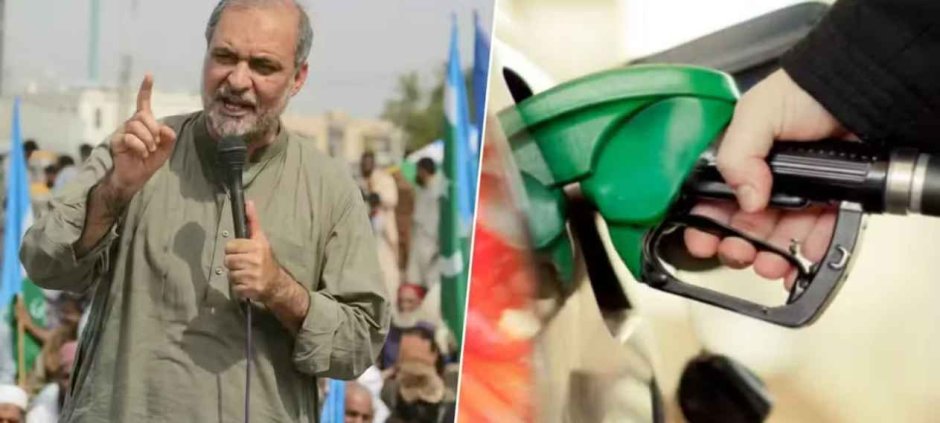
The government has agreed to provide fuel cost relief to farmers, public transport operators, and certain vehicle owners. However, it has refused to abolish the petroleum levy, according to Jamaat-e-Islami (JI).
The development followed another round of discussions between JI representatives and government officials on Tuesday. Acting JI Emir Liaquat Baloch shared the details during a press conference.
The meeting took place with Deputy Prime Minister and Foreign Minister Ishaq Dar. Discussions focused on reducing the financial burden caused by rising fuel prices.
Baloch said negotiations over removing the petroleum levy had reached their final stage. He added that the government had acknowledged several demands raised by JI.
Government Considers Relief for Farmers and Transporters
According to Baloch, the government has accepted the validity of JI’s demands. These demands were presented through a six-point proposal and a nationwide protest campaign.
The proposed relief would cover the agriculture sector, public transport, and selected vehicle categories. However, the exact implementation details have not been finalised.
Baloch said officials would complete their working on oil refinery profits and the gradual removal of the petroleum levy. This work was expected to be completed on Monday.
A working paper was also scheduled for preparation on Tuesday. JI Emir Hafiz Naeem ur Rehman will review the final draft agreement.
He will then announce the party’s next course of action. The announcement will depend on the contents of the proposed agreement.
Government Has Not Confirmed Petroleum Levy Removal
Despite JI’s statements, the government has not officially confirmed an agreement to abolish the petroleum levy.
The Foreign Office described the discussions as candid and constructive. It said both sides discussed possible relief for low-income citizens affected by rising energy costs.
Officials also agreed to continue discussions over the coming days. However, the government did not announce a final decision regarding the levy.
During negotiations, government representatives explained that international oil prices influence domestic fuel rates. They also said global petroleum prices were increasing.
Officials maintained that authorities had already provided the maximum possible relief under existing conditions.
What the Proposed Fuel Relief Means for Citizens
For now, petrol and diesel prices remain unchanged. No immediate reduction will take place until both sides reach a final agreement.
If the proposed relief is approved, farmers and transport operators could receive benefits. Certain vehicle owners may also qualify under the proposed arrangements.
The possible removal of the petroleum levy remains another major issue. However, the government has not agreed to end the levy so far.
The levy is an important source of government revenue. According to earlier reports, authorities aim to collect Rs. 1.6 trillion through the petroleum levy during FY2026-27.
In other related news also read Why Every Fuel Litre Costs Pakistanis Rs130 More
Further discussions will determine whether the proposed relief moves forward. Citizens will have to wait for an official announcement regarding any changes to fuel prices.