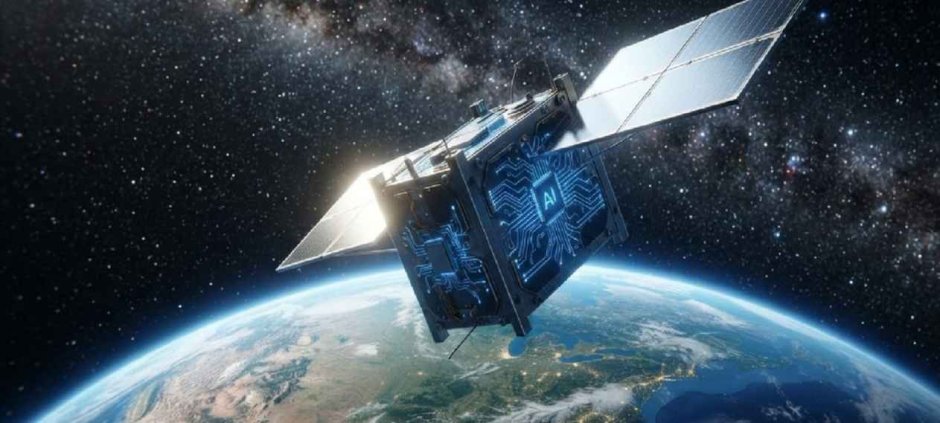
Google has launched a refrigerator-sized satellite to test artificial intelligence computing in space. The mission is part of Project Suncatcher.
The research project aims to explore whether satellites can support AI computing systems. The latest satellite carries four Tensor Processing Units, also known as TPUs.
These specialized chips are designed to handle artificial intelligence workloads. Google will use the mission to study their performance under space conditions.
The satellite will run a version of Google’s Gemma AI model during testing. However, the system can operate for only about 15 minutes at a time.
The limited operating period is linked to heat management challenges. Managing heat is one of the biggest difficulties for computing systems in space.
Google will examine how its TPUs respond to several extreme conditions. These include launch stress, radiation and significant temperature changes.
The company has broader plans for space-based computing. It wants to eventually develop clusters of satellites that operate as orbital data centers.
These proposed data centers would use solar power to support their computing operations. Multiple satellites could work together as a connected computing network.
Future satellites could carry dozens of TPUs each. They could also communicate with other satellites and Earth through laser connections.
Google plans to launch two additional satellites next year. Those missions will help test communication between orbital computing systems.
The current satellite was developed with satellite company Planet. It was launched aboard a SpaceX rocket as part of the experimental mission.
The satellite is expected to operate for around one year. During this period, engineers will collect data about its performance in orbit.
Several challenges could limit the development of orbital AI data centers. Cooling remains one of the most important technical issues.
Traditional data centers use air or water systems to remove excess heat. These approaches cannot operate normally in the vacuum of space.
Google is testing alternative methods to manage heat from its chips. The company is exploring pipes and radiators for this purpose.
Repairs could create another major challenge for space-based computing. Technicians cannot easily access satellites when equipment fails.
Launching computing hardware into orbit also remains expensive. These costs could make orbital data centers difficult to operate commercially.
Google has said space-based data centers are unlikely to become cheaper than Earth-based facilities soon. The company does not expect that within five years.
Other companies are also researching AI computing in space. Starcloud previously launched an Nvidia H100 chip into orbit.
SpaceX has also discussed deploying satellites designed for orbital AI computing. Such deployments could begin as early as 2028.
For now, Google considers Project Suncatcher a long-term research effort. The company does not expect it to replace traditional data centers soon.
The project could still provide important information about AI infrastructure beyond Earth. Google will use the results to assess the technology’s future potential.
In other related news also read Google Announces New Job Openings in Pakistan
As testing continues, Google will study whether orbital computing can become practical. The findings could shape future plans for AI data centers in space.