The Gilgit-Baltistan (GB) government has launched a free outpatient health insurance programme to provide essential medical services to financially disadvantaged families, with approximately 67,000 people expected to benefit from its initial phase.
The initiative, known as the OPD Sehat Hifazat Card, is being implemented by the GB Health Department with financial and technical support from the German government through KfW, a German state-owned development bank.
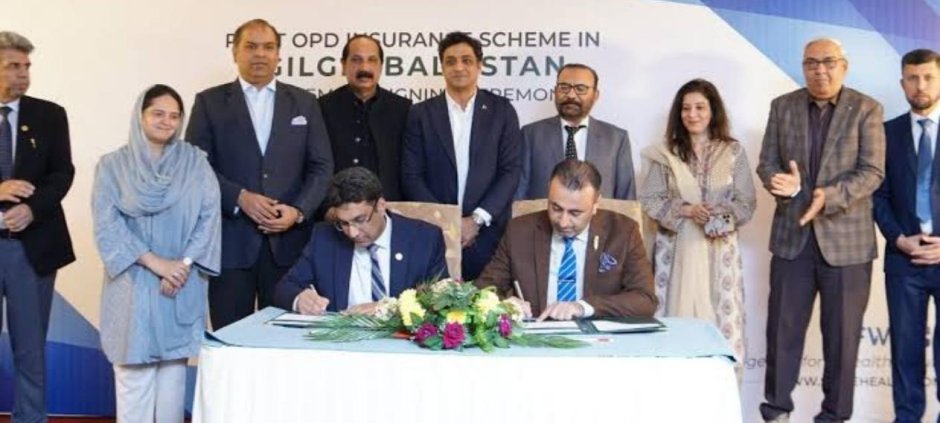
The pilot programme was officially launched at a ceremony held at the Chief Minister’s Secretariat on November 1, 2026, coinciding with Gilgit-Baltistan’s Independence Day.
Chief Minister Amjad Hussain attended the ceremony alongside Assembly Deputy Speaker Malik Kifayatur Rehman, Health Minister Iqbal Hassan, other provincial ministers, the health secretary and representatives of partner organisations.
The initiative aims to improve access to routine healthcare for deserving families by reducing the financial burden associated with outpatient medical treatment.
GB Launches OPD Sehat Hifazat Card for 67,000 People
The initial phase of the programme will cover approximately 67,000 deserving people in Gilgit district.
Under the scheme, eligible beneficiaries will receive free outpatient healthcare services through OPD Sehat Hifazat Cards.
Chief Minister Amjad Hussain said the initiative marked an important milestone in strengthening primary healthcare services across the region.
He explained that the government’s objective was to ensure that financially disadvantaged families could access essential medical facilities without facing an unbearable financial burden.
The pilot project will initially focus on Gilgit, with plans to extend the programme to additional districts in phases.
The gradual expansion is intended to increase healthcare coverage and provide more residents with access to essential medical services.
The government has described the initiative as part of its broader efforts to establish a universal healthcare system in Gilgit-Baltistan.
What Services Will the Free OPD Health Card Cover?
The OPD Sehat Hifazat Card is designed to help beneficiaries access outpatient medical treatment without paying the full cost of essential services themselves.
OPD stands for Outpatient Department, where patients receive medical consultations, examinations and treatment without being admitted to a hospital.
The programme is intended to cover key services, including:
- Medical consultations: Access to doctors for routine examinations and medical advice.
- Diagnostic tests: Essential investigations to help identify and monitor health conditions.
- Medicines: Access to prescribed medicines included under the programme’s coverage arrangements.
These services are particularly important for low-income families who may delay medical consultations or diagnostic tests because of financial difficulties.
The initiative focuses on outpatient care, which is different from health insurance programmes designed primarily to cover hospital admissions and inpatient treatment.
However, the precise list of covered procedures, participating hospitals, individual coverage limits and service conditions should be confirmed through the GB Health Department and the programme’s official arrangements.
German Government and KfW Support Healthcare Initiative
The programme is being implemented with support from the German government through KfW, its state-owned investment and development bank.
The international partnership is intended to strengthen healthcare financing and improve access to outpatient medical services for financially vulnerable communities.
The pilot project forms part of the wider Social Health Protection Initiative in Gilgit-Baltistan.
Earlier project documentation and reporting on the initiative described a funding arrangement in which KfW would provide 90% of the pilot’s financing, while the GB government would contribute the remaining 10%.
The earlier reported project allocation exceeded Rs407 million. <Cite refs={[“turn455777search2″,”turn455777search7”]}/>
Chief Minister Amjad Hussain welcomed Germany’s assurance of continued cooperation during the third and fourth phases of the project.
He said the partnership would help strengthen healthcare services and improve the overall health system in the region.
Continued international support could also assist the government in extending the programme beyond its initial pilot location.
Government Plans to Expand Healthcare Coverage Across GB
The Gilgit-Baltistan government has identified the introduction of a universal healthcare system as one of its priorities.
The initial OPD insurance programme is expected to provide a foundation for expanding access to essential medical facilities across the region.
At present, the pilot is focused on deserving people in Gilgit district. The government plans to extend it to other districts in subsequent phases.
Such an expansion could help residents in more remote communities access medical consultations and diagnostic services without having to bear the full cost themselves.
Improving access to primary healthcare is particularly important in mountainous and geographically remote areas, where travelling to medical facilities can be difficult and expensive.
The programme is intended to address part of this challenge by strengthening financial protection for eligible households seeking outpatient care.
However, the expansion will depend on funding arrangements, administrative preparations and the availability of participating healthcare providers.
Cooperation With Sindh to Facilitate Free Treatment
The chief minister also discussed plans to strengthen cooperation between the Sindh government and the Gilgit-Baltistan Health Department.
According to his remarks, the arrangement is intended to facilitate free treatment for deserving patients from Gilgit-Baltistan at major hospitals in Sindh.
This cooperation could provide additional treatment options for patients who require medical facilities or specialist services that may not be readily available in their home districts.
The proposed coordination also reflects the importance of interprovincial cooperation in improving healthcare access for residents of remote regions.
The government has indicated that these efforts will be pursued alongside its wider plans to improve medical facilities within Gilgit-Baltistan.
New Medical College Expected to Begin Classes Next Year
During the ceremony, Chief Minister Amjad Hussain also discussed plans for a proposed medical college in Gilgit-Baltistan.
He said classes at the institution were expected to begin next year, creating additional opportunities for talented local students interested in pursuing medical education.
The proposed institution is intended to help address the shortage of doctors in the region by developing local medical professionals.
Gilgit-Baltistan’s geographical challenges can make healthcare staffing difficult, particularly in remote districts where access to specialist doctors and medical facilities is limited.
Expanding local medical education could help increase the number of trained professionals available to serve communities across the region.
The chief minister said providing opportunities for local students to pursue medical education remained an important part of the government’s broader healthcare objectives.
Who Will Benefit From the OPD Sehat Hifazat Card?
The first phase of the programme is expected to benefit around 67,000 deserving people in Gilgit district.
The initiative is intended primarily for financially disadvantaged families who face difficulties paying for routine medical treatment.
However, detailed eligibility criteria, individual coverage limits and the complete beneficiary verification process have not been specified in the reported launch announcement.
The government has also not provided a dedicated public registration procedure in the available announcement.
Residents should therefore wait for official instructions from the GB Health Department regarding beneficiary selection, card distribution, participating hospitals and the process for accessing treatment.
People should avoid relying on unofficial registration links or paying individuals claiming to guarantee inclusion in the programme.
What the Free OPD Insurance Scheme Means for Gilgit-Baltistan
The launch of the OPD Sehat Hifazat Card represents an additional effort to improve access to essential healthcare services for financially vulnerable families.
By covering outpatient services, the initiative aims to address medical expenses that households frequently face when seeking consultations, diagnostic tests and prescribed medicines.
The initial target of approximately 67,000 beneficiaries provides a starting point for the programme, while the planned expansion to other districts could extend its benefits to a larger population.
The partnership with Germany and KfW also provides an important source of support for the region’s healthcare development efforts.
For now, Gilgit district will serve as the pilot location, with further expansion planned in phases.
The programme’s long-term effectiveness will depend on the quality of participating healthcare services, smooth card distribution, transparent beneficiary selection and continued financial support.
Also read: Landslides Block Key Roads Across Gilgit-Baltistan