Pakistan is showing signs of improved financial stability, with foreign exchange reserves reaching record levels, international credit-rating upgrades and a strong stock market performance. However, these improvements have yet to translate into meaningful relief for ordinary citizens, according to a Bloomberg report.
Despite progress in the country’s external financial position, households and businesses continue to face high energy costs, heavy taxation, expensive borrowing and limited investment opportunities. Economists have also questioned whether the current recovery can be sustained without continued support from international lenders.
The State Bank of Pakistan (SBP) has reported foreign exchange reserves of approximately $21.5 billion, while the government is targeting an increase to $25 billion by June 2027. Pakistan has also secured improved sovereign credit ratings and returned to international capital markets through major bond issuances.
However, these developments contrast with the economic pressures experienced by households, including rising living expenses, electricity costs and limited purchasing power.
The central issue facing Pakistan is whether improvements in financial indicators can develop into sustainable economic growth, higher incomes and better employment opportunities.
Pakistan’s Foreign Exchange Reserves Reach $21.5 Billion
One of the most significant improvements in Pakistan’s economic position has been the recovery of its foreign exchange reserves.
The State Bank of Pakistan held approximately $21.52 billion in foreign exchange reserves as of October 23, 2026. Total liquid foreign exchange reserves, including commercial banks’ holdings, stood at approximately $26.75 billion.
The improvement represents a substantial recovery from the difficult external financial position Pakistan experienced in early 2023, when the central bank’s reserves had fallen below $3 billion.
SBP Governor Jameel Ahmad has projected that the central bank’s reserves could reach $25 billion by the end of June 2027.
The target is expected to strengthen the country’s ability to meet external payment obligations and manage pressure on the balance of payments.
The increase in reserves has been supported by foreign exchange purchases, remittances, improved external account conditions and access to international financing.
However, maintaining these gains will require continued foreign exchange earnings, export growth, financial discipline and effective management of external debt obligations.
International Credit Rating Agencies Upgrade Pakistan
Pakistan has also received improved sovereign credit ratings from major international agencies, reflecting progress in economic stabilisation and external financial management.
In July 2026, S&P Global Ratings upgraded Pakistan’s long-term sovereign credit rating from B- to B, maintaining a stable outlook.
Moody’s Ratings followed in August by upgrading Pakistan’s rating from Caa1 to B3, also with a stable outlook.
These improvements reflect expectations of stronger foreign exchange reserves, fiscal adjustments and progress under Pakistan’s International Monetary Fund programme. <Cite refs={[“turn434159search2″,”turn434159search5”]}/>
Credit-rating upgrades can improve a country’s standing among international investors and potentially make it easier to obtain financing from global markets.
However, Pakistan’s ratings remain below investment grade, meaning the country continues to face substantial borrowing risks and remains dependent on the implementation of economic reforms.
The upgrades therefore represent progress rather than a complete resolution of the country’s financial challenges.
Pakistan Raises Billions Through International Borrowing
Pakistan has also returned to international capital markets, seeking to diversify its financing sources and reduce its dependence on traditional external support.
In September 2026, the government raised $3 billion through a dual-tranche Eurobond issuance, marking its largest single international capital-market transaction.
The bond sale attracted nearly $6 billion in investor orders, indicating renewed interest among international institutional investors.
The issuance included a $1.75 billion bond with a 5.5-year maturity and a $1.25 billion bond with a 10-year maturity. <Cite refs={[“turn434159search0″,”turn434159search4”]}/>
Finance Minister Muhammad Aurangzeb has said Pakistan plans to continue accessing global debt markets while diversifying its financing arrangements.
The government is also seeking to reduce its reliance on large bilateral deposits and financial support from friendly countries, including Saudi Arabia, China and the United Arab Emirates.
Earlier this year, Pakistan approached the United States for a proposed $10 billion Exchange Stabilisation Support Facility.
However, increasing borrowing options does not automatically resolve the country’s debt problems. New loans create repayment obligations, making it important for Pakistan to generate enough foreign exchange through exports, remittances and investment.
IMF Agreement Provides Additional Financial Support
Pakistan’s economic stabilisation efforts continue to depend significantly on its agreement with the International Monetary Fund.
On October 7, 2026, the IMF announced a staff-level agreement with Pakistani authorities following the fourth review under the Extended Fund Facility and the third review under the Resilience and Sustainability Facility.
The agreement could unlock approximately $1.21 billion in additional financing, subject to approval by the IMF Executive Board.
If approved, the disbursement would bring total payments under the two arrangements to approximately $5.7 billion.
The IMF acknowledged that Pakistan had maintained macroeconomic stability despite elevated energy prices and international economic uncertainties. It also highlighted improvements in foreign exchange reserves and renewed access to international capital markets. <Cite refs={[“turn426542search0″,”turn426542search1”]}/>
However, former finance minister Miftah Ismail has warned that Pakistan’s dependence on external financing remains a serious vulnerability.
He argued that restricting domestic demand to strengthen external accounts could place additional pressure on economic growth and household incomes.
Ismail also suggested that Pakistan could require another IMF programme after its current arrangements expire if structural economic problems remain unresolved.
Interest Rate Increased to 12% Amid Inflation Concerns
Pakistan’s economic outlook has also come under pressure from rising international energy prices and regional geopolitical developments.
On October 26, 2026, the State Bank increased its policy rate by 50 basis points to 12%, effective October 27.
The central bank said the decision was influenced by worsening inflation risks, including higher global energy prices and concerns about wheat supplies.
The increase represents an additional challenge for businesses and individuals who rely on bank financing.
Higher borrowing costs can discourage private investment, increase financing expenses for businesses and make loans more expensive for consumers.
Although monetary tightening can help control inflation and reduce pressure on imports, it can also slow economic activity when businesses are already facing high operating costs. <Cite refs={[“turn426542search9″,”turn426542search11”]}/>
October Inflation Eases but Household Costs Remain High
Pakistan’s latest inflation figures show that consumer inflation eased to 9.6% in October from 10.3% in September.
According to the Pakistan Bureau of Statistics, the monthly Consumer Price Index increased by 1.1% during October.
Although the annual inflation rate declined, prices remained significantly higher than a year earlier.
Transport costs increased by 28.61% year-on-year, while the housing, water, electricity, gas and fuels category recorded an annual increase of 11.03%.
These figures help explain why many households continue to experience financial pressure despite improvements in broader economic indicators.
A slower inflation rate does not mean that prices have returned to previous levels. It means the pace at which prices are increasing has moderated. <Cite refs={[“turn426542search4″,”turn426542search6”]}/>
Why Ordinary Pakistanis Have Yet to Feel the Recovery
The gap between financial stability and household prosperity remains one of Pakistan’s biggest economic challenges.
Improved foreign exchange reserves can strengthen the country’s ability to pay for imports and meet international obligations. Credit-rating upgrades can improve investor confidence, while a stronger stock market can attract investment.
However, these developments do not automatically increase household salaries, create jobs or reduce the cost of essential goods and services.
For ordinary citizens, economic improvement is more likely to be felt through higher employment opportunities, affordable electricity, manageable food prices, better purchasing power and increased household income.
Businesses are also facing challenges from taxation, regulatory requirements, expensive energy and high financing costs.
Economists have argued that Pakistan’s large informal economy needs better tax coverage and a more effective regulatory framework.
High corporate and personal income taxes, together with expensive energy, can discourage businesses from expanding and investing in productive activities.
The challenge is to improve government revenue without placing an excessive burden on businesses and salaried individuals.
Political and Security Challenges Affect Investor Confidence
Pakistan’s economic recovery is also unfolding amid domestic political uncertainty and renewed security concerns.
Protests by supporters of jailed former prime minister Imran Khan have continued to create political tensions, while militant violence in Khyber Pakhtunkhwa and Balochistan has raised concerns about the security environment.
Such conditions can influence investor decisions, particularly when businesses are considering long-term investments in infrastructure, manufacturing and other productive sectors.
The government is also attempting to benefit from improved diplomatic relations with international partners and its role in regional diplomatic efforts.
However, geopolitical developments can create both opportunities and risks for Pakistan’s economy, especially through changes in international oil prices, trade conditions and financing arrangements.
The IMF has also identified geopolitical tensions, volatile energy prices and tighter global financial conditions among the risks facing Pakistan’s economic outlook. <Cite refs={[“turn938713search2″,”turn938713search0”]}/>
Stock Market Rally Raises Questions About Long-Term Stability
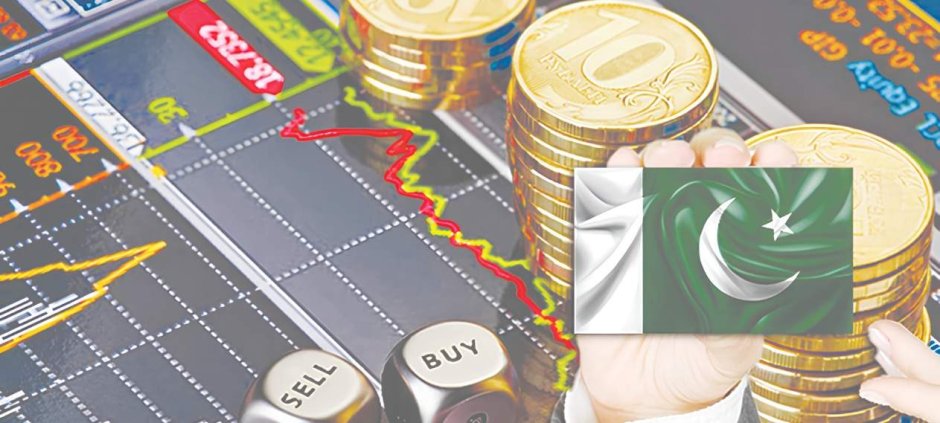
Pakistan’s stock market has experienced a major rally since 2023, providing another indication of improved investor sentiment.
According to the Bloomberg report, the benchmark KSE-100 index has gained more than 300% since 2023.
The rally has been supported by improving macroeconomic indicators, currency stability and confidence associated with Pakistan’s IMF programme.
However, market gains do not necessarily reflect improvements in the financial position of every household or business.
A stock market rally primarily benefits investors who own shares, directly or through investment funds. People who do not participate in financial markets may experience little direct benefit from rising share prices.
International investor Mattias Martinsson said that he was encouraged by the improved currency position and stock market performance but questioned whether the gains could remain sustainable without continued IMF support.
His concern highlights the importance of building economic strength through productive investment rather than relying mainly on external financial assistance.
Exports, Remittances and Investment Needed for Sustainable Growth
Economists believe Pakistan must improve its ability to generate foreign exchange independently if it wants to reduce its reliance on international borrowing.
Shakil Anwer Kamal, a Karachi-based economist and capital markets expert, argued that expanding borrowing sources alone would not resolve the country’s structural economic problems.
He identified exports, remittances, foreign direct investment, productivity and fiscal reforms as important areas for sustainable improvement.
Pakistan’s textile industry, agriculture, information technology and manufacturing sectors could contribute to increased export earnings if supported by reliable energy supplies, competitive costs and improved business conditions.
The government also needs to encourage private-sector investment and address barriers that prevent companies from expanding their operations.
The World Bank has projected Pakistan’s economic growth at approximately 3.8% for FY2027, while warning that high energy costs and limited progress on structural reforms could restrict stronger growth. <Cite refs={[“turn938713search3”]}/>
Can Pakistan’s Economic Recovery Benefit Ordinary Citizens?
Pakistan’s improving financial indicators represent progress in addressing the economic instability experienced in recent years.
Higher foreign exchange reserves, improved credit ratings, renewed access to international markets and continued IMF support have strengthened the country’s external financial position.
Nevertheless, the benefits of this improvement will depend on whether the government can translate financial stability into stronger economic activity.
Reducing energy costs, improving tax administration, encouraging private investment, increasing exports and creating employment opportunities will be essential for a broader recovery.
The latest inflation figures also demonstrate that lower inflation does not necessarily mean that household expenses have become affordable.
Pakistan therefore faces a critical challenge: maintaining macroeconomic stability while ensuring that economic growth reaches ordinary citizens through better incomes, employment and purchasing power.
Until that happens, the country’s improving financial indicators may continue to coexist with the economic difficulties experienced by millions of households.
Also read: Pakistan Beats Global Odds, Ranked 2nd Emerging Economy