Skip to main contentSkip to footer
Opens in a new tab
  • Home
  • Contact
The Neutral
  • Latest
  • Pakistan
    • Azad Jammu & Kashmir
    • Balochistan
    • Gligit-Baltistan
    • Khyber-Pakhtunkhawa
    • Punjab
    • Sindh
  • Business
  • World
  • Life & Style
  • Technology
    • Gadgets
    • Games
    • Phone Tech
  • Sports
    • Cricket
    • Football
    • Hockey
    • Others
  • Gold
The Neutral
  • Home
  • Latest
  • Pakistan
  • Business
  • World
  • Technology
  • Life & Style
  • Health
  • Sports
  • Opinion
  • Gold
  • Packages
  • Contact
  • About Us
  • Privacy Policy
  • Terms of Service
  • Latest
  • Pakistan
    • Azad Jammu & Kashmir
    • Balochistan
    • Gligit-Baltistan
    • Khyber-Pakhtunkhawa
    • Punjab
    • Sindh
  • Business
  • World
  • Life & Style
  • Technology
    • Gadgets
    • Games
    • Phone Tech
  • Sports
    • Cricket
    • Football
    • Hockey
    • Others
  • Gold

Expert Warns Karachi’s Heat Could Become a Major Hazard

  • Kabeer
  • Pakistan
  • Jun 5, 2026
Expert Warns Karachi’s Heat Could Become A Major Hazard

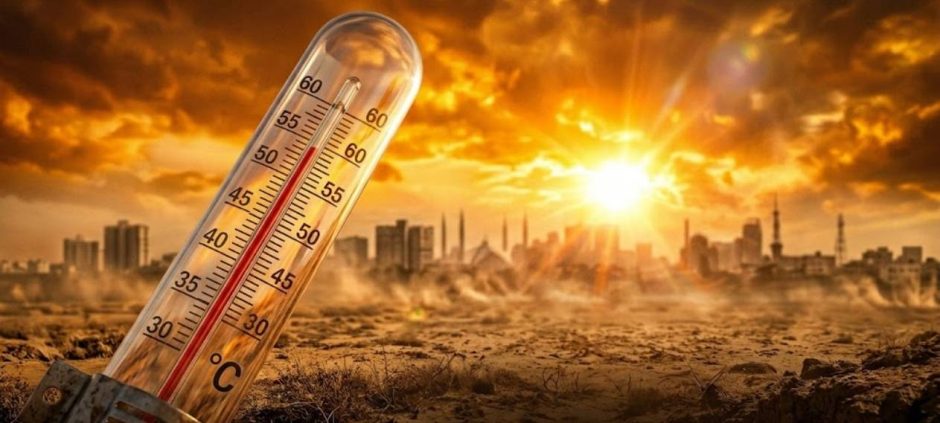
Karachi’s worsening urban heat is emerging as a serious public health concern, with experts warning that immediate action is needed to prevent a larger crisis. According to Prof. Zafar Fatmi, the city’s growing heat intensity is being driven by both climate change and rapid urban expansion, making daily life increasingly difficult for residents.

Speaking about the issue, Prof. Fatmi, who leads environmental occupational health and climate change research at Aga Khan University, said Karachi’s landscape is changing in ways that trap more heat. Expanding concrete structures, dense construction, traffic congestion, shrinking green spaces, and widespread tree loss are causing urban areas to absorb and retain higher temperatures than surrounding regions.

Recent research highlights the scale of the problem. A 2026 multi-city study found that Karachi recorded the strongest urban heat island effect among major Pakistani cities. The study showed an urban-rural temperature difference of approximately 4.5 degrees Celsius, linking reduced vegetation cover with rising land surface temperatures across the city.

The impact is even more severe at ground level. Research conducted in Karachi revealed that delivery riders, rickshaw drivers, and other outdoor workers often experience temperatures significantly higher than official weather readings, particularly when working under direct sunlight. Prof. Fatmi noted that signs of heat stress are already becoming more common, including dehydration, headaches, dizziness, fatigue, poor sleep, and fainting episodes.

The risks are especially high for vulnerable groups such as children, elderly citizens, pregnant women, traffic police officers, street vendors, construction workers, delivery riders, and residents living in poorly ventilated homes. Individuals suffering from heart disease, diabetes, kidney disorders, lung conditions, and high blood pressure are also more susceptible to heat-related illnesses.

Prof. Fatmi warned that the situation becomes even more dangerous when extreme heat combines with Karachi’s air pollution. He stressed that the city urgently needs a comprehensive heat-health action plan featuring public awareness campaigns, shaded bus stops, drinking water stations, cooling centers, school heatwave guidelines, and improved hospital preparedness. He also called for long-term measures including protecting trees, expanding green spaces, reducing unnecessary concrete development, improving public transport, controlling emissions, and making heat assessments mandatory for major urban projects.

Also read: Karachi Heat Index Nears 50°C amid Rising Heatwave

Kabeer

Related News

ADB Approves $468 Million for Flood and Water Projects in Pakistan
6 hrs ago|2:46 pm

ADB Approves $468 Million for Flood and Water Projects in Pakistan

LHC Rules Underage Girls Cannot Live With Husbands
6 hrs ago|2:40 pm

LHC Rules Underage Girls Cannot Live With Husbands

Gold Prices Rise 1.8% in Dubai After Sharp Decline
7 hrs ago|2:33 pm

Gold Prices Rise 1.8% in Dubai After Sharp Decline

Punjab Distributes 662 Laptops and 441 Scholarships to Students
7 hrs ago|2:26 pm

Punjab Distributes 662 Laptops and 441 Scholarships to Students

Trending News

  • LGES Opens Teaching Opportunities Across 14 Subjects in Lahore
    1 day ago|8:14 pm
    LGES Opens Teaching Opportunities Across 14 Subjects in Lahore
  • Arif Patel Praises UAE Leadership for Dubai’s Global Success
    1 day ago|4:40 pm
    Arif Patel Praises UAE Leadership for Dubai’s Global Success
  • Punjab Approves Reconstruction of Two Major Rawalpindi Roads
    Nov 23, 2026|7:02 pm
    Punjab Approves Reconstruction of Two Major Rawalpindi Roads

Recent News

  • ADB Approves $468 Million for Flood and Water Projects in Pakistan
    ADB Approves $468 Million for Flood and Water Projects in Pakistan
    Pakistan
  • LHC Rules Underage Girls Cannot Live With Husbands
    LHC Rules Underage Girls Cannot Live With Husbands
    Pakistan
  • Gold Prices Rise 1.8% in Dubai After Sharp Decline
    Gold Prices Rise 1.8% in Dubai After Sharp Decline
    Pakistan
  • Punjab Distributes 662 Laptops and 441 Scholarships to Students
    Punjab Distributes 662 Laptops and 441 Scholarships to Students
    Pakistan
  • Punjab Issues 27,000+ E-Challans for Over-Speeding
    Punjab Issues 27,000+ E-Challans for Over-Speeding
    Pakistan
  • Punjab to Distribute CM E-Bikes to Students From December 15
    Punjab to Distribute CM E-Bikes to Students From December 15
    Pakistan
The Neutral
Get the latest Pakistan news, business updates, technology, health, sports, lifestyle, entertainment, opinions, gold rates, currency rates, film gossip, and trending stories all in one place.
Categories
  • Pakistan
  • Technology
  • Business
  • Sports
  • World
  • Health
  • Cricket
  • Football
  • Hockey
Quick Links
  • Community Registration Form
  • Terms of Service
  • Privacy Policy
  • Packages

© 2026 The Neutral - All Rights Reserved.

Developed & maintained by WPFellow
×
Next Up
NEPRA Approves Rs1.19 Per Unit Increase in Electricity

NEPRA Approves Rs1.19 Per Unit Increase in Electricity