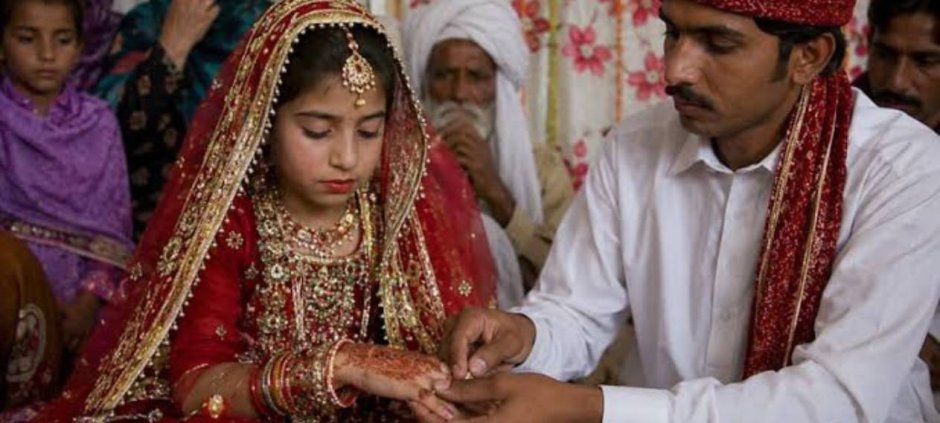
The Lahore High Court (LHC) has ruled that underage girls cannot legally reside with their husbands following marriage, even if they entered into the marriage willingly. The court observed that a minor’s consent alone does not establish a legal right to live with her husband.
In a nine-page written judgment, Justice Tariq Saleem Sheikh set aside orders issued by a magistrate concerning two underage girls. However, the court directed that both girls remain in shelter homes until the next hearing while further proceedings are carried out.
The ruling highlights the legal requirements surrounding child marriages, the authority of magistrates and the need to protect the rights and welfare of underage girls.
LHC Says Minor’s Consent Does Not Override the Law
Justice Tariq Saleem Sheikh observed that even if an underage girl enters into a marriage of her own free will, her consent does not automatically give her the legal right to live with her husband.
The court maintained that a girl below the age of 18 residing with her husband after marriage is contrary to the law. It emphasised that the wishes of a minor cannot be treated as the only or decisive factor when determining her residence or custody.
The judgment makes clear that legal protections applicable to minors must be considered independently of their statements or willingness to enter into a marriage.
The court’s observations underline that cases involving underage girls require proper legal assessment rather than decisions based solely on whether a girl expresses a desire to live with her husband.
Magistrate Cannot Order Shelter Placement Without Legal Authority
The LHC also examined the authority of magistrates to order the placement of underage girls in Dar-ul-Aman facilities.
Justice Sheikh clarified that a magistrate must possess the necessary legal authority before making such an order. Simply recording a girl’s statement does not provide sufficient legal grounds to direct her placement in a shelter home.
The court therefore set aside the magistrate’s earlier orders concerning the two girls.
The judgment highlights the importance of following proper legal procedures in matters involving minors, particularly when decisions affect their custody, accommodation and personal circumstances.
Forced Detention Cannot Replace Proper Legal Proceedings
The Lahore High Court further observed that keeping a girl in a Dar-ul-Aman against her will cannot be treated as a substitute for proper judicial proceedings.
According to the judgment, decisions concerning underage girls must be made after considering their individual circumstances and overall welfare.
The court emphasised that several factors must be taken into account, including:
- The girls’ wishes and personal circumstances.
- Their safety and protection.
- Access to education.
- Suitable accommodation arrangements.
- Their overall welfare and best interests.
The observations indicate that neither a minor’s consent to marriage nor automatic placement in a shelter home should replace a lawful judicial assessment.
Sessions Judge Directed to Meet Girls and Submit Report
Although the LHC set aside the magistrate’s orders, it did not direct the immediate release of the two girls or their handover to their husbands.
Instead, the court issued interim directions requiring both girls to remain in Dar-ul-Aman until the next hearing.
The sessions judge of Multan has been directed to meet the girls individually and prepare a report covering their ages, safety and accommodation arrangements.
The judge has also been asked to examine whether alternative residential arrangements are available for them.
The assessment must ensure that the girls’ welfare and best interests remain central to any decision about their future residence.
Court Emphasises Legal Protection and Welfare of Minors
The ruling reinforces the need for proper legal authority and judicial scrutiny in cases involving underage marriages, custody and residential arrangements.
By setting aside the magistrate’s orders while maintaining interim shelter arrangements, the LHC has highlighted that decisions concerning minors must follow established legal procedures.
The matter will be taken up again at the next hearing after the sessions judge submits the required report.
The court’s directions are intended to ensure that the circumstances of both girls are examined individually and that their safety, education and welfare are properly considered before further orders are issued.
Also read: LHC Confirms Death Sentences in Motorway Rape Case