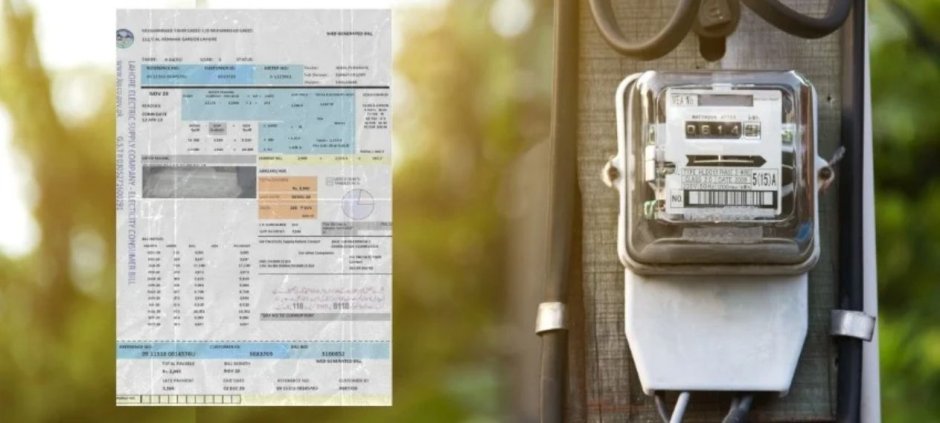
Pakistan’s federal government is planning to abolish the additional electricity charges formula for certain consumers who use more than 200 units per month. Federal Minister for Energy Awais Leghari shared the proposal during a Senate session, saying the government intends to remove the additional charges for six months for consumers whose monthly consumption exceeds 201 units.
The proposed change aims to address concerns about the current electricity tariff system, particularly for households whose bills can increase sharply after crossing the 200-unit threshold. However, the announcement describes a government plan, and the final implementation details and effective date have not been provided.
Why Are Electricity Bills a Concern for 200-Unit Consumers?
During the Senate discussion, Senator Abid Sher Ali highlighted the financial pressure electricity bills place on millions of Pakistanis, including consumers who qualify for protected tariffs.
He questioned why a household could face a significant increase in its bill after using just one additional unit beyond the 200-unit limit. He also raised concerns about whether ordinary consumers were bearing the financial impact of electricity theft and losses within power distribution companies.
In response, Leghari said electricity tariff slabs were necessary but acknowledged that the existing system created difficulties that needed to be addressed.
The proposed six-month relief is intended to change how additional charges affect consumers crossing the specified consumption threshold. The exact method for calculating bills under the proposed arrangement will depend on the government’s final policy details.
Government Reviews Electricity Relief System
Leghari said the number of consumers using up to 200 units of electricity had reached approximately 20 million. He also noted that many households in this category were using solar energy.
The government is working on a system that would determine electricity relief according to household poverty levels rather than relying entirely on the number of units consumed.
Under such an approach, assistance could be linked more closely to a household’s financial circumstances. However, the eligibility criteria, assessment method and implementation timeline have not yet been specified in the announcement.
The proposed approach could change how electricity subsidies are distributed, but consumers should wait for an official notification before assuming that their bills or tariff categories will change.
Circular Debt Falls to Rs1,670 Billion
The energy minister also discussed the financial position of Pakistan’s power sector. He said circular debt had declined to Rs1,670 billion.
According to Leghari, the government aims to eliminate circular debt within the next four years. He also said the debt servicing surcharge associated with circular debt would be abolished.
Circular debt develops when payments between electricity consumers, distribution companies, power producers and other participants in the energy supply chain do not fully cover their obligations. It has remained a major financial challenge for Pakistan’s power sector.
Removing the debt servicing surcharge would be a separate policy step from the proposed six-month change to additional charges for consumers crossing the 200-unit threshold. The government has not provided a confirmed date for the surcharge’s removal in the information shared during the Senate session.
Energy Ministry Budget Support Reduced
Leghari further said the Energy Ministry had received Rs1,180 billion in budgetary support when the current government took office. According to the minister, that support had fallen to Rs700 billion in the current fiscal year.
He also reported that annual losses recorded by power distribution companies, commonly known as DISCOs, had been reduced. However, he acknowledged that consumers had not yet received the full benefit of these improvements.
Reducing distribution losses can help improve the financial position of the power sector. Whether those savings eventually lead to lower consumer bills will depend on tariff decisions, subsidy arrangements and other government policies.
What Should Electricity Consumers Know?
For now, the proposed six-month relief remains subject to official implementation details. Consumers should not assume that additional charges have already been removed from their bills.
The government will need to clarify which consumers qualify, how the revised formula will work and when the change will take effect. Any final decision should be confirmed through an official notification from the relevant authorities.
The Senate discussion has highlighted concerns about electricity affordability, tariff thresholds and the financial burden on households. The proposed relief, alongside the government’s stated plans for circular debt and distribution losses, could form part of wider efforts to address pressure on electricity consumers.
Also read: NEPRA Reviews Rs2.56 Electricity Price Hike Request