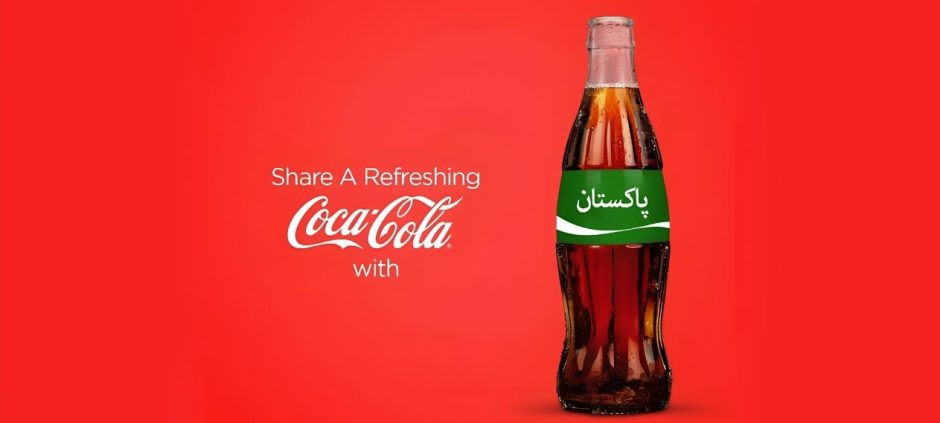
For 73 years, Coca-Cola has been more than a global beverage brand in Pakistan. Over the decades, it has become part of the country’s everyday material culture, appearing in family gatherings, music, fashion, street art, cinema and modern cultural expression.
The journey began in 1953, when Coca-Cola entered Pakistan at a time when the country was still shaping its identity as a young nation. What initially arrived as an international product gradually became localized through Pakistani traditions, social customs and creative expression.
Today, Coca-Cola operates seven production units across Pakistan, directly employing more than 2,100 people while contributing to economic activity across its wider value chain.
From Urban Novelty to Household Tradition
When Coca-Cola’s iconic glass bottle appeared in cities such as Lahore and Karachi during the early 1950s, it found a natural place within Pakistan’s strong culture of hospitality.
Offering guests something cold and refreshing has long been an important part of South Asian social traditions, particularly during the intense summer heat. The glass Coca-Cola bottle fitted naturally into that ritual.
The familiar sound of a crown cap opening, the fizz of the drink and condensation on the glass bottle became recognizable elements of everyday gatherings.
Over time, Coca-Cola bottles began appearing alongside traditional Pakistani food at family occasions and became common at roadside dhabas and informal gatherings.
The bottle also became part of the baithak culture, where workers, students and intellectuals would gather to discuss politics, society and culture over cold drinks.
When the Brand Entered Pop Culture
Coca-Cola’s influence eventually moved beyond consumption and into Pakistan’s visual and popular culture.
During the 1960s, the brand’s distinctive red-and-white identity began appearing alongside local artistic styles. Truck artists incorporated Coca-Cola imagery into Pakistan’s famous truck-art tradition, placing it alongside Urdu poetry, floral patterns and portraits of popular singers.
By the 1970s, the brand’s visual identity had even found its way into Pakistani fashion.
The term “Coca-Cola cut” became associated with an hourglass-style silhouette for the kurti and shalwar kameez, inspired by the distinctive shape of the vintage Coca-Cola bottle.
This reflected how an international commercial design had been translated into a local fashion vocabulary.
The Noor Jehan Connection
One of the most memorable examples of Coca-Cola becoming part of Pakistani popular culture came through cinema and music.
The legendary Noor Jehan sang the famous 1984 Lollywood track “Zalima Coca-Cola Pila De” for the film Chan Te Soorma.
The song transformed Coca-Cola into part of a playful romantic expression, combining a modern commercial product with traditional Punjabi linguistic and cultural references.
Its popularity helped embed the phrase in Pakistan’s popular imagination, where it continued to be heard at weddings, celebrations, radio broadcasts and public gatherings.
Coke Studio Changes the Cultural Conversation
Perhaps the most significant chapter in Coca-Cola’s cultural journey in Pakistan began in 2008 with the launch of Coke Studio.
The music platform brought together artists from different generations and musical traditions, including Sufi performers, folk singers, classical musicians and contemporary rock and hip-hop artists.
Coke Studio also gave greater visibility to regional languages and musical traditions, including Siraiki, Balochi, Pashto, Sindhi and Punjabi.
Rather than simply presenting music as commercial entertainment, the platform became closely associated with the revival and modernization of Pakistan’s diverse musical heritage.
Today, Coke Studio is described as one of Pakistan’s major cultural exports, reaching audiences in more than 184 countries and generating billions of views globally.
A Shared Cultural History
The story of Coca-Cola in Pakistan demonstrates how global brands can become localized through everyday cultural experiences.
From glass bottles sitting on roadside dhaba tables to references in Lollywood music, truck art, fashion and contemporary music, Coca-Cola has gradually become connected with several aspects of Pakistani social life.
The company’s latest Independence Day campaign, “Yahan Hai Pakistan,” builds on this history as Pakistan celebrates its 79th Independence Day.
The campaign presents Pakistan’s identity through the everyday moments where traditions, creativity and global influences meet.
After more than seven decades, Coca-Cola’s story in Pakistan is therefore not simply about a beverage. It is also about how a global product became intertwined with local rituals, artistic expression and cultural memories shared across generations.
Also read: Coke Studio Season 15 Opens With “Aayi Aayi”