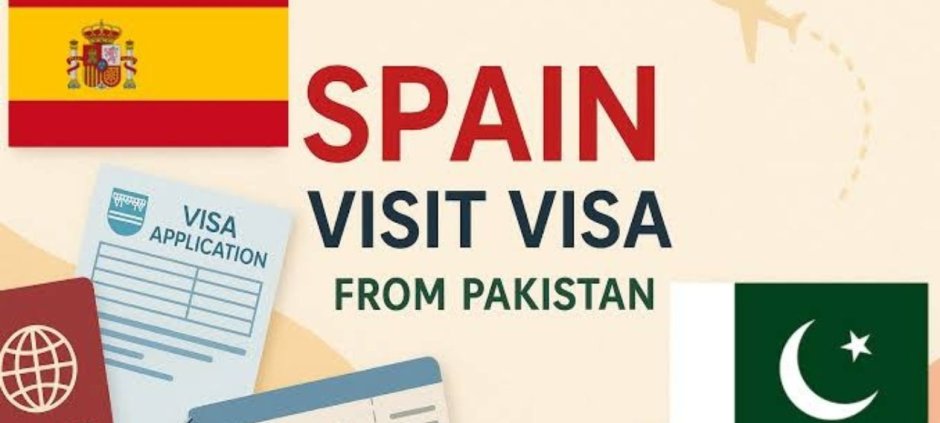
Spain has called for stronger air links with Pakistan to increase bilateral trade and improve business relations. Spanish Ambassador to Pakistan Carlos Aragon has urged both countries to prioritize direct flights, saying better air connectivity could create new opportunities for businesses and investors.
Speaking to members of the business community at the Faisalabad Chamber of Commerce and Industry (FCCI), Aragon also promised to simplify visa processing. He said business applicants would receive priority so they could obtain visas without unnecessary delays.
The ambassador highlighted several areas where Pakistan and Spain could work together, including trade, investment, education, renewable energy and textile recycling.
Direct Flights Could Boost Bilateral Trade
Aragon said direct flights between Pakistan and Spain could make travel easier for businesspeople and strengthen commercial relations.
Better air connectivity could help companies explore new markets, develop partnerships and increase business activity between the two countries.
He also stressed the importance of making visa procedures easier for business travellers. Giving priority to business applicants could help reduce delays and encourage more commercial visits.
Spain Offers Cooperation in Women’s Empowerment
The ambassador identified women’s empowerment as another important area of cooperation.
He said Spain was working with the United Nations to support women’s empowerment initiatives. A UNICEF-funded project in Punjab was also providing training and practical skills to young girls.
According to Aragon, the first phase of the project was expected to finish by the end of 2026. The second phase would begin after its completion.
He said these initiatives could help create more opportunities for women and strengthen cooperation between Pakistan and Spain.
Textile Recycling and Circular Economy
Aragon also discussed opportunities in the circular economy, particularly textile recycling.
He said Spain had introduced a national circular economy strategy around four to five years ago. Although Pakistan and Spain did not have a formal agreement in this area, some Spanish companies were already supplying textile recycling machinery to Pakistan.
The ambassador said this was an area where both countries could expand cooperation.
Pakistan’s textile industry produces large amounts of waste, making recycling technology an important opportunity for local businesses. Spanish expertise could help Pakistani companies improve waste management and adopt more sustainable production methods.
Aragon also said Spain could support Pakistan in developing its renewable energy sector.
Spanish Universities Open Doors for Pakistani Students
Education was another major topic during the meeting.
Aragon said Spanish universities offered valuable academic and personal development opportunities for Pakistani students. He believed graduates from Spanish institutions could also help improve Pakistan’s image internationally.
He assured participants that the Spanish embassy would support stronger connections between Pakistani students and universities in Spain.
FCCI Invites Spanish Investors to Faisalabad
Earlier, FCCI President Arif Ehsan Malik welcomed the ambassador and highlighted the potential for stronger trade relations.
He invited Spanish investors to explore business opportunities at M3 Industrial Estate in Faisalabad. Malik also said he was working to secure recognition for Faisalabad as Pakistan’s first circular city.
He shared figures indicating that Faisalabad consumes around 90% of textile waste and 65% of plastic waste.
Malik described FCCI as a representative body of the city’s business community, with around 20,000 members. He also referred to Faisalabad as Pakistan’s textile engine.
He thanked Spain for supporting Pakistan’s GSP Plus status and said Pakistani exporters were committed to meeting international labour and environmental standards.
Proposed Partnerships in Textiles and Olive Oil
Malik suggested that Pakistani textile businesses could work with Spanish companies to develop co-branded traditional textile products.
He also highlighted Spain’s experience in olive oil production and proposed cooperation in this sector.
Another proposal involved establishing a partnership between a Spanish design school and the Textile University of Faisalabad. The collaboration could focus on industrial design, fashion and innovation.
The meeting ended with a question-and-answer session attended by business representatives and other participants. FCCI Senior Vice President Mian Muhammad Saeed delivered the vote of thanks, while Arif Ehsan Malik presented a chamber shield to Ambassador Carlos Aragon.
The discussions highlighted several opportunities for Pakistan and Spain to strengthen their relationship. Direct flights, faster business visas, investment, education and textile recycling could become important areas of future cooperation.
However, no launch date for direct flights or specific timeline for the proposed visa changes was announced during the meeting.
Also read: Rodri Leads Spain’s World Cup Awards Sweep