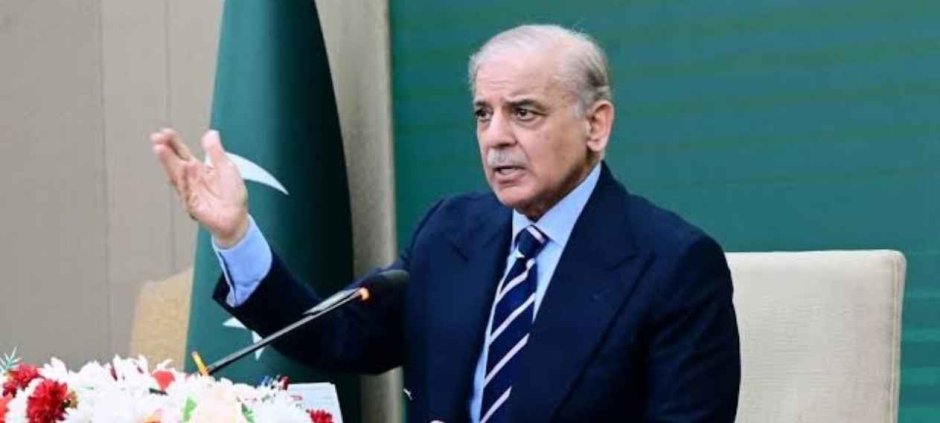
Prime Minister Shehbaz Sharif has called for converting Pakistan’s diplomatic and military achievements into economic benefits. He said the government had taken difficult decisions and introduced reforms to stabilise the economy.
Addressing participants at the National Security Workshop, the prime minister highlighted several national challenges. He described Pakistan’s rapidly growing population as a ticking time bomb.
He announced that an Apex Committee meeting would be convened soon. The meeting would consider strict measures to address population growth.
Government Plans Tough Decisions on Population Growth
Shehbaz Sharif said the government had established a population control task force. It operates under the supervision of Dr Shabana and includes the health minister.
The prime minister said he was personally chairing the body. He added that population management required decisions similar to those taken for economic reforms.
He warned that uncontrolled population growth could undermine national development. He also stressed cooperation between federal and provincial governments.
Illegal Gold Mining and Mineral Development
The prime minister said illegal gold mining in Khyber Pakhtunkhwa had been completely stopped. He also outlined plans to increase the value of Pakistan’s mineral resources.
Under the proposed arrangements, mining companies would have to establish smelters within agreed deadlines. The government intends to promote processing and manufacturing before exporting minerals.
He also mentioned financial support provided during the recent crisis. According to him, the federal government provided Rs28 billion in subsidies during its initial weeks. He added that Rs50 billion had already been spent on fuel subsidies.
Pakistan’s Role in Iran-US Talks
Shehbaz Sharif described Pakistan’s role in bringing Iran and the United States to negotiations in Islamabad as a major diplomatic achievement.
He said the talks marked an important development after 47 years. Pakistan was continuing efforts to support regional peace, he added.
The prime minister acknowledged the contributions of Field Marshal Syed Asim Munir and Deputy Prime Minister Ishaq Dar. He said their efforts helped facilitate the negotiations.
He also referred to the Islamabad Memorandum of Understanding signed during the process.
FBR Reforms and Economic Performance
The prime minister discussed reforms introduced at the Federal Board of Revenue. He said tax evasion had remained a major challenge, particularly in indirect taxes.
According to him, enforcement measures helped recover Rs900 billion during fiscal year 2025-26. He described the recovery as an important achievement against tax evasion and corruption.
He said Pakistan’s GDP growth was estimated at 3.5 percent for the current year. However, the country needed to increase growth to at least 6 percent.
He also highlighted foreign exchange reserves and export performance. According to his figures, exports increased by 8 percent during the first quarter. IT exports reached $4.6 billion, compared with around $1.5 billion three years earlier.
Agriculture and Youth Employment
The prime minister described agriculture as a key part of Pakistan’s economy. He said the sector required modern technology, investment, and improved facilities.
He also highlighted the potential of livestock and mineral resources. He stressed that these sectors could contribute more to economic development.
Discussing employment, he said young people represented both a challenge and an opportunity. Around 60 percent of Pakistan’s population consisted of young people, according to his remarks.
He called for greater investment in information technology, artificial intelligence, and vocational training. He also stressed the need to create more employment opportunities.
In other related news also read Prime Minister Shehbaz Sharif Prioritizes Healthcare Improvements
The prime minister said federal and provincial governments were working together on education and skills development. He concluded that modern knowledge, hard work, honesty, and integrity were essential for national progress.