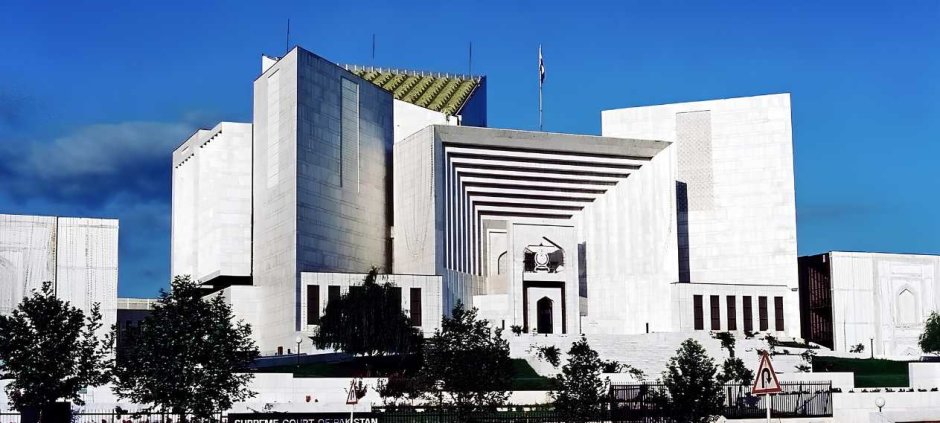
The Supreme Court of Pakistan has ruled that domestic violence cannot be treated as a private family matter to shield a government employee from departmental accountability, upholding the compulsory retirement of an Intelligence Bureau (IB) official accused of setting his wife on fire.
In a detailed judgment, the court clarified that an employee’s acquittal in criminal proceedings does not automatically prevent a government department from taking disciplinary action if misconduct has been independently established through a proper departmental inquiry.
The court observed that an individual’s conduct inside the home can also reflect on their professional character, suitability for public service and the trust placed in them by the state.
It emphasised that the dignity and rights of women must be respected both inside and outside the home, adding that domestic violence cannot receive legal protection simply because it occurs within private premises.
The two-member bench, comprising Justice Ayesha A. Malik and Justice Shahid Waheed, dismissed the employee’s petition and maintained the Federal Service Tribunal’s decision upholding his compulsory retirement.
Supreme Court Says Domestic Violence Is Not a Private Matter
The Supreme Court observed that serious misconduct committed within the home can have consequences for a government employee’s service record.
According to the detailed judgment, the sanctity of the home cannot be used as a justification or legal shield for violence against women.
The court stressed that respecting a woman’s dignity is not merely a moral responsibility but also a constitutional requirement.
It further explained that government employment involves public trust, and an employee’s personal conduct may be relevant when assessing whether they remain suitable for public service.
The ruling makes clear that conduct outside official working hours is not automatically beyond departmental scrutiny, particularly when the behaviour is serious enough to undermine public confidence or violate service discipline.
The court referred to the Civil Servants (Efficiency and Discipline) Rules, 2020, under which conduct considered unbecoming of a government employee or prejudicial to service discipline may constitute misconduct even when it occurs outside the workplace. <Cite refs={[“turn174398view0”]}/>
Case Involved Intelligence Bureau Employee Jawad Abbasi
The case concerned Jawad Abbasi, an employee of the Intelligence Bureau who was serving as a cook.
He faced allegations of setting his wife on fire and attempting to portray the incident as a suicide.
Although he was acquitted in the criminal case, departmental proceedings continued against him.
The departmental authorities examined the allegations separately and imposed the penalty of compulsory retirement.
Abbasi challenged the departmental decision before the Federal Service Tribunal, but the tribunal upheld the penalty.
He subsequently approached the Supreme Court, arguing against the decision maintaining his compulsory retirement.
The Supreme Court dismissed his petition, finding no sufficient legal grounds to interfere with the departmental action upheld by the tribunal. <Cite refs={[“turn174398view0”]}/>
Criminal Acquittal Does Not Automatically End Departmental Proceedings
A central issue considered by the Supreme Court was whether an employee’s acquittal in a criminal case automatically invalidates disciplinary proceedings based on related allegations.
The court explained that criminal trials and departmental inquiries have different objectives and operate under different standards of proof.
Criminal proceedings determine whether an accused person is guilty of an offence beyond reasonable doubt.
Departmental proceedings, on the other hand, examine whether an employee has committed misconduct under the applicable service rules.
The court clarified that an acquittal in a criminal case does not necessarily establish that the employee’s conduct was acceptable for the purposes of government service.
Similarly, receiving the benefit of the doubt does not automatically mean that the employee’s version of events has been accepted as true.
The distinction allows government departments to assess misconduct independently, provided they follow the prescribed procedures and establish their findings through relevant evidence.
The ruling does not mean that every employee acquitted in a criminal case can automatically face punishment. Departmental authorities must still conduct a lawful inquiry and provide the employee with a fair opportunity to defend themselves.
Departmental Inquiry Examined Statements of 13 Witnesses
The Supreme Court also examined the procedure followed during the departmental inquiry against the employee.
According to the judgment, the inquiry officer recorded statements from 13 witnesses in the employee’s presence.
The employee was provided with an opportunity to cross-examine the witnesses and present his defence during the proceedings.
The inquiry independently examined the allegations, including the alleged violence against his wife and the claim that the incident had been falsely presented as a suicide.
The court noted that the proceedings were not based merely on the registration of a police case or the existence of an FIR.
Instead, the departmental authorities relied on evidence collected through the inquiry process.
This distinction was important because the court emphasised that an FIR alone cannot justify a major departmental penalty.
The opportunity to examine witnesses, challenge evidence and present a defence formed part of the procedural safeguards considered by the court.
After reviewing the proceedings, the Supreme Court found that the employee had been given an adequate opportunity to defend himself and that the departmental action was supported by the inquiry findings. <Cite refs={[“turn174398view0”]}/>
Court Upholds Compulsory Retirement
The Supreme Court upheld the Federal Service Tribunal’s decision maintaining the employee’s compulsory retirement.
The bench found no legal error, violation of due process or substantial question of law of public importance that would justify interference with the tribunal’s decision.
It also considered the punishment proportionate to the gravity of the misconduct established during the departmental inquiry.
As a result, the court refused leave to appeal and dismissed the petition.
The decision means that the compulsory retirement order against the IB employee remains in force.
Women’s Dignity Is a Constitutional Requirement
Another important aspect of the judgment was the court’s emphasis on the constitutional importance of women’s dignity.
The bench observed that the protection of women cannot be limited to public spaces or official environments.
A woman’s dignity and safety must also be respected within her home, where domestic violence cannot be dismissed as a private disagreement or family issue.
The court connected this principle with the responsibilities of the state and the standards expected from public servants.
Government employees hold positions of public trust, and their conduct may affect the reputation and credibility of the institutions they serve.
The judgment therefore highlights that serious misconduct within private life may also become a matter of public accountability when it raises questions about an employee’s character and fitness for government service.
What the Supreme Court Ruling Means for Government Employees
The decision reinforces the distinction between criminal liability and departmental accountability in Pakistan’s public service system.
An employee’s acquittal in a criminal case does not automatically prevent a department from proceeding with an independent disciplinary inquiry.
However, departments must follow the relevant service rules, examine evidence fairly and provide employees with an opportunity to challenge allegations.
The ruling also establishes an important principle concerning misconduct outside the workplace: serious behaviour in private life may be relevant to public employment when it affects service discipline or the reputation of the institution.
For government employees, the judgment highlights that public service responsibilities extend beyond official working hours in cases involving serious misconduct.
The Supreme Court’s decision also reinforces the importance of protecting women’s dignity and ensuring that domestic violence is not dismissed simply because it occurs behind closed doors.
Also read: SC Rules Widow Has First Right to Pension