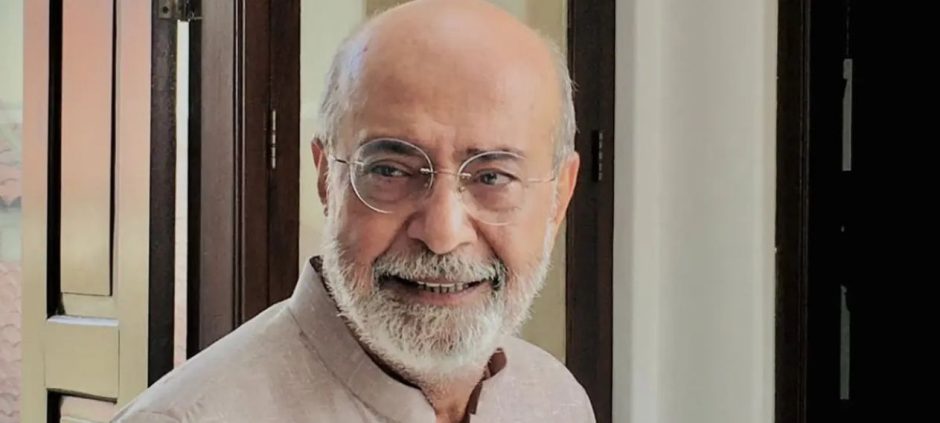
Veteran Pakistani actor, writer, and director Syed Mohammed Ahmed has claimed that artificial intelligence (AI) is increasingly being used to write television drama serials in Pakistan, raising concerns about originality, storytelling quality, and the preservation of local culture. Speaking during an interview on Sheeba Khan’s Dareecha podcast, the celebrated writer said some scriptwriters are relying on AI to generate entire drama serials, a trend he believes is damaging the creative standards of the country’s entertainment industry.
Ahmed expressed concern over the growing use of AI in scriptwriting, claiming that some writers are producing complete 26-episode television dramas with the help of artificial intelligence. According to him, AI-generated scripts often fail to capture the richness of Pakistan’s language, cultural traditions, and everyday social interactions, resulting in dialogue that sounds artificial and disconnected from local realities.
Questioning the pace at which some writers produce multiple television projects simultaneously, Ahmed said quality storytelling requires significant time, research, and creative effort.
“It takes me around 10 to 11 months to write a quality drama. It is not humanly possible to write several dramas at the same time,” he remarked during the podcast.
The veteran writer suggested that the sudden increase in script output within the industry has fueled suspicions that AI is being used to accelerate the writing process.
Ahmed acknowledged that technology is becoming an important part of creative industries worldwide, but argued that AI still lacks the ability to replicate the emotional depth and cultural nuances that define successful Pakistani dramas.
He explained that many AI-generated scripts include conversations that feel unnatural because they fail to accurately reflect local dialects, family dynamics, traditions, and social behavior. According to Ahmed, authentic storytelling requires a deep understanding of society—something he believes current AI tools cannot fully achieve.
Beyond the use of AI, Ahmed also criticized television producers for frequently altering original scripts in an effort to increase ratings and create viral content.
Sharing one of his personal experiences, he revealed that he had completed 17 episodes of a drama before producers instructed him to remove everything written after the 11th episode.
He said writers often lose creative control once they submit their scripts, as production houses make extensive changes to storylines without fully understanding the writer’s original vision.
“If producers cannot understand the writer’s vision despite repeated explanations, they simply modify the script themselves,” Ahmed said.
The veteran writer also raised concerns about the lack of recognition for contributors behind many television scripts. He alleged that some established writers receive assistance from students or content teams that edit AI-generated drafts or contribute to script development but rarely receive proper credit for their work.
According to Ahmed, production houses often prioritize well-known names instead of acknowledging those who actively participate in the writing process. He suggested that financial pressures within the entertainment industry have led many aspiring writers to accept such arrangements despite receiving little public recognition.
Discussing his own career, Ahmed revealed that he has decided to gradually step away from screenwriting because he no longer wishes to produce stories revolving around repetitive family disputes, toxic relationships, and negative themes.
He expressed a desire to focus on more meaningful storytelling but said projects promoting positive social messages often struggle to attract producers’ interest.
Ahmed disclosed that one of his scripts centered on women’s empowerment failed to receive support from production houses, despite its socially relevant message.
His remarks come at a time when artificial intelligence is rapidly transforming creative industries across the world, sparking debates over originality, copyright, artistic ownership, and the future of human creativity. While AI continues to offer new possibilities for content creation, Ahmed believes authentic storytelling rooted in Pakistan’s language and culture remains a task best handled by human writers.
Also read: France and Spain Race to Contain Wildfires before New Heatwave