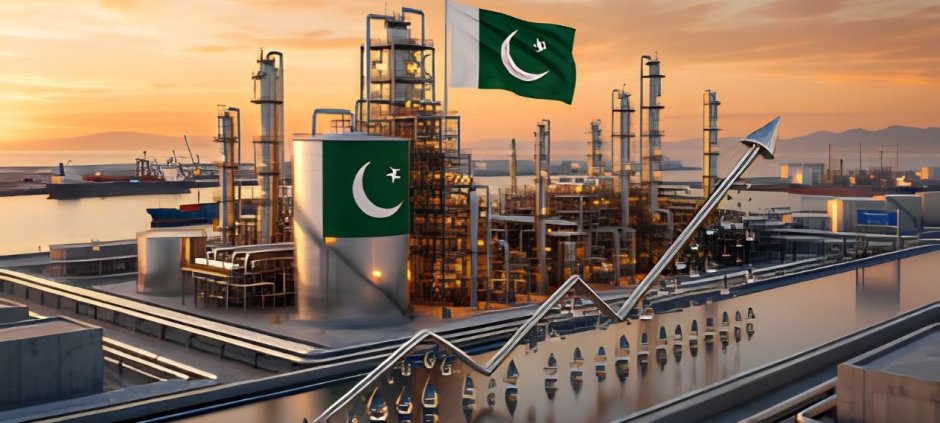
Pakistan is seeking investment from US financial institutions to support a major upgrade of its oil refining industry, as Islamabad looks to improve domestic fuel production, strengthen energy security and expand economic cooperation with Washington.
Federal Petroleum Minister Ali Pervaiz Malik discussed the investment opportunity during a meeting with US Chargé d’Affaires Natalie A. Baker in Islamabad on Monday, October 26, 2026. The discussions also covered potential US involvement in Pakistan’s liquefied natural gas (LNG) supply chain and the possibility of establishing long-term energy supply agreements.
According to an official government statement, Malik highlighted Pakistan’s refinery modernisation programme as a potential investment opportunity for American financial institutions. The talks took place against the backdrop of continuing uncertainty in international energy markets and concerns about fuel availability arising from the conflict in the Middle East. Source: Press Information Department
Pakistan’s refinery upgrade programme is estimated to require around $5 billion in investment over five years. Four of the country’s five refineries signed formal agreements with the government in September to modernise their technologies, improve fuel quality and increase production capacity. Source: Dawn
Pakistan Seeks US Financing for Refinery Upgrades
During the meeting, Malik briefed the US envoy on Pakistan’s efforts to maintain uninterrupted fuel supplies and reduce vulnerabilities arising from changes in the international energy landscape.
The minister said the refinery modernisation programme could provide investment opportunities for American financial institutions and encouraged greater engagement between Pakistani and US businesses.
The proposed upgrades are intended to improve the operational efficiency of local refineries and enable them to produce cleaner petroleum products that meet higher quality standards.
For Pakistan, modernising domestic refining facilities is important because the country needs reliable supplies of petrol, diesel and other petroleum products to support transportation, industry and economic activity.
Greater refining capacity and improved technology could also help local facilities process crude oil more efficiently and improve the range and quality of products they produce.
However, securing the estimated investment will require financing arrangements, project implementation and continued cooperation between refinery operators, the government and potential investors.
The latest meeting did not announce a final US financing commitment or a completed investment agreement. Instead, Pakistan presented refinery modernisation as an opportunity for American financial institutions to participate in the country’s energy sector.
Four Refineries Sign Agreements Under Modernisation Programme
Pakistan’s refinery upgrade initiative gained momentum in September 2026, when four of the country’s five refineries signed formal agreements with the government.
The agreements were signed under the Brownfield Petroleum Refining Policy 2026, which aims to encourage investment in existing refineries and support improvements in fuel quality and production.
The four participating refineries are:
- Attock Refinery Limited (ARL)
- National Refinery Limited (NRL)
- Pakistan Refinery Limited (PRL)
- Cnergyico Petroleum Limited
The planned upgrades are expected to require approximately $5 billion over five years, according to published reports.
The investment is intended to support modernisation of refining equipment, improve production efficiency and enable the facilities to produce cleaner fuels meeting Euro-V standards.
These improvements could help Pakistan strengthen its domestic petroleum supply chain and reduce some of the operational limitations associated with older refining technology.
The agreements represent an important step towards implementing the programme, but the projected investment still needs to be deployed through the relevant projects and financing arrangements.
Why Refinery Modernisation Matters for Pakistan
Pakistan’s petroleum sector plays a central role in the country’s energy supply, particularly for transport, freight movement, agriculture and industrial production.
Modern refining technology can help facilities process crude oil more efficiently and produce fuels that meet stricter environmental and quality specifications.
Upgraded refineries may also improve production flexibility and reduce operational inefficiencies, depending on the equipment installed and the projects implemented.
For consumers and businesses, improvements in the domestic fuel supply chain could contribute to greater reliability. However, modernisation alone cannot guarantee lower petrol or diesel prices, which are also influenced by international crude oil prices, exchange-rate movements, taxes, transportation costs and other market factors.
The government’s investment drive is therefore focused on strengthening the refining industry’s capacity and operational performance rather than promising an immediate reduction in retail fuel prices.
Access to affordable long-term financing will be an important consideration as refinery operators undertake projects that require substantial capital expenditure.
US Companies Show Interest in Pakistan’s LNG Market
Beyond refinery financing, the meeting also covered opportunities for US companies to supply liquefied natural gas to Pakistan.
Executives from Pakistan State Oil (PSO) and Pakistan LNG Limited (PLL) briefed participants on the interest shown by US companies in supplying LNG to the country.
LNG is natural gas that has been cooled into liquid form to facilitate storage and transportation by specialised vessels. It can be imported to supplement domestic gas supplies, although procurement decisions depend on demand, prices, delivery schedules and available infrastructure.
US Chargé d’Affaires Natalie Baker expressed Washington’s willingness to work with Pakistan to address its energy requirements and create commercial opportunities for American businesses.
She also expressed optimism about the possibility of long-term energy supply agreements, saying such arrangements could provide benefits to both countries.
For Pakistan, longer-term contracts could help provide greater visibility over supply arrangements. However, the financial benefits would depend on the prices, contractual terms and flexibility of any agreements eventually reached.
No completed LNG supply contract was announced during the October 26 meeting. The discussions indicate interest in potential cooperation rather than confirmation of a finalised arrangement. Source: Business Recorder
Pakistan Highlights Wider Energy Security Concerns
The meeting took place as Pakistan sought to safeguard fuel availability amid challenges arising from the evolving geopolitical situation.
Malik said the conflict in the Middle East had complicated the international fuel supply environment, requiring proactive steps to maintain uninterrupted supplies.
Baker commended Pakistan for managing its fuel supply situation despite the challenging regional circumstances, according to the government statement.
The discussions reflected a shared interest in identifying ways to strengthen energy cooperation and establish commercial relationships that could support Pakistan’s longer-term requirements.
For Islamabad, engaging with additional energy suppliers and investors could help broaden its options in a market where international prices, shipping conditions and geopolitical developments can affect the cost and availability of fuel.
Nevertheless, diversification depends on commercially viable supply contracts, financing, appropriate infrastructure and the ability to meet contractual obligations.
The government has not announced that the latest meeting will immediately change Pakistan’s fuel procurement arrangements.
Pakistan Invites US Companies to Minerals Investment Forum
During the meeting, Malik also invited American companies to participate in the upcoming Pakistan Minerals Investment Forum.
The invitation was intended to encourage US businesses to explore investment opportunities in Pakistan’s mineral resources and related industries.
The minerals sector has been presented by the government as another potential area for foreign investment, alongside energy and infrastructure.
Greater engagement could provide opportunities for companies interested in mineral exploration, processing, technology and related services. The scale of any resulting investment would depend on individual projects, regulatory conditions and commercial assessments.
The invitation also broadened the discussions beyond petroleum and LNG, reflecting Pakistan’s interest in building economic cooperation across multiple sectors.
What Happens Next?
Pakistan’s discussions with the United States have opened potential avenues for cooperation in refinery modernisation, LNG supplies and wider energy investment.
The estimated $5 billion refinery upgrade programme provides a major financing opportunity, with four local refineries already having signed agreements with the government.
However, the latest meeting did not produce a confirmed US funding commitment, and no final long-term LNG supply contract was announced.
The next steps will depend on whether American financial institutions choose to participate in refinery projects, whether interested US energy companies reach supply agreements with Pakistani buyers, and how the relevant commercial negotiations progress.
For Pakistan, attracting investment could help finance essential upgrades, improve domestic refining capabilities and strengthen the reliability of fuel supplies.
For the United States, greater commercial engagement could create opportunities for financial institutions and energy companies to participate in Pakistan’s petroleum and gas markets.
The October 26 meeting marks a further step in discussions, but the practical results will depend on the agreements and investments that follow.