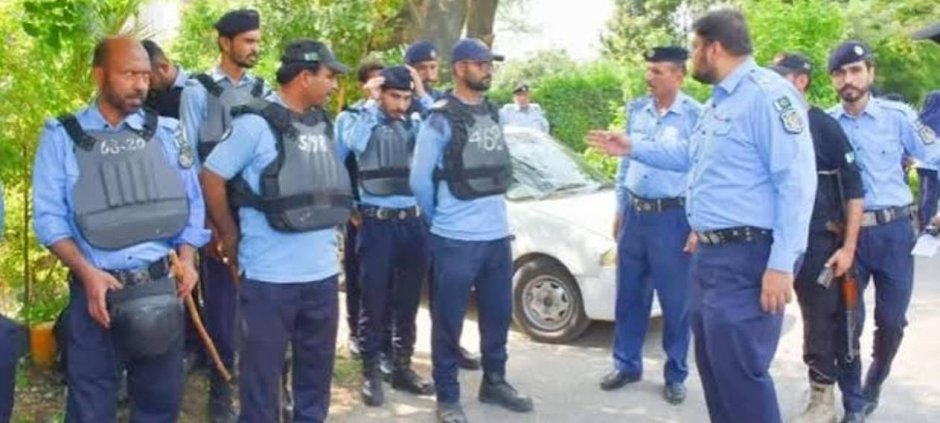
Islamabad Police has introduced a new social media policy placing stricter restrictions on how police officers and personnel of all ranks use social media platforms.
The policy, approved by the Inspector General of Islamabad Police, has taken effect immediately and introduces rules covering videos, photographs, public statements, official information and personal views shared online.
Under the new policy, unit heads have also been given responsibility for monitoring the social media activities of their personnel and ensuring that officers comply with the new restrictions.
The move is aimed at regulating the use of social media by police personnel and ensuring that official matters are communicated through authorised channels.
Personal Publicity in Uniform Banned
One of the key provisions of the new policy prohibits police personnel from using their official uniforms for personal publicity, fame or glamour.
Officers and other personnel will also be prohibited from recording or sharing videos while wearing their police uniforms inside official vehicles, offices or private locations.
The policy states that disciplinary action will be taken against personnel who violate these restrictions.
The rules apply broadly to police personnel across different ranks, meaning officers cannot use their official appearance or position for personal social media promotion without complying with the department’s requirements.
Approval Required for Police-Related Content
The new policy also applies to content that presents the police department’s activities in a positive manner.
Police personnel will require prior approval from the Deputy Inspector General (Headquarters) before sharing such content on social media.
This means that even posts or videos intended to highlight the department’s achievements or positive activities cannot automatically be published by individual officers.
The requirement places responsibility for official communication with designated authorities rather than individual personnel.
Restrictions on Public Statements
The social media policy also introduces restrictions on police personnel making public statements.
Officers and other personnel cannot issue media statements, appear at public forums or write articles without obtaining prior authorisation.
The policy is intended to ensure that public communication involving police personnel is properly coordinated and authorised.
Personnel are also prohibited from using social media platforms to express their personal political or religious views.
The restriction applies to police personnel regardless of their rank and is part of the broader rules governing their public and online conduct.
Official Documents and Material Cannot Be Shared
Another major provision concerns departmental information.
Police personnel have been barred from sharing departmental or classified documents, photographs and other official material on social media platforms.
The restriction covers official information that may not be authorised for public distribution.
By limiting the independent sharing of departmental material, the policy places greater emphasis on controlled communication and official channels for releasing information.
Official Information to Come Through PR Branch
Under the new policy, information relating to police activities will be released through the Chief Police Officer’s Public Relations Branch.
The branch will serve as the authorised channel for communicating official police information to the public and media.
This approach is designed to ensure that information about departmental activities is released in a coordinated manner and through designated officials.
Individual personnel will therefore not be permitted to independently issue information about police activities through their personal social media accounts unless they have the required authorisation.
Unit Heads Given Monitoring Responsibility
The new policy also places a significant responsibility on unit heads.
According to the policy, unit heads will be personally responsible for monitoring the social media activities of their staff and ensuring compliance with the rules.
This means supervisory officers will have to keep track of whether personnel under their command are following the department’s social media requirements.
The responsibility extends beyond individual officers, making unit leadership an important part of enforcing the policy.
Strict Departmental Action for Violations
Islamabad Police has directed that strict departmental action be taken against officers and personnel who violate the new social media policy.
The disciplinary measures are intended to ensure that the newly introduced rules are followed across the department.
Personnel are therefore expected to review their social media activities and ensure that their posts, photographs, videos and public statements comply with the policy.
New Framework for Police Social Media Use
Social media has become an important platform for public communication, but the new Islamabad Police policy places clear limits on how serving personnel can use it.
The restrictions cover personal publicity while wearing uniforms, videos and photographs, public statements, political and religious views, official documents and departmental information.
At the same time, the policy establishes authorised channels for communicating police activities to the public.
With the policy now effective, Islamabad Police personnel will be required to follow the new rules, while unit heads will monitor compliance and the CPO Public Relations Branch will handle official departmental information.
Also read: Islamabad Police Announces 23 Inspector Jobs