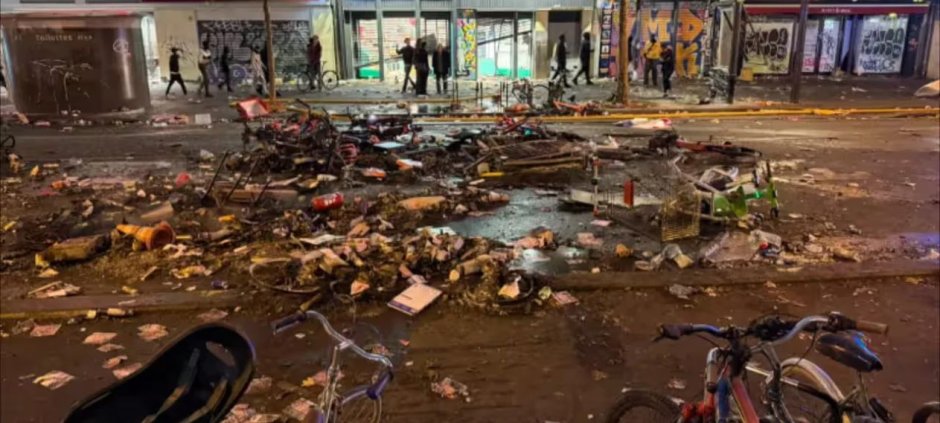
France is considering stricter security measures after violent protests and widespread rioting caused serious damage across the country. Prime Minister Sébastien Lecornu said on Monday that he had asked local authorities to introduce partial curfews in areas affected by the unrest.
The decision followed a weekend of violence, looting and arson that damaged public buildings, shops and other businesses. More than 2,300 people were placed in police custody over the weekend, while nearly 1,000 police officers and firefighters were reported injured, according to figures cited by French authorities.
Lecornu said the government was determined to restore public order. He added that a state of emergency could be declared if necessary, but local curfews appeared to be the more appropriate step at this stage.
The prime minister did not identify all the cities that would introduce restrictions or explain exactly how the curfews would operate. However, he ruled out imposing a full curfew across Paris.
Historic Buildings and Businesses Damaged
The unrest affected several major French cities. In Limoges, a historic town hall dating back to the 19th century was gutted by fire. The building’s central spire collapsed during the blaze, while the incident raised concerns about the scale of destruction.
Damage was also reported in Lyon and Bordeaux. Buildings in Marseille, Lille and Angers were broken into, while shops and other commercial properties faced looting and vandalism.
In Paris, the Louvre Museum announced its closure after protesters called for a blockade. Several university gatherings and blockades were also reported.
The damage has raised concerns about the financial impact on businesses. CCI France estimated that more than 2,000 businesses could be directly affected, with losses potentially reaching hundreds of millions of euros. In Paris alone, between 300 and 400 businesses were reportedly vandalised over the weekend.
Thousands Detained as Government Faces Criticism
French authorities deployed around 60,000 police officers and other security personnel on Saturday. However, Interior Minister Laurent Nuñez acknowledged that the deployment had not been enough to control violent crowds in some cities.
Nuñez offered his resignation to President Emmanuel Macron, but Macron rejected it and directed him to develop additional measures to prevent looting and the construction of barricades.
Mayors of major cities, including Paris, Marseille and Lyon, criticised the government’s security preparations. They said some areas had been left without adequate protection and demanded answers about how the violence had been allowed to spread.
Marseille introduced a ban on public gatherings and demonstrations on Monday from noon until 8pm local time. The northern town of Denain also imposed a nighttime curfew running from 9pm to 6am through October 25.
Despite the unrest, the interior minister said there were no plans to cancel Tuesday evening’s Paris Saint-Germain versus Barcelona football match.
Protests Linked to Living Costs and Public Services
The demonstrations initially began with students demanding better classroom conditions, including improvements to school infrastructure and teaching capacity. The movement later expanded as trade unions, farmers, university students, retirees and Yellow Vest activists joined protests over rising living costs, fuel and energy prices, and declining purchasing power.
Concerns about deteriorating public services also contributed to public frustration. Demonstrations that had largely remained peaceful escalated when groups began looting shops, setting fires and clashing with police.
Macron blamed groups he described as far-left troublemakers for the violence. Opposition figures, however, criticised the government’s handling of the crisis. The unrest has added to political pressure on the administration ahead of France’s next presidential election.
Travel Warnings Issued Across Europe
Several European countries advised their citizens in France to avoid demonstrations and large crowds. Italy, Germany, the Czech Republic, Poland, the Netherlands and Nordic countries issued guidance urging travellers to follow local authorities’ instructions and remain alert.
The continuing unrest has created uncertainty for residents, tourists and businesses. The French government is now under pressure to restore order, repair damaged areas and respond to public concerns about living costs and public services.
Also read: France Recognizes Palestine as Gaza Suffers Under Israeli Assault