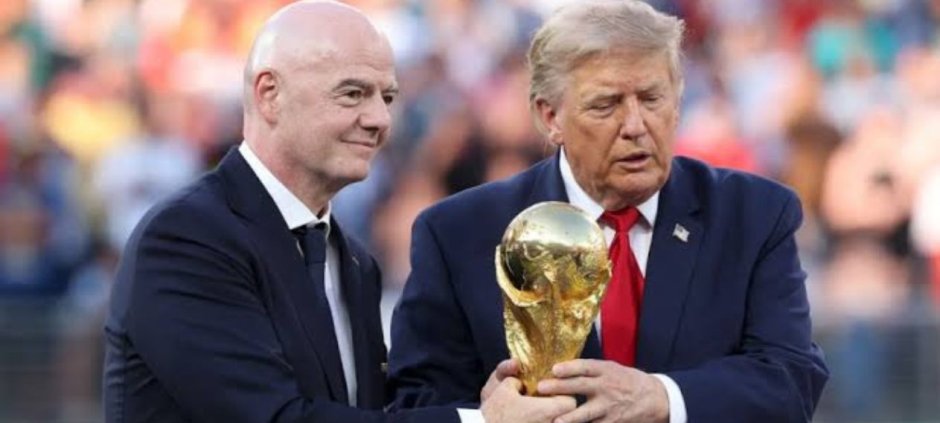
FIFA will allow members of its ruling Council to inspect key documents related to an abandoned proposal by president Gianni Infantino to introduce private investment into the organisation’s commercial operations and premium football competitions.
The decision follows growing pressure from the Union of European Football Associations (UEFA), which has demanded explanations about the FIFA Forward Enterprise (FFE) proposal and the decision-making process behind it.
According to a source close to world football’s governing body, FIFA Secretary General Mattias Grafstrom informed Council members through a letter sent on Monday, November 2, that they could request access to the relevant documents.
The 37 members of the FIFA Council, including Infantino and eight vice-presidents, have been given two weeks to indicate whether they wish to inspect the material.
However, the documents will not be publicly released. Council members will only be able to review them in person at FIFA headquarters in Zurich, Switzerland, under specific confidentiality conditions.
The development comes after UEFA’s November 2 deadline for FIFA to respond to questions about the abandoned investment proposal passed without a detailed response.
The dispute has increased scrutiny of FIFA’s governance and Infantino’s leadership as he prepares to seek another presidential term in March 2027. <Cite refs={[“turn576973view0″,”turn576973view1”]}/>
FIFA Offers Restricted Access to Investment Plan Documents
The latest decision will allow FIFA Council members to examine documents connected to the FIFA Forward Enterprise proposal.
In his letter, Grafstrom invited Council members to register their interest within two weeks if they wanted to inspect the material.
The documents will be available at FIFA’s headquarters in Zurich and can only be viewed in person under specific conditions designed to protect confidentiality.
The arrangement does not amount to a public release of the records or an unrestricted disclosure to UEFA.
It remains unclear exactly which documents will be included, how extensive the material will be or whether the inspection arrangements will satisfy the concerns raised by European football officials.
The FIFA Council consists of 37 members, including the president and eight vice-presidents. Its members represent different football confederations and participate in major decisions concerning the organisation.
The limited access offer is therefore an opportunity for Council members to examine the proposal’s background, although the wider football community will not automatically receive access to the same information.
What Was FIFA Forward Enterprise?
FIFA Forward Enterprise, commonly referred to as FFE, was a proposed commercial structure associated with Gianni Infantino.
The proposal emerged in late July 2026 and triggered strong opposition within parts of the international football community.
Media reports described it as a plan to bring private investors into FIFA’s major commercial competitions, including the World Cup.
FIFA subsequently issued its own clarification, explaining that the proposal involved moving its commercial and operational event-delivery activities into a subsidiary organisation that FIFA would permanently own and control.
Under the proposed arrangement, the organisation intended to generate additional commercial revenue and distribute funding among its 211 member associations.
FIFA said each member association could receive $20 million in FIFA Forward development funding over four years, covering 2027 to 2030.
The proposal also included a voluntary FIFA Fast Forward Programme, which would have provided an additional one-time $20 million in development funding per participating member association through external investment.
FIFA insisted that the arrangement would not transfer control of the organisation or change its governance structure. It rejected claims that football itself was being sold to private investors. <Cite refs={[“turn576973view2″,”turn814301search4”]}/>
Infantino Abandons Proposal After Strong Opposition
The FFE proposal faced criticism from European football officials and other stakeholders shortly after it became public.
UEFA emerged as one of the strongest opponents, questioning the structure, financial arrangements and decision-making process behind the initiative.
The backlash created concerns about FIFA’s governance and the level of consultation conducted before the proposal was presented.
Infantino subsequently abandoned the plan after it generated widespread opposition.
The withdrawal did not end the controversy. Instead, UEFA began seeking additional information about how the proposal had been developed, who had been involved and what financial arrangements had been considered.
The organisation has since pressed FIFA for access to relevant records and explanations regarding the proposed investment structure.
The latest decision to allow Council members to inspect documents comes amid those continuing demands for transparency.
UEFA Sends More Than 40 Questions to FIFA
UEFA intensified its efforts to obtain information following a FIFA Council meeting on October 15.
UEFA General Secretary Theodore Theodoridis sent a letter to Grafstrom containing more than 40 questions and requests for information related to the FFE proposal.
The letter also raised concerns about other FIFA decisions, including the organisation’s award of a Peace Prize to US President Donald Trump.
Another issue concerned the suspension of a red card shown to US player Folarin Balogun during the World Cup following an intervention by Trump.
UEFA’s questions therefore extended beyond the abandoned investment proposal to include wider issues involving FIFA’s governance and decision-making.
The European governing body wanted FIFA to provide detailed explanations and supporting documents by November 2.
However, FIFA did not provide a complete response by the deadline, arguing that fulfilling the request within two weeks was impractical.
Reuters reported that the request involved more than 100 questions across several governance-related matters, while the AFP report carried by Dawn referred to more than 40 questions specifically in connection with the October 15 correspondence. <Cite refs={[“turn576973view1″,”turn576973view0″,”turn814301search9”]}/>
UEFA Considers Legal Action Against Infantino
The dispute has also moved beyond internal football administration.
UEFA has approached a court in Florida in the United States to obtain evidence connected to the abandoned FFE proposal.
The information-gathering effort is intended to support consideration of a possible complaint in Switzerland alleging criminal mismanagement against Infantino.
These are potential legal allegations and have not been established as findings of wrongdoing.
The court-related proceedings have added another layer to the disagreement between UEFA and FIFA, particularly over access to information and the financial arrangements considered under the abandoned proposal.
FIFA’s decision to restrict document inspections to Council members in Zurich comes while the legal process in the United States is continuing.
Reuters also reported that FIFA considered the limited response period impractical because of other organisational responsibilities, preparations for an extraordinary congress on November 23 and legal constraints arising from the US proceedings. <Cite refs={[“turn576973view0″,”turn576973view1”]}/>
Infantino Faces Re-Election in March 2027
The controversy comes at an important time for Infantino, who is preparing to seek another term as FIFA president.
The next presidential election is scheduled for March 2027, while potential rival candidates have until November 18, 2026, to declare their intentions.
UEFA has so far been unable to identify a challenger with sufficient support to contest Infantino’s position.
The Asian Football Confederation announced on October 23 that it would support Infantino’s re-election bid.
CONCACAF president Victor Montagliani had been discussed as a possible challenger, but he has indicated that he intends to seek another term leading the North and Central American football confederation.
Former Tottenham Hotspur, Celtic and Switzerland defender Ramon Vega has also expressed interest in standing, although his ability to secure the necessary support remains uncertain.
The election campaign has therefore become another important factor in the debate surrounding FIFA’s leadership and governance. <Cite refs={[“turn576973view0″,”turn576973view1″,”turn814301search2”]}/>
FIFA Governance Under Increased Scrutiny
The disagreement over FIFA Forward Enterprise has raised broader questions about transparency, commercial decision-making and the involvement of member associations in major organisational changes.
UEFA wants greater access to information about how the investment proposal was developed and why the decision was taken to abandon it.
FIFA, meanwhile, has offered its Council members a controlled opportunity to examine selected documents rather than making the records publicly available.
Whether this arrangement will satisfy UEFA’s demands remains uncertain.
The wider dispute also involves questions about the FIFA Peace Prize, disciplinary decisions and the organisation’s leadership structure.
For now, the most immediate development is FIFA’s offer to allow Council members to inspect documents at its Zurich headquarters.
With the presidential election approaching and legal scrutiny continuing, the way FIFA handles the document-access process could influence the debate over its governance and accountability in the months ahead.
Also read: Pakistan Congratulates Spain on FIFA World Cup Victory