Indian authorities have tightened security across parts of New Delhi ahead of a major opposition march and rally led by Congress leader Rahul Gandhi, with protesters demanding the resignation of Chief Election Commissioner Gyanesh Kumar over controversial changes to voter lists.
Security personnel carrying batons and shields, along with riot-control vehicles, were deployed around Ramlila Maidan, the designated venue for Sunday’s demonstration on November 1, 2026.
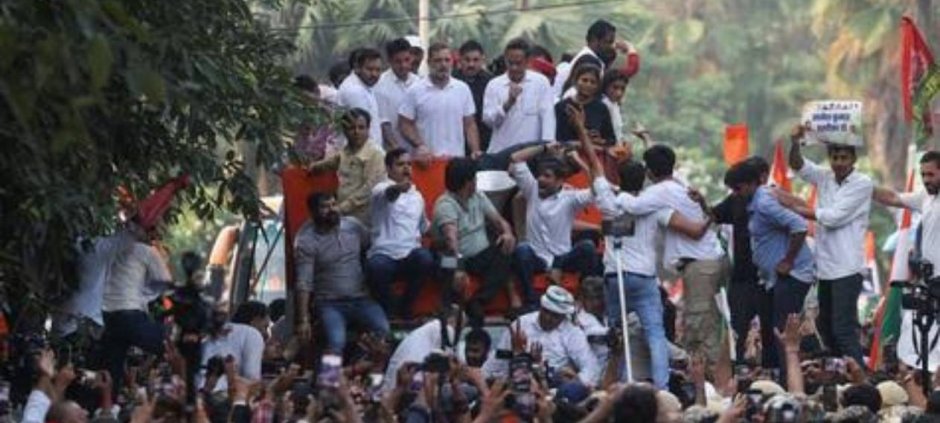
The opposition alliance, known as the Indian National Developmental Inclusive Alliance (INDIA), expects hundreds of thousands of people to participate in what it describes as a major protest against the government’s handling of electoral registration.
The demonstration follows weeks of protests by opposition parties, student organisations and youth groups, which have questioned the voter-list revision process and alleged that the changes could benefit Prime Minister Narendra Modi’s Bharatiya Janata Party (BJP).
India’s Election Commission has rejected allegations of political favouritism, maintaining that its procedures are lawful and that voters whose names were wrongly removed can register again. The BJP has also rejected the opposition’s accusations. <Cite refs={[“turn469850news20″,”turn469850search1”]}/>
Delhi Security Strengthened Ahead of Opposition Rally
Police and other security personnel were positioned around Ramlila Maidan ahead of the planned demonstration.
Visuals from news agency ANI showed riot-control vehicles and dozens of officers carrying protective equipment outside the venue. Authorities also made arrangements along the proposed march route to manage the expected crowd.
The Delhi Traffic Police warned that a large gathering could affect traffic movement and said diversions and other restrictions would be introduced as required.
Senior police officer Rohit Rajbir told ANI that people had already started arriving to participate in the rally. He said arrangements had been made at the venue and along the route to ensure the event could proceed smoothly.
The opposition announced plans for a march of approximately 1.5 kilometres from central Delhi to Ramlila Maidan, where participants were expected to gather for the main rally.
Police also appealed to visitors and commuters to cooperate with security personnel and follow traffic instructions during the demonstration.
Rahul Gandhi to Lead ‘Save Democracy’ March
Congress leader Rahul Gandhi is scheduled to lead the opposition march, joined by leaders and representatives of parties belonging to the INDIA alliance.
The rally is being organised under the broader message of saving democracy, with opposition parties focusing on the role of the Election Commission and the revision of electoral rolls.
The main demand is the resignation of Chief Election Commissioner Gyanesh Kumar. Opposition leaders argue that the voter-list changes have raised serious questions about the fairness and transparency of electoral registration.
The INDIA alliance includes several opposition parties that have coordinated their activities and public demonstrations over the issue.
The planned November 1 rally forms part of a wider protest campaign announced in September. At that time, opposition parties outlined plans for demonstrations, a march towards the Election Commission and further representations to constitutional authorities. <Cite refs={[“turn469850search1″,”turn469850search9”]}/>
Also read: Indian Police Arrrst Rahul Gandhi During Protest in Delhi
Controversy Over Removal of More Than 130 Million Names
The dispute centres on a voter-list revision process that began last year and reportedly resulted in more than 130 million names being removed from electoral rolls.
According to the figures cited in the report, the removals included approximately:
- 28 million: People recorded as deceased.
- 63 million: People reported to have relocated.
- 30 million: Individuals who could not be traced.
The reported figures form part of the wider debate over how voter registration records were reviewed and updated.
The revision has attracted criticism from opposition parties, which have questioned the procedures used to remove names and raised concerns about the ability of affected voters to restore their registration.
The controversy intensified after a September report by The Indian Express highlighted concerns reportedly raised internally by two deputy election commissioners over voter-list revisions, registration procedures and digital systems.
Opposition parties have argued that the reported concerns require greater transparency from the Election Commission.
Opposition Alleges Disproportionate Impact on Minority Voters
Another major point of disagreement concerns the alleged impact of voter-list deletions on minority communities.
Opposition parties claim that the changes disproportionately affect Muslim voters and other minorities, arguing that the process could influence electoral representation and participation.
These allegations have been rejected by the Election Commission and the BJP.
The Election Commission maintains that its actions are lawful and that eligible voters whose names were incorrectly deleted can apply for re-enrolment.
The BJP has accused opposition parties of questioning legitimate electoral procedures and attempting to undermine public confidence in the democratic process.
The competing positions have kept the voter-list revision at the centre of India’s political debate, with opposition parties continuing to demand explanations and accountability from election authorities.
No independent finding confirming the opposition’s allegations was included in the report.
Youth Groups and Student Organisations Join Protests
The campaign against the voter-list revision has expanded beyond established opposition political parties.
Student organisations and youth-led groups have also participated in demonstrations, with near-daily protests reported since last month.
The youth-led Cockroach Janta Party was among the groups mentioned in the report as participating in the demonstrations and demanding Kumar’s resignation.
The involvement of student and youth organisations has broadened the campaign, bringing additional groups into protests focused on electoral registration and the role of the Election Commission.
Their participation has added to the public attention surrounding the planned Delhi rally.
Election Commission and BJP Reject Allegations
The Election Commission has defended the voter-list revision process and rejected claims that it has favoured the ruling BJP.
It has said that mistakes in voter registration can be addressed through re-enrolment procedures, allowing eligible individuals whose names were wrongly removed to seek their inclusion in the electoral rolls.
The BJP has similarly rejected accusations of electoral manipulation, accusing opposition parties of challenging legitimate administrative processes.
The disagreement has created a continuing dispute between opposition leaders, the ruling party and election authorities over the handling of electoral records.
The November 1 rally is expected to provide opposition parties with another opportunity to present their concerns publicly and press for changes in the way voter-list revisions are conducted.
Political Debate Continues Ahead of 2029 Election
The controversy comes with India’s next general election scheduled for 2029, leaving several years before voters head to the polls again.
For now, the dispute remains focused on voter registration procedures, the Election Commission’s responsibilities and allegations raised by opposition parties.
The authorities’ security arrangements in Delhi reflect preparations for the expected large gathering at Ramlila Maidan and along the march route.
The rally is part of a wider opposition campaign seeking the resignation of Chief Election Commissioner Gyanesh Kumar and greater scrutiny of the voter-list revision process.
As the demonstration proceeds, attention will remain on the number of participants, the authorities’ handling of the gathering and any further responses from the Election Commission and ruling party.