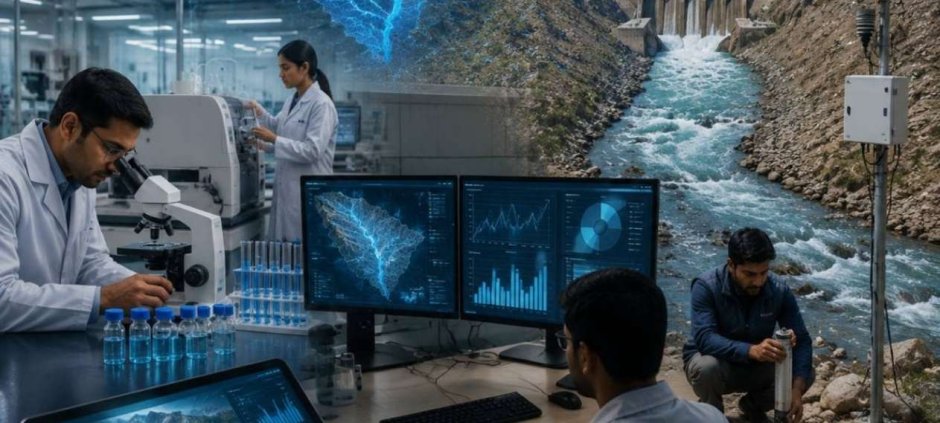
Pakistan’s debate over artificial intelligence (AI) has largely focused on IT exports, digital skills and the threat automation poses to entry-level jobs. However, a new argument suggests the country’s biggest opportunity may lie beyond the technology sector: using AI to improve agricultural productivity and conserve scarce water resources.
In an analysis published by Samaa, Tanweer Ahmad argues that AI could deliver broader economic benefits if it is applied to farming, where low productivity and inefficient water use remain major challenges.
The article calls for a practical approach that prioritizes measurable results, affordable technology and support for small farmers rather than focusing mainly on AI infrastructure and digital exports.
Why Pakistan’s AI Debate Needs a Wider Focus
Pakistan’s IT exports are worth roughly $4.6 billion, according to the figures cited in the analysis. However, a substantial share comes from freelancing, call centres and entry-level coding work that may face growing pressure from automation.
The article acknowledges the importance of developing Pakistan’s own AI capabilities but argues that policymakers should also explore how the technology can improve productivity across other sectors of the economy.
Agriculture is a natural candidate. It employs around one-third of Pakistan’s workforce and contributes nearly a quarter of the country’s gross domestic product, yet productivity remains relatively low.
The analysis cites Pakistan Institute of Development Economics figures showing that wheat yields average approximately 2.9 tonnes per hectare in Pakistan, compared with 5.4 tonnes in China.
Closing even part of this productivity gap could benefit a much larger share of the population than technology-sector growth alone can reach in the near term.
How AI Could Help Farmers Save Water
Water scarcity is one of the central challenges facing Pakistani agriculture. Farmers must decide how much water their crops need and when irrigation should take place, often without access to reliable field-level information.
AI-assisted systems could help improve these decisions by combining soil sensors, local weather forecasts and crop data to recommend irrigation schedules for individual fields.
Instead of watering crops according to fixed routines or relying on guesswork, farmers could use data to determine when irrigation is needed and how much water to apply.
Similar systems could also support more targeted use of fertilisers and pesticides. Applying these inputs where and when crops need them could reduce waste and improve efficiency.
However, the potential benefits should not be confused with proven results. The effectiveness of such systems depends on local conditions, equipment costs, the quality of the data and whether farmers can operate and maintain the technology.
Early Projects Show Potential, but More Evidence Is Needed
The analysis points to a pilot project by the Sarhad Rural Support Programme in Khyber Pakhtunkhwa, which links soil sensors with AI-controlled drip irrigation powered by solar energy. Farmers are reportedly being invited to observe the system in operation.
It also refers to a media report from Rahim Yar Khan claiming that AI-assisted drip irrigation can save up to 30% of water.
That figure, however, has not been independently verified, according to the article. It notes that publicly available independent comparisons of water consumption, crop yields and costs per farmer are lacking.
This is an important distinction. A promising demonstration does not automatically establish that a technology will deliver similar results across different crops, soil types and farming conditions.
The article therefore recommends that every publicly funded pilot measure water use, crop yields and the cost per farmer against a comparable plot operating without the technology. Results should then be published for public scrutiny.
Such reporting would allow policymakers to identify which systems work, where they are effective and whether their benefits justify the investment.
The Biggest Challenge Is Making AI Affordable
Even if AI-powered irrigation systems prove effective, widespread adoption will not happen automatically.
Many Pakistani farmers operate small holdings and may struggle to afford drip irrigation equipment, soil sensors and solar-powered pumps. Uneven internet connectivity and limited access to digital services create further barriers.
Technology designed around English-language interfaces or data-heavy mobile applications may also fail to reach farmers who need guidance in Urdu or regional languages.
The analysis cites research by the Islamabad Policy Research Institute that similarly highlights the need for stronger digital connectivity and targeted subsidies.
These challenges suggest that the main obstacle is not simply developing the technology. It is finding affordable ways to deliver it to farmers and ensuring that they can use it effectively.
Government Departments Could Help Expand Adoption
The article recommends using existing institutions, including provincial agriculture departments and rural support programmes, to introduce and support AI-based farming tools.
Targeted subsidies could help smallholders access suitable equipment, while advisory services in Urdu and regional languages could make technical guidance more accessible.
Local weather information and soil data would also be important for ensuring that recommendations are relevant to the conditions farmers face in their own fields.
The analysis further argues that AI and skills training announced in Quetta through the Prime Minister’s Youth Programme should be connected to agricultural technology initiatives rather than treated as a separate exercise.
Training young people to install sensors, maintain irrigation equipment, develop local advisory software and provide technical support could create employment while addressing practical agricultural needs.
Turning Pakistan’s Youth and IT Skills into an Economic Advantage
Around 64% of Pakistan’s population is under 30, according to the analysis. This young population could become an important resource for developing and maintaining agricultural technology.
Instead of preparing young people only for entry-level coding and call-centre jobs, training programmes could help them build practical skills in agricultural data systems, sensor installation and digital advisory services.
Such an approach would connect Pakistan’s existing IT talent with a sector that supports millions of livelihoods.
It could also create work outside major technology centres, particularly if agricultural technology services are developed around local farming communities.
The opportunity, however, depends on effective training, access to equipment and the availability of sustainable business models that allow technology providers to serve small farmers affordably.
Water-Efficient Agriculture Could Strengthen Pakistan’s Global Role
The analysis also connects agricultural AI with Pakistan’s international priorities. Pakistan chairs the Shanghai Cooperation Organisation’s Council of Heads of State until the Islamabad summit scheduled for August 2027, while AI and digital transformation are among the priorities identified for the country’s term.
Water-efficient agriculture could provide a practical area for cooperation with other developing countries facing similar challenges involving water scarcity, food production and agricultural productivity.
But international leadership would carry more weight if Pakistan could demonstrate measurable improvements on its own farms.
Evidence showing reduced water use, improved yields and affordable implementation would offer a stronger foundation for cooperation than policy announcements alone.
Measuring AI Success by Results on the Ground
The central argument is that Pakistan should judge its AI strategy by what the technology achieves in everyday economic life.
In agriculture, the most useful measures would include how much water farmers save, whether crop yields improve, how much the systems cost and whether independent evaluations confirm the benefits.
If these projects produce reliable results, AI could help Pakistan address water scarcity while supporting agricultural output and creating new technical jobs.
If they fail to demonstrate measurable gains, public spending risks producing publicity without meaningful improvements for farmers.
For Pakistan, the larger AI opportunity may therefore lie not only in exporting digital services but also in applying technology to urgent domestic challenges. Agriculture offers a promising starting point, provided that affordability, implementation and independent evidence remain at the centre of the strategy.
Also read: Govt May Introduce Fixed Tax on Agriculture