Tesla has unveiled a redesigned electric Roadster featuring rocket-style thrusters, dramatic aerial stunts and performance figures that could make it one of the most ambitious vehicles in the company’s lineup. However, customers will have to wait until 2028 for the planned start of production.
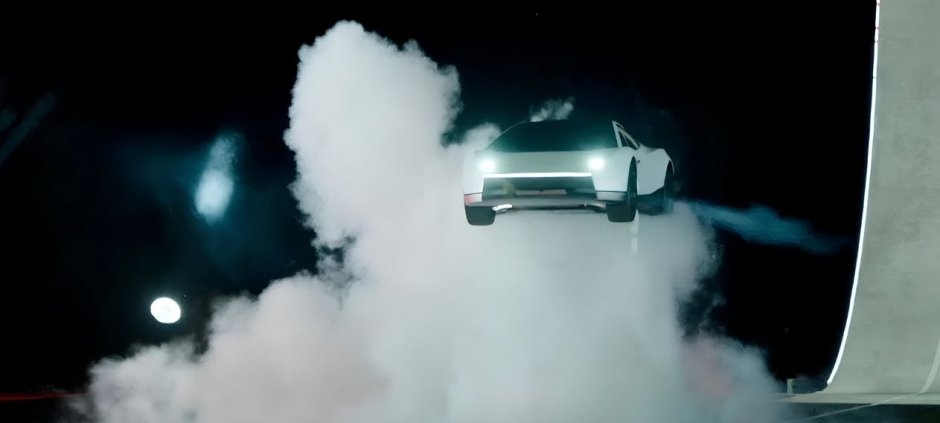
The two-seater sports car was revealed on Thursday at a SpaceX test site in McGregor, Texas. Developed in collaboration with Elon Musk’s rocket company, SpaceX, the vehicle demonstrated a series of eye-catching manoeuvres, including turning in the air and landing with the help of built-in thrusters.
The unveiling comes more than a decade after Tesla first presented a prototype of its next-generation Roadster, with earlier delivery targets repeatedly missed.
Rocket Thrusters Take Centre Stage
The new Roadster’s most striking feature is its rocket-style propulsion system, which Tesla developed with SpaceX.
During the demonstration, the white sports car drove upside down on a ramp using a suction system before turning in the air and landing with the help of its built-in thrusters.
The vehicle later used the thrusters to jump over a truck and other vehicles while twisting in the air.
The demonstration attracted considerable attention from enthusiasts and investors, although the company has yet to provide full details about how the system would operate in a production vehicle.
The unusual technology also raised questions about the Roadster’s commercial purpose, particularly as Tesla increasingly focuses on autonomous driving, artificial intelligence and robotics.
Tesla Claims Acceleration in Under One Second
Tesla vehicle engineering chief Lars Moravy said the Roadster could accelerate from zero to 60 miles per hour in less than one second.
The company also cited a top speed exceeding 230 miles per hour, or approximately 370 kilometres per hour.
Musk suggested the car could potentially achieve even greater speeds, describing its performance as approaching half the speed of sound.
Tesla also said the vehicle could travel more than 300 miles, or approximately 480 kilometres, on a single charge.
However, the claimed range is considerably below the figure Musk announced when the second-generation Roadster was first revealed in 2017. At that time, Tesla promised a range of around 620 miles and expected deliveries to begin in 2020.
The latest presentation showcased ambitious performance claims, but further details will be needed to establish the vehicle’s final specifications and real-world capabilities.
Three Versions and Expensive Reservations
Tesla’s reservation page following the unveiling listed different versions of the Roadster with substantial deposits.
The Performance version requires a $50,000 deposit, while the Thrust version, which includes acceleration thrusters, requires a $250,000 deposit.
The company also described a Rocket variant as an invitation-only model. According to Tesla’s description, this version will be a single-seater featuring a full flight system.
Executives did not announce final target prices during Thursday’s event. Tesla had previously quoted a base price of $200,000 for the vehicle nearly a decade ago.
The reservation deposits indicate the premium positioning of the Roadster, but final pricing, production specifications and delivery arrangements remain important details for prospective buyers.
Why the Roadster Matters to Tesla
Although Musk has previously downplayed the Roadster’s financial importance, the vehicle could serve as Tesla’s flagship performance car.
Morningstar analyst Seth Goldstein described the Roadster as a potential “halo car” for the company — a high-performance vehicle designed to showcase an automaker’s engineering and technology.
Tesla investor Gene Munster, however, questioned the demonstration’s commercial value, describing it as an engineering showcase rather than a product likely to have a major immediate impact on the company’s finances.
The event has also prompted speculation about closer ties between Tesla and SpaceX. Some observers interpreted the collaboration as potentially supporting discussions about a merger between the companies, although no merger was announced at the unveiling.
A Long-Awaited Comeback
The Roadster has a special place in Tesla’s history. The original model, launched in 2008 and sold until 2012, was the company’s first electric vehicle and used a Lotus Elise chassis.
It helped challenge perceptions about the performance potential of electric cars and contributed to Tesla’s early reputation as an innovative automaker.
The second-generation Roadster was unveiled in 2017, but its production timeline has repeatedly slipped. The latest announcement sets 2028 as the planned production start, extending the wait for customers who have followed the project for years.
The new version is intended to build on the original Roadster’s performance-focused identity while introducing technology developed in collaboration with SpaceX.
Tesla’s Priorities Are Shifting
The unveiling comes as Tesla increasingly prioritises artificial intelligence, self-driving systems and robotics alongside its electric vehicle business.
The company has introduced the Cybercab robotaxi, a two-seater vehicle designed without conventional manual driving controls, and has been expanding its work on Optimus humanoid robots.
Tesla has also faced pressure over its ageing vehicle lineup and declining sales over the past two years, although higher fuel prices helped boost deliveries in the third quarter.
The company was scheduled to report its third-quarter financial results on October 21, making its margins, cash flow and delivery performance key issues for investors.
Production Still Years Away
The rocket-powered Roadster has delivered a dramatic demonstration, but its long-term success will depend on more than spectacle.
Tesla still needs to clarify the final specifications, pricing and practical operation of the thruster system, while bringing the vehicle into production on the latest timeline.
For now, the company is targeting 2028 for production, meaning the public demonstration is only an early look at what Tesla hopes to deliver.
If the vehicle eventually reaches customers with the promised performance and technology, it could become one of the most distinctive electric sports cars on the market. Until then, questions about production timing, affordability and real-world capabilities will remain central to the Roadster’s story.
Also read: Tesla Cybertruck Accidentally Submerged in Ventura Harbor