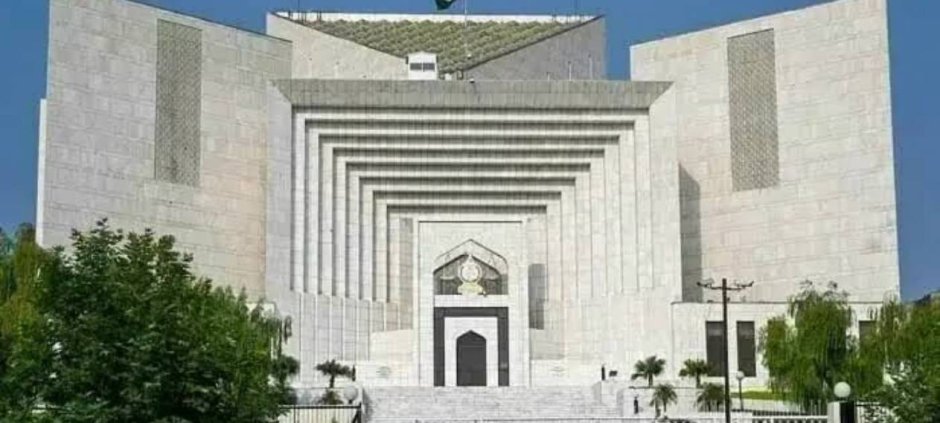
The Supreme Court of Pakistan has directed Nikah registrars to strictly use the prescribed Nikahnama and ensure that all relevant columns are completed accurately and carefully.
The court issued detailed directions to improve the recording of marriage terms and ensure compliance with the Muslim Family Laws Ordinance, 1961 and related rules.
A four-member bench headed by Justice Shahid Waheed issued the 26-page judgment on Tuesday while deciding matters arising from orders passed by different benches of the Peshawar High Court and Lahore High Court.
The Supreme Court observed that the cases involved broader questions concerning the legal framework governing Muslim families and were not limited to the interpretation of a single Nikahnama clause or the private rights of two spouses.
Nikah Registrars Must Complete All Relevant Columns
The Supreme Court directed Nikah registrars to use the officially prescribed Nikahnama and properly complete every relevant section.
According to the judgment, no column should be left blank or disregarded without a lawful reason.
The court emphasised that the Nikahnama is an important legal document and that the terms agreed between the parties must be accurately recorded rather than entered mechanically.
Registrars have also been directed to avoid making entries based on assumptions or their own understanding of what the parties intend.
If any term or information is unclear, the registrar must seek clarification from the parties before completing the document.
Court Highlights Haq Mahr Requirements
The Supreme Court placed particular emphasis on Columns 13 to 16, which concern dower, commonly known as Haq Mahr.
The judgment stated that dower is a mandatory legal requirement of marriage under Islamic law.
The court further observed that where dower has not been provided, courts have the authority to enforce the relevant legal rights.
Under the directions, Column 13 must clearly specify the total amount of dower agreed upon by the parties.
The dower may consist of money, movable property or immovable property, depending on the agreement between the spouses.
The court’s directions are intended to ensure that the agreed terms are clearly documented and can be identified if a dispute arises later.
Property Given as Dower Must Be Clearly Identified
The Supreme Court also provided specific directions concerning property agreed as dower.
Where immovable or other property forms part of the dower, Column 16 must contain sufficient information to identify the property.
The details may include its description, measurements, location and value where a value has been agreed upon.
The requirement is aimed at reducing ambiguity over property that has been included as part of the marital dower.
Clear documentation can also help courts and the parties determine the exact nature of the property if questions arise regarding ownership or enforcement of the dower.
Registrar Must Explain Important Entries
The court directed Nikah registrars to read out or explain relevant entries to the bride and groom before obtaining their signatures or thumb impressions.
This requirement is particularly important where the Nikahnama contains provisions concerning dower, special conditions, delegated authority relating to divorce, or property given as dower.
The directions are intended to ensure that both parties understand the terms being formally recorded in the marriage document.
The court also made clear that registrars cannot independently formulate special conditions.
Any condition entered in Column 17 must reflect the agreement reached by the parties and should not contain wording created according to the registrar’s personal interpretation.
No Entries Based on Personal Assumptions
The Supreme Court further instructed registrars not to enter information based on personal assumptions or informal understandings.
If the parties use unclear terminology or provide incomplete information, the registrar must ask them to clarify the intended terms.
This is intended to ensure that the Nikahnama reflects the actual agreement between the spouses.
The directions could also help reduce disputes arising from unclear or incomplete marriage documents, particularly in cases involving financial obligations, property or special contractual conditions.
Copies Must Be Provided and Records Preserved
After completing the Nikahnama, the registrar is required to authenticate and preserve the relevant record.
Copies must also be provided to the spouses, while the required copy must be forwarded to the concerned Union Council in accordance with the law.
The court’s directions place responsibility on registrars not only to complete the document accurately but also to maintain and transmit the required records properly.
Proper preservation of these documents can be important when spouses later need to establish the terms agreed at the time of marriage.
Union Councils Directed to Train Registrars
The Supreme Court also directed competent authorities, particularly the chairmen and secretaries of concerned Union Councils, to ensure that licensed Nikah registrars receive appropriate training.
The court called for periodic training and orientation sessions so that registrars understand how the prescribed form should be completed.
The judgment emphasised that the Nikahnama should not be filled out as a routine formality.
Instead, the agreed terms must be properly understood and accurately recorded in the relevant columns.
Authorities Asked to Inspect Nikah Registers
In addition to training, the court directed authorities to periodically inspect the registers maintained by Nikah registrars.
The inspections are intended to ensure compliance with applicable laws, rules and licence conditions.
Authorities are expected to monitor whether registrars are properly performing their statutory responsibilities and maintaining marriage records in accordance with the prescribed requirements.
The court also stated that where a registrar fails to perform statutory duties or violates the conditions of their licence, the competent authority should take appropriate action in accordance with the law.
Supreme Court Sets Out Detailed Nikahnama Guidelines
The Supreme Court’s judgment provides detailed guidance for the future practice of Nikah registration, particularly regarding the accurate recording of dower and other agreed conditions.
The directions reinforce the importance of ensuring that the Nikahnama contains complete and understandable information rather than leaving significant sections blank.
The ruling also places responsibilities on Union Councils and other competent authorities to train and monitor licensed Nikah registrars.
For couples entering into marriage, the directions underline the importance of carefully reviewing the Nikahnama and ensuring that the terms agreed between them are properly recorded before signatures or thumb impressions are taken.
The judgment is expected to provide clearer guidance for registrars and authorities while strengthening the documentation of marital rights and obligations under the applicable legal framework.
Also read: Smuggling Crackdown: Supreme Court Orders Permanent Seizure