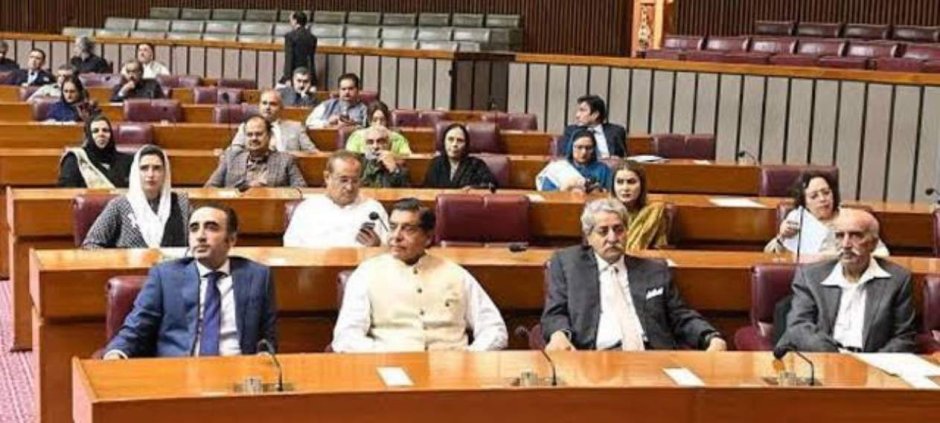
The Pakistan Tehreek-e-Insaf (PTI) has raised objections to the proposed representation formula for a parliamentary committee on electoral reforms, demanding a revised arrangement that would give opposition parties a stronger voice in the process.
The development follows an invitation from the federal government seeking PTI’s participation in the proposed committee, which is expected to review Pakistan’s electoral system and recommend measures to improve the transparency and fairness of future elections.
Federal Minister for Parliamentary Affairs Dr Tariq Fazal Chaudhry contacted PTI Chief Whip Aamir Dogar by telephone to discuss the committee’s formation and request the opposition party’s nominations.
During the conversation, Dogar questioned the proposed allocation of seats, under which the government side would have 15 members and the opposition five in the National Assembly component of the committee.
He argued that such limited representation could restrict the opposition’s ability to contribute meaningfully to discussions and suggested considering the arrangement used for the 2013 Electoral Reforms Committee.
PTI also demanded that an investigation into allegations of election rigging be included in the committee’s Terms of Reference (ToRs).
PTI Objects to Proposed 15-5 Representation Formula
According to sources, Tariq Fazal Chaudhry informed Dogar that representation would be allocated according to the parliamentary strength of political parties.
Under the proposed arrangement discussed during the telephone conversation, government-side lawmakers would receive 15 seats, while opposition parties would have five representatives in the National Assembly portion of the committee.
Dogar questioned whether the opposition could effectively participate in the reform process with such a limited share.
He asked the government to reconsider the formula and suggested that the arrangement adopted for the 2013 Electoral Reforms Committee should also be examined.
The PTI chief whip reportedly said that the party wanted a representation structure that would allow opposition parties to participate meaningfully in discussions and contribute to decisions concerning future elections.
The government has not announced a revised formula in response to these objections.
How Many Members Will the Electoral Reforms Committee Have?
The proposed Parliamentary Committee on Electoral Reforms is designed to include members from both the National Assembly and Senate.
The National Assembly passed a motion on October 16, 2026, authorising Speaker Sardar Ayaz Sadiq, in consultation with the Senate chairman and parliamentary party leaders, to constitute the committee.
Under the approved framework, the body will have 30 members, including 20 representatives from the National Assembly and 10 senators.
The motion states that parliamentary parties will receive representation in proportion to their strength in Parliament. <Cite refs={[“turn571175view2″,”turn621390search6”]}/>
The 15-5 allocation discussed between Tariq Fazal Chaudhry and Aamir Dogar relates to the proposed distribution of the 20 National Assembly seats, while the Senate will contribute another 10 members.
Separate reporting indicates that the proposed National Assembly allocation includes nine members from the PML-N, five from the PPP and one from the MQM, with five seats reserved for the opposition. <Cite refs={[“turn571175view0″,”turn621390search2”]}/>
The final membership will be confirmed once the relevant nominations are received and the National Assembly speaker issues the formal notification.
PTI Wants Alleged Election Rigging Included in Committee’s ToRs
Apart from seeking greater representation, PTI has called for an investigation into alleged election rigging to be included in the committee’s Terms of Reference.
During his conversation with the parliamentary affairs minister, Dogar reportedly argued that allegations concerning the party’s electoral mandate should be examined before the committee proceeds with other reform proposals.
PTI has repeatedly alleged that its mandate was taken away during the previous general election. These claims remain allegations raised by the party and have been contested by other political stakeholders.
The party now wants the proposed parliamentary body to examine those concerns as part of its formal responsibilities.
Chaudhry responded that the committee’s ToRs would be prepared after its official notification had been issued.
The minister did not announce whether the government would accept PTI’s demand to include an investigation into the allegations.
Government Urges Opposition to Participate
Tariq Fazal Chaudhry told Dogar that opposition participation would strengthen Parliament and contribute to the democratic process.
He reportedly said the government was willing to move forward with an open mind and urged PTI to submit its nominees promptly so that the National Assembly speaker could complete the notification process.
The minister also maintained that the committee would provide a parliamentary platform for political parties to discuss electoral reforms and other important national issues.
The government has argued that involving all major parliamentary parties would help build broader agreement on changes to the electoral system.
The parliamentary affairs minister is also holding consultations with other political parties to finalise the proposed committee’s composition.
Government Sends Formal Letters to Opposition Leadership
Following the initial telephone conversation, the federal government sent formal written requests to opposition leaders seeking nominations for the parliamentary committee.
One letter was addressed to Opposition Leader Mahmood Khan Achakzai, while another was sent to PTI Chief Whip Aamir Dogar.
Dogar confirmed his telephone conversation with Tariq Fazal Chaudhry and said the minister had discussed the proposed representation formula.
However, he clarified that the final decision about joining parliamentary committees rested with the opposition leader.
Dogar said he had conveyed this position to the minister and that PTI would follow whatever decision Achakzai made regarding participation.
The party is therefore yet to announce a final decision on whether it will accept the government’s invitation.
What Will the Parliamentary Committee on Electoral Reforms Do?
The proposed committee was established to review Pakistan’s electoral framework and recommend changes aimed at ensuring free, fair and transparent elections.
The motion approved by the National Assembly authorises the body to consider the use of modern technology in the electoral process and prepare recommendations for relevant legislation.
It may also propose constitutional amendments where considered necessary.
The committee will have the authority to establish subcommittees to examine specific matters and prepare recommendations.
Its report will be submitted to Parliament within the timeframe determined by the National Assembly speaker after the committee’s formal notification. <Cite refs={[“turn571175view2″,”turn621390search5”]}/>
The participation of opposition parties could influence the scope of discussions, particularly on issues involving election administration, transparency, voter registration and the counting and reporting of results.
PTI’s Participation Remains Uncertain
The government’s invitation and PTI’s objections have brought the committee’s proposed composition into focus even before its formal notification.
The government wants opposition parties to nominate representatives and participate in the reform process, while PTI is seeking changes to the representation formula and inclusion of an investigation into alleged electoral irregularities.
Aamir Dogar is expected to convey the party’s position after consultations with the opposition leadership.
The immediate issue is whether the government will reconsider the proposed allocation and whether PTI will agree to participate under the revised or existing arrangement.
Until the opposition submits its nominees and the speaker formally notifies the committee, its final composition and terms of reference remain unsettled.
The discussions will determine whether the proposed parliamentary forum can bring government and opposition parties together to examine reforms to Pakistan’s electoral system.
Also read: Islamabad Begins Removing Containers After PTI Protests