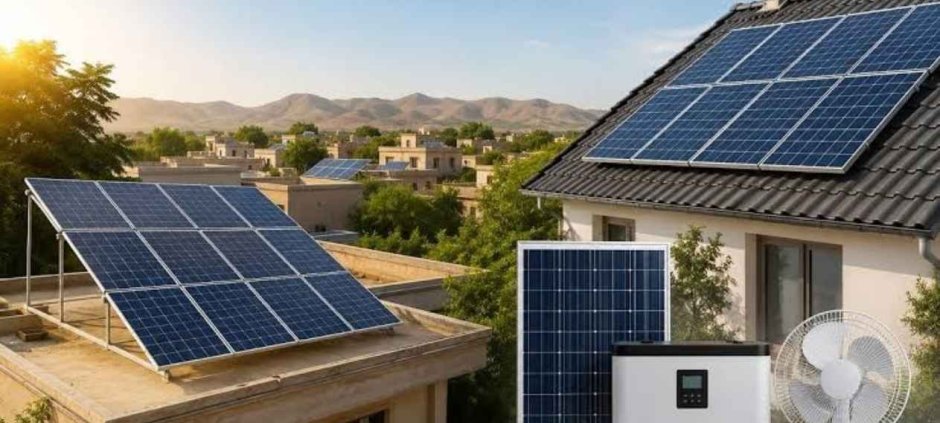
Pakistan’s rapid expansion of solar power is not fully reflected in its official energy statistics. The growing use of rooftop and distributed solar systems has created a gap in national energy reporting.
According to the Pakistan Energy Market Review 2026 (PEMR26) report by Renewables First, distributed solar is becoming an important part of the country’s energy supply. However, official figures do not fully capture its contribution.
The report highlights differences between Pakistan’s reported energy supply and consumption figures during FY2025. Official statistics showed primary energy supply increasing by just 1.6 percent.
Meanwhile, reported energy consumption recorded significantly higher growth of 8 percent. These figures do not include the additional electricity generated through distributed solar installations.
Solar Power Reduces Pakistan’s Energy Requirements
The PEMR26 report estimates that distributed solar displaced approximately 13 million tonnes of oil equivalent (Mtoe) in primary energy supply requirements during FY2025.
This means Pakistan avoided needing an equivalent amount of additional energy supplies. Without solar generation, the country would have required more fossil fuels to meet its energy demand.
The increasing adoption of solar systems has changed the country’s overall energy landscape. Households, businesses, industries, and agricultural consumers are increasingly using solar power.
However, the contribution of these installations remains underrepresented in official energy statistics. This creates a difference between reported energy figures and actual energy generation.
The report suggests that accounting for distributed solar could provide a clearer picture of Pakistan’s energy supply and consumption.
Pakistan’s Electrification Rate Reaches 27 Percent
The expansion of solar power has also contributed to improvements in Pakistan’s overall electrification rate.
According to the report, the country’s electrification rate has reached 27 percent. This reflects the growing role of electricity across different sectors.
Industrial electrification has also recorded progress over recent years. The share increased from 20 percent in FY2023 to 25 percent in FY2025.
This indicates that industries are gradually increasing their use of electricity. Solar adoption has also continued among residential and agricultural consumers.
Distributed Solar Changes the Energy Market
The growing popularity of rooftop solar systems is changing how electricity is generated and consumed in Pakistan.
Unlike large power plants, distributed solar installations generate electricity closer to where it is used. This allows households, businesses, and farms to produce some of their own electricity.
The increasing use of these systems can reduce dependence on conventional energy sources. It can also lower the amount of additional fossil fuel supplies required.
However, incomplete reporting makes it difficult to measure the full impact of distributed generation. Including distributed solar in national energy statistics could help improve future energy planning.
In other related news also read Diwali Celebrations Light Up Cities Across Pakistan
The findings highlight the importance of updating Pakistan’s energy reporting methods. Accurate data would help policymakers better understand electricity generation, consumption, and changing energy requirements.