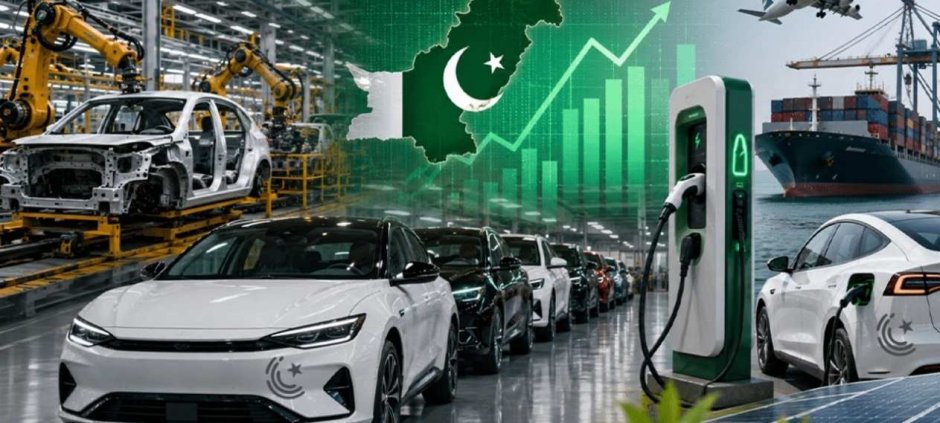
Pakistan has shared the draft of its proposed Auto Policy 2026–31 with the International Monetary Fund (IMF), as discussions continue over electric vehicle (EV) taxation and other measures designed to reshape the country’s automotive industry.
According to sources in the Ministry of Industries and Production cited by Samaa, the IMF has sought an 18% sales tax on electric vehicles, while the government has proposed alternative revenue sources to compensate for potential tax losses associated with EV incentives.
Virtual discussions between Pakistani officials and the international lender are expected to address the outstanding issues before the proposed policy moves towards final approval.
The outcome could influence how electric vehicles are taxed, how the government balances revenue requirements with incentives for cleaner transportation, and how the automotive industry develops over the next five years.
IMF Seeks 18% Sales Tax on Electric Vehicles
One of the main points under discussion is the proposed tax treatment of electric vehicles.
According to ministry sources, the IMF has called for an 18% sales tax on EVs, raising questions about the government’s plans to offer favourable tax treatment to encourage electric mobility.
The government has indicated that it intends to compensate for potential revenue losses through alternative sources rather than simply abandoning its proposed incentives.
The disagreement reflects a broader policy challenge: encouraging consumers to switch towards cleaner vehicles while maintaining government revenue under Pakistan’s economic reform programme.
The final tax structure will depend on the outcome of discussions between Pakistani officials and the IMF. The reported 18% rate should therefore be understood as part of the ongoing negotiations, rather than a confirmed change already implemented for vehicle buyers.
Government Plans to Explain Alternative Revenue Measures
During the expected virtual discussions, Pakistani officials are set to explain how the proposed auto policy could offset revenue losses associated with lower taxation on electric vehicles.
The government has also indicated that officials will brief the IMF on the implementation of a levy on vehicles valued at more than Rs20 million, according to the report.
The proposed measures form part of the wider effort to reconcile EV incentives with the government’s revenue objectives.
However, the exact structure and implementation of these measures will depend on the final policy arrangements. The outcome of the talks could determine whether any changes are made to the tax proposals before the policy proceeds through the remaining approval process.
Shehbaz Sharif Approves Draft Auto Policy
Prime Minister Shehbaz Sharif has approved the draft Auto Policy 2026–31, which is expected to be submitted to the Federal Cabinet for further approval.
According to the reported details, officials from the Ministry of Law briefed the prime minister on the proposed framework. He subsequently directed that the draft be placed before the cabinet.
The prime minister’s approval of the draft does not mean that every proposed measure has already come into force. The policy still needs to pass through the relevant approval process, while the outstanding discussions with the IMF remain an important consideration.
The latest developments indicate that the government is seeking to move the proposed framework forward while addressing concerns over taxation and revenue collection.
Policy Aims to Strengthen Pakistan’s Automotive Industry
Beyond the immediate disagreement over EV taxes, the proposed policy is intended to reshape Pakistan’s automotive sector through changes in import duties, local production requirements, exports and competition.
A report published by Dawn on October 21 said the draft aims to raise automotive exports to $6 billion and improve local production and competitiveness. The framework also proposes gradual reductions in tariffs on imported vehicles and automotive parts by the end of fiscal year 2030–31.
The policy is also expected to introduce measures linking incentives to export performance, encouraging manufacturers to increase overseas sales and strengthen the domestic supply chain.
These proposals could affect local vehicle assemblers, parts manufacturers and consumers. The eventual impact will depend on how the changes are implemented and how manufacturers respond to a different tariff and incentive structure.
Imported Hybrid Vehicles Also Covered
The proposed policy seeks to address price differences between locally manufactured vehicles and imported hybrid models.
It also proposes making certificates confirming compliance with relevant standards mandatory for imported vehicles.
Such requirements are intended to strengthen regulatory oversight and establish clearer standards for vehicles entering the Pakistani market. The final requirements and their implementation will depend on the approved policy and applicable regulations.
The proposed changes could influence vehicle importers, dealers and consumers by altering compliance requirements alongside the wider changes to taxation and duties.
What the IMF Talks Mean for Car Buyers
The continuing discussions could be important for people planning to purchase electric, hybrid or conventional vehicles in Pakistan.
Changes to sales tax, import duties and other levies can affect vehicle prices, although the actual impact will depend on the final rates, the category of vehicle and other applicable charges.
Electric vehicle buyers, in particular, will be watching developments closely because the tax dispute concerns the balance between affordability and government revenue.
However, consumers should not assume that a reported proposal has already changed the price or tax treatment of vehicles currently available in showrooms.
Until the relevant measures are formally approved and implemented, the proposed tax arrangements remain subject to the policy process.
Final Approval Remains the Key Step
Pakistan’s Auto Policy 2026–31 is intended to provide a framework for the automotive industry over the coming years, with goals covering exports, domestic production, competition and electric mobility.
The immediate challenge is to resolve the outstanding taxation questions while ensuring that the policy can proceed through the remaining approval stages.
The upcoming discussions with the IMF will be significant in determining how the government addresses the reported demand for an 18% EV sales tax and its own plans to offset potential revenue losses.
For now, the draft has moved forward following the prime minister’s approval, but the final tax arrangements and implementation details remain dependent on the outcome of the ongoing process.