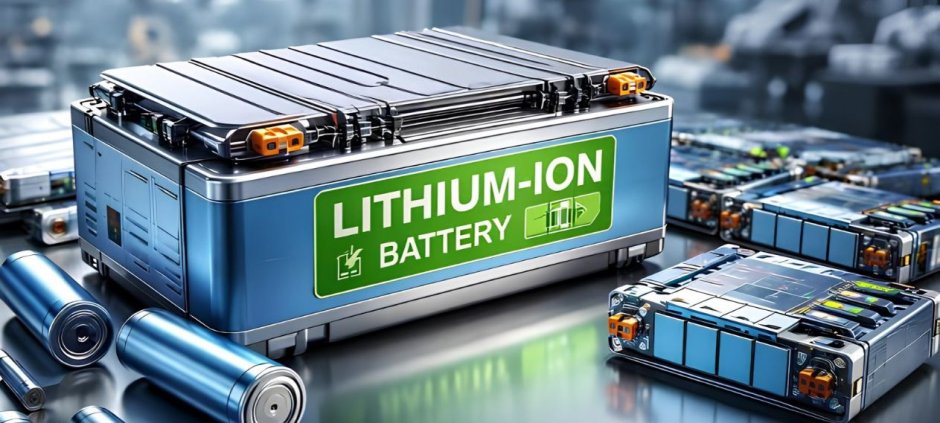
Pakistan is preparing to launch a $2.25 billion lithium-ion battery manufacturing project in Rawalpindi as the government seeks to reduce dependence on imported energy technologies and develop a domestic battery industry.
The proposed factory is owned by Margalla Heavy Industries Limited (MHIL), a military-run company operating at Heavy Industries Taxila in Rawalpindi district. The project involves Chinese manufacturers and a local private-sector investor, according to Hamad Ali Mansoor, chief executive of the Engineering Development Board (EDB).
Speaking to Arab News, Mansoor said construction of the facility had been completed and machinery installed, but commercial production was awaiting government approval of the lithium-ion battery manufacturing policy. Once the policy is approved, production could begin within six to eight months.
The project is expected to support Pakistan’s growing demand for energy storage systems, electric vehicles and renewable energy technology. The government is also considering a wider manufacturing strategy involving four major battery factories to establish domestic production capacity and create opportunities for exports. Source: Arab News
$2.25 Billion Battery Factory Awaits Policy Approval
The battery manufacturing project was agreed upon in July 2026 between MHIL, a Chinese company described by the EDB chief executive as a leading manufacturer, and a local private investor.
The identities of the Chinese company and local investor have not yet been publicly disclosed in the reporting on the project.
According to Mansoor, the factory building is ready and the equipment has been installed. However, the facility cannot proceed to production until the government approves the policy governing lithium-ion battery manufacturing in Pakistan.
The project is expected to manufacture lithium-ion battery cells rather than rely solely on assembling imported cells into battery packs.
This distinction is important because battery cells are the basic units used to construct battery packs for electric vehicles and energy storage systems. Local cell manufacturing could help Pakistan develop a deeper domestic supply chain and reduce its reliance on imported components.
The planned investment of $2.25 billion represents a major industrial project, although its implementation timeline depends on policy approval and the completion of the remaining requirements.
Factory to Begin With 200–300 MW Capacity
The proposed factory is expected to begin operations with an initial production capacity reported at 200 to 300 megawatts, before gradually expanding to more than 1,000 megawatts annually, according to the EDB chief executive.
The facility is intended to serve Pakistan’s energy storage and electric mobility markets, both of which are expected to require greater battery capacity as the country expands its use of renewable energy and electric vehicles.
Battery energy storage systems can store electricity for use when generation is lower or demand is higher. They can also help manage fluctuations in electricity supplied by solar and wind installations.
For electric vehicles, lithium-ion batteries provide the energy needed to power cars, motorcycles, buses and other transport options.
Establishing domestic manufacturing could provide local businesses with access to battery cells while creating opportunities for related industries, including battery-pack assembly, electronics, charging equipment and energy management.
However, the extent of these benefits will depend on the factory achieving its planned capacity, maintaining competitive production costs and meeting the technical standards required by customers.
Pakistan’s Battery Storage Demand Could Reach 100,000 MW
The Engineering Development Board estimates that Pakistan’s demand for battery energy storage systems could reach as much as 100,000 megawatts by June 2030 under a stronger economic growth scenario.
Mansoor told Arab News that the projection assumes Pakistan’s gross domestic product grows by 5% or more annually. If economic growth remains below 3%, demand could reach approximately 80,000 megawatts instead.
These figures are projections rather than confirmed future purchases. Actual demand will depend on economic performance, investment in solar energy, electricity-sector requirements and the adoption of electric vehicles.
The projected market includes households, commercial buildings, industrial facilities and electric transport ranging from two-wheelers and three-wheelers to passenger cars, buses and trucks.
The government’s assessment suggests that energy storage could become an increasingly important part of Pakistan’s energy infrastructure over the coming years.
However, a forecast of 80,000 to 100,000 megawatts should not be interpreted as a guaranteed market for a single manufacturer. Suppliers will need to compete on cost, performance, reliability and compliance with applicable standards.
Pakistan May Need Four to Five Battery Gigafactories
The EDB estimates that meeting the country’s projected battery storage requirements could require four to five gigafactories, with each factory costing approximately $1 billion to $1.25 billion.
Grid stabilisation alone could require around 3,000 to 5,000 megawatts of battery storage capacity, according to the board’s estimates.
Battery storage can help balance electricity supply and demand, particularly as more solar and wind power is integrated into the energy system.
For Pakistan, these systems could be useful for storing surplus solar generation and supplying electricity when renewable output falls. They could also support commercial and industrial users seeking more flexibility in how they manage their electricity consumption.
The projected need for multiple factories explains why the government is pursuing a wider manufacturing policy rather than relying on a single investment.
Nevertheless, the development of several gigafactories would require substantial financing, reliable supply chains, skilled labour, technology partnerships and a sufficiently large market for locally produced cells.
Government Plans Four Major Manufacturing Facilities
Pakistan has prepared a lithium-ion battery manufacturing policy that was submitted to the Ministry of Industries and Production in March 2026 and remains awaiting approval, according to the EDB chief executive.
The policy envisages four major factories: three in Punjab’s Lahore, Faisalabad and Rawalpindi divisions, and another in Karachi.
The proposed framework is intended to encourage domestic battery manufacturing, support technology development and establish a stronger industrial base for energy storage and electric mobility.
The policy would also require manufacturers to export a specified share of production. However, Mansoor did not disclose the proposed export target before the policy receives approval.
According to the EDB, the framework incorporates international safety and performance standards to help ensure locally manufactured batteries meet relevant market requirements.
An export requirement could encourage manufacturers to look beyond domestic demand and develop products for international customers. Whether Pakistan can become a competitive exporter will depend on production costs, product quality, capacity and access to overseas markets.
Until the policy is formally approved, the specific requirements and incentives remain subject to the final framework.
Pakistan Wants to Reduce Dependence on Imported Components
Pakistan currently assembles around 3,000 to 4,000 megawatts of batteries and related components, including motors, controllers and chargers, according to Mansoor.
However, the country continues to depend on imported components and lacks sufficient domestic lithium-ion cell manufacturing capacity.
Developing local production could reduce some import requirements and create opportunities for Pakistani engineering companies to manufacture higher-value products.
Mansoor said the government wanted to move towards manufacturing these components entirely within Pakistan by next year.
Achieving that goal would require investment across multiple stages of the supply chain, including components, electronics, battery systems and quality assurance.
Domestic manufacturing could also support employment in engineering, production, testing and maintenance. The actual number of jobs created, however, has not yet been disclosed for the proposed factory.
Electric Vehicles Could Support Future Battery Demand
The proposed battery factory comes as Pakistan seeks to expand electric mobility and modernise its automotive industry.
Lithium-ion batteries are central to electric transport because they power the motors used in electric motorcycles, cars, buses and commercial vehicles.
In addition, the technology is increasingly used in stationary storage systems that can be paired with solar installations or other electricity sources.
The government has also been advancing its Automotive and Auto Parts Manufacturing Policy 2026–2031, which is intended to support the development of the local automotive sector.
Growth in electric-vehicle production could create additional demand for batteries and associated components. At the same time, the energy storage market could expand as households and businesses adopt battery systems to manage electricity supply.
However, the scale and pace of these markets will depend on policy implementation, the affordability of electric vehicles, charging infrastructure and the economics of energy storage.
What Happens Next?
Pakistan’s proposed $2.25 billion lithium-ion battery factory represents a potential milestone for domestic energy technology manufacturing.
The facility at Heavy Industries Taxila is reportedly ready for production, but the start of operations remains dependent on approval of the government’s battery manufacturing policy.
The EDB expects production to begin within six to eight months of approval, initially at 200 to 300 megawatts before expanding towards a planned annual capacity exceeding 1,000 megawatts.
The government also intends to encourage additional factories in Punjab and Karachi to build a broader manufacturing industry and serve projected demand from energy storage systems and electric vehicles.
For now, the key development to watch is policy approval. Once the framework is finalised, the timeline for commercial production, implementation of export requirements and development of the wider battery manufacturing sector should become clearer.
Also read: FBR Sets New Customs Values for Lithium Battery Imports