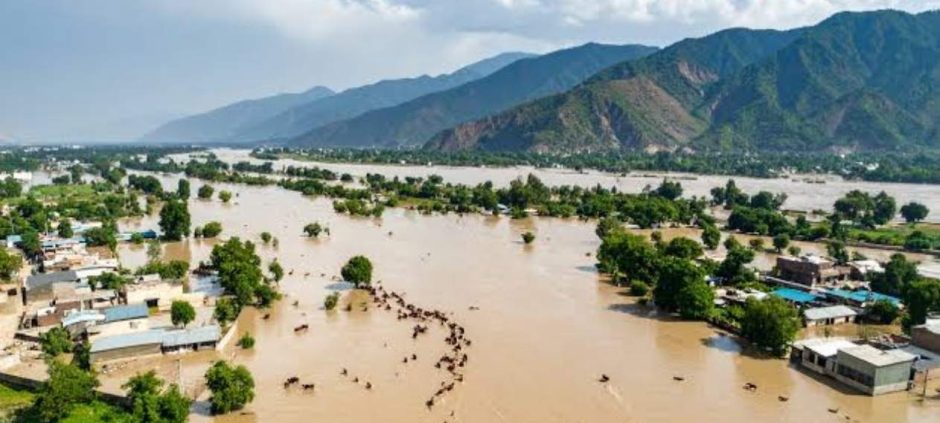
Pakistan is facing another flood threat as rising river flows, high reservoir levels, and continued monsoon activity increase risks across several regions. The National Disaster Management Authority (NDMA) has warned of possible low to moderate flooding in vulnerable areas.
The NDMA’s National Emergencies Operation Centre has issued an advisory covering river conditions, dam storage levels, and possible flooding in Khyber Pakhtunkhwa, Punjab, Balochistan, and Azad Jammu and Kashmir.
According to the latest assessment, the Indus River has already reached low-level flood conditions at Kalabagh, Chashma, Taunsa, and Guddu. Meanwhile, water levels in the Ravi, Chenab, Jhelum, Kabul, and Sutlej rivers remain within normal limits.
However, the situation could change as water flows in several major rivers are expected to increase on August 8 and 9. Authorities are closely monitoring areas where sudden increases in water levels could create flooding risks.
Low-level flooding is also expected at Sukkur on the Indus River, Marala on the Chenab, and Balloki on the Ravi. The Jhelum River and areas downstream of Mangla Dam could also experience low-level flows.
The Kabul River at Adezai has also been identified as an area where similar conditions could develop. Authorities are monitoring these locations as increased river flows combine with ongoing monsoon activity.
In Khyber Pakhtunkhwa, Chitral, Upper Dir, Abbottabad, Shangla, Khyber, Orakzai, Kohat, Tank, North Waziristan, and South Waziristan are facing potential low to moderate flood risks.
In Azad Jammu and Kashmir, sudden flooding could affect Bagh and Kotli. Several areas of Balochistan are also being monitored, including Zhob, Musakhel, Kohlu, Barkhan, and Dera Bugti.
Punjab is also facing flood risks, particularly around the hill torrents of Dera Ghazi Khan and Rajanpur. These areas could experience low to moderate flooding if heavy rainfall continues in upstream regions.
The warning also covers several major cities. Rawalpindi, Gujranwala, Sialkot, Narowal, Faisalabad, Okara, and Lahore could face low to moderate urban flooding during the ongoing monsoon activity.
Water levels at major reservoirs are also being closely monitored. At Tarbela Dam, the water level has reached 1,548 feet, while storage stands at 97.94 percent.
Tarbela’s current storage is higher than the 95.98 percent recorded during the same period last year. At Mangla Dam, the water level is 1,205.2 feet, with storage recorded at 62.99 percent.
Mangla’s storage is also slightly higher than last year’s figure of 62.80 percent for the corresponding period. High reservoir levels remain an important factor in monitoring the country’s flood situation.
The NDMA has issued a particular warning for people living in or traveling through mountainous regions. Heavy monsoon rainfall can trigger flash floods, landslides, and debris flows with little warning.
Residents, tourists, and travelers in vulnerable areas have been advised to avoid riverbanks and streams. People have also been urged to check weather forecasts and road conditions before traveling.
Authorities are continuing to monitor river flows and weather conditions across the country. The situation could change rapidly if heavy rainfall increases water levels in rivers, streams, and drainage channels.
Also read: Punjab Launches Drones for Flood Warnings