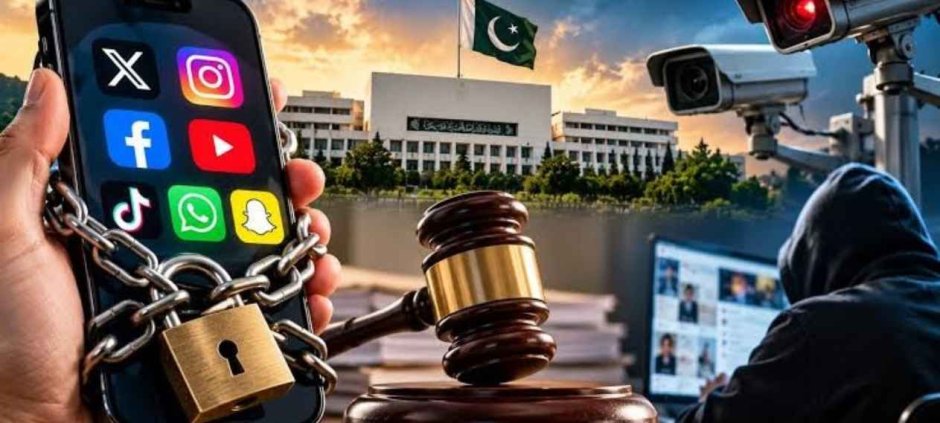
The federal government plans to make the Social Media Regulatory Authority operational soon. The move comes as Pakistan increases its focus on online safety, cybersecurity, and the regulation of digital platforms.
Federal Minister for Information Technology Shaza Fatima Khawaja announced the plan during a Cybersecurity Awareness Week ceremony. She said the authority would form part of the government’s wider efforts to strengthen cybersecurity and protect personal information.
The announcement comes as the National Cyber Crime Investigation Agency (NCCIA) continues investigating cybercrime in Pakistan. The agency operates under the country’s existing legal framework, including the Prevention of Electronic Crimes Act (PECA).
NCCIA Continues Monitoring Online Activities
The proposed regulatory authority has raised questions about the future of social media oversight in Pakistan. Internet users are already facing increased scrutiny as authorities investigate suspected cybercrime and other online violations.
Recently, NCCIA officials warned that certain online activities were being monitored. These included content considered anti-state, online harassment, and material alleged to be defamatory.
NCCIA Additional Director Atif Ameer also warned social media users about their online activities. His statement, “You are not clicking alone,” highlighted the agency’s focus on digital conduct.
According to the reported remarks, the NCCIA has identified fraudulent call centres, anti-state content, and online harassment as key enforcement priorities.
The planned authority would introduce another regulatory body into Pakistan’s digital environment. However, the government has not yet explained how its responsibilities will differ from the NCCIA’s existing investigative role.
Government Highlights Growing Cybersecurity Risks
Shaza Fatima said Pakistan’s growing dependence on digital technology had created new cybersecurity challenges. She also highlighted how artificial intelligence could make online threats more advanced and difficult to detect.
The minister stressed the importance of stronger reporting systems and greater public awareness. She also called for improved protection of sensitive personal information.
As more people use digital services, cybersecurity risks can affect individuals, businesses, and public institutions. These risks include online fraud, identity theft, data breaches, and other forms of cybercrime.
The government says stronger safeguards are needed to respond to these emerging threats. The planned authority is expected to be part of its broader approach to digital regulation.
Minister Raises Concerns About Children’s Online Safety
The minister also highlighted the risks children face while using social media. She warned that cyberbullying, online scams, and careless sharing of personal information could expose young users to harm.
These concerns have become increasingly important as digital platforms play a larger role in everyday life. Parents and users are being encouraged to understand online risks and protect sensitive information.
Improving cybersecurity awareness can help people identify suspicious activity and report potential threats. Stronger reporting mechanisms may also help authorities respond more effectively to online incidents.
Questions Remain Over Social Media Regulation
The proposed Social Media Regulatory Authority has renewed debate about online privacy and digital freedom in Pakistan. While authorities argue that regulation can help combat cybercrime, questions remain about how oversight will be carried out.
Observers may seek clarification about the authority’s powers, responsibilities, and relationship with existing institutions. Clear rules could help distinguish cybersecurity enforcement from restrictions on lawful online expression.
The government has not announced a firm date for the authority’s launch. It has also yet to provide full details about its operational structure or how it will coordinate with the NCCIA.
In other related news also read NCCIA Arrests Father Over Sale of Exploitative Child Videos
Further information is expected to clarify how the new authority will function. Until then, its proposed role remains part of Pakistan’s wider debate over cybersecurity, social media regulation, and online rights.