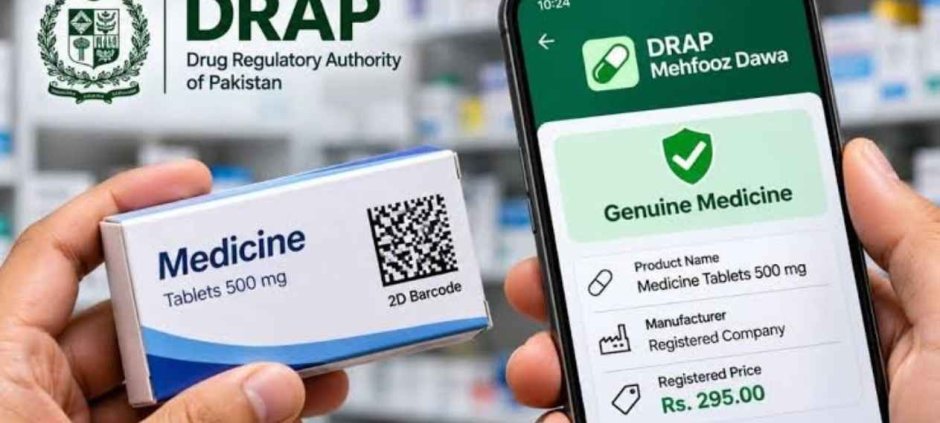
The Drug Regulatory Authority of Pakistan (DRAP) has urged consumers to verify medicines before purchasing them. The regulator has encouraged people to use its Mehfooz Dawa app for this purpose.
The application allows users to check medicine authenticity and verify registered prices. It uses a 2D barcode system that can be scanned through a smartphone.
Consumers can scan the barcode printed on medicine packaging. The app then provides information about the registered product and its approved price.
The initiative aims to address counterfeit medicines and illegal pricing practices. It also seeks to improve transparency across Pakistan’s pharmaceutical market.
More Than 90,000 Medicines Registered With DRAP
Ministry of National Health Services spokesperson Sajid Shah shared details about the registration system. He said around 800 pharmaceutical companies are registered with DRAP.
The regulator has also registered more than 90,000 medicines. Consumers can use the app to compare product information with official registration records.
The barcode system provides buyers with a convenient way to check medicine details. It can also help them identify differences between registered prices and prices charged by sellers.
Medicine Track and Trace System Becomes Operational
Pakistan’s centralised Medicine Track and Trace System became operational on October 9, 2026. The system covers medicines distributed across the country.
It is designed to help regulators monitor medicines throughout the supply chain. Authorities can use this information to follow products during distribution.
The system may also support faster action when safety or quality concerns arise. Regulators could identify affected products and arrange targeted recalls when necessary.
This approach can help authorities respond more effectively to complaints. It also provides another way to monitor pharmaceutical products in the market.
How the Mehfooz Dawa App Works
Consumers need a smartphone to access the medicine verification service. They can scan the 2D barcode printed on a medicine pack.
The app displays the product’s registered information and price. Buyers can then compare these details with the medicine they intend to purchase.
This process helps consumers check whether the packaging matches official records. It also allows them to identify possible price differences.
However, consumers should continue purchasing medicines from authorised and licensed pharmacies. Barcode verification should complement other safety precautions.
Barcode System Faced Several Years of Delays
Pakistan first proposed introducing a medicine barcode system in 2015. The federal cabinet approved the initiative in 2017.
However, administrative delays prevented its full implementation for several years. Health Minister Mustafa Kamal later directed authorities to address the issue.
DRAP subsequently announced October 1, 2026, as the cut-off date for introducing the barcode mechanism. The initiative was intended to tackle counterfeit and expired medicines.
It also aimed to address black marketing and other illegal pharmaceutical activities.
DRAP Continues Action Against Unsafe Medicines
The digital verification initiative comes amid continued regulatory action against unsafe medicines. DRAP regularly issues alerts about counterfeit, substandard, adulterated and unregistered products.
In an alert issued on November 5, the regulator advised consumers to buy therapeutic products from authorised outlets. It also urged buyers to check medicines carefully before use.
The Ministry of National Health Services said the government remains committed to improving medicine safety. Its efforts aim to ensure access to safe, effective and quality medicines across Pakistan.
In other related news also read DRAP Launches Nationwide Crackdown on Substandard Syringes
The Mehfooz Dawa app provides consumers with another tool for checking medicines. Its effectiveness will depend on public awareness and regular use of the verification system.